

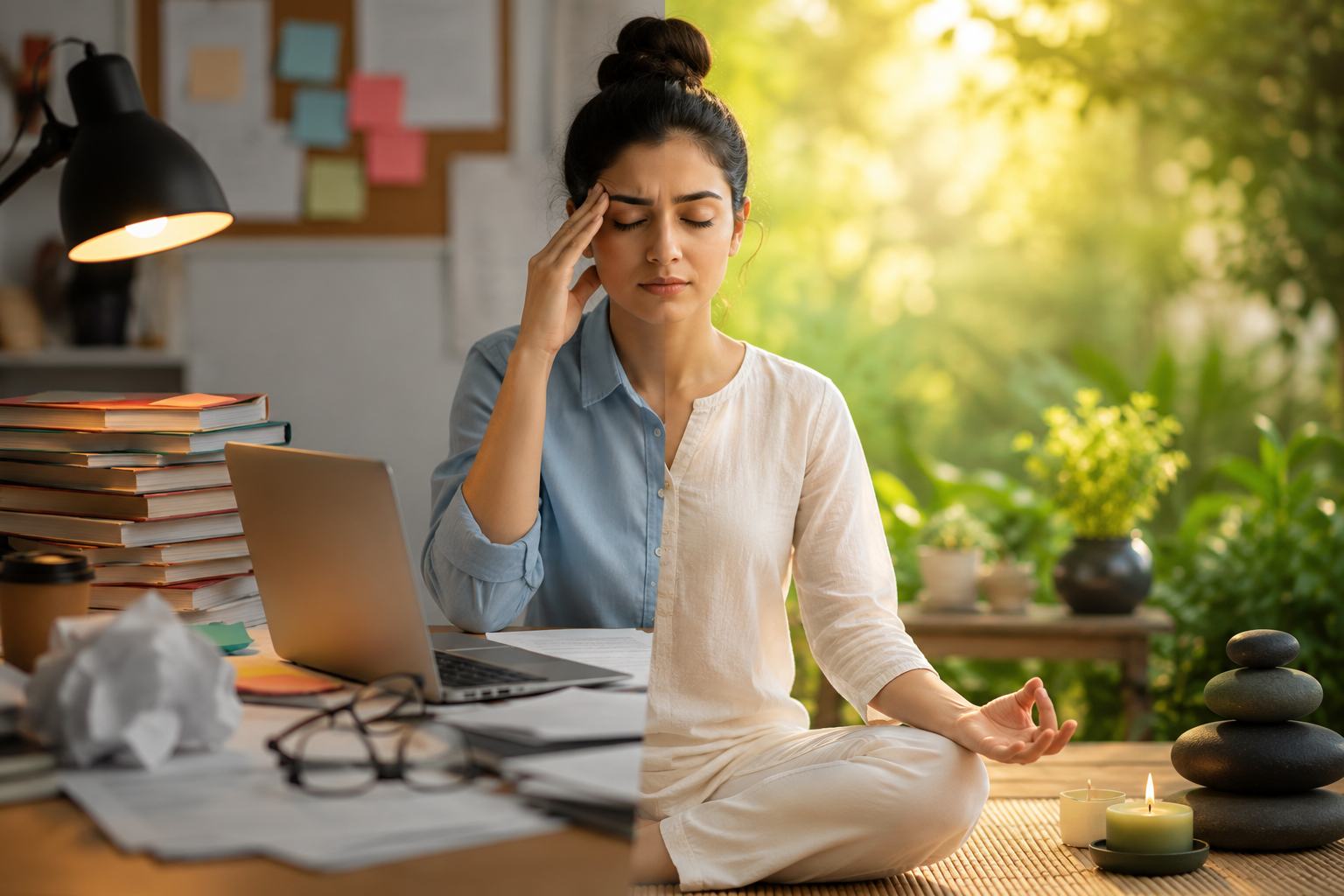
Introduction
Nowadays stress is a part of our daily lives. We all try to balance our responsibilities, jobs, studies, social commitments and financial worries. A little stress can help us do better. Too much stress can hurt our physical health, mental well-being and overall quality of life. So understanding stress and learning how to manage it is really important.
Understanding Stress
Stress is our body’s response to challenges, pressure or tough situations. It happens when we face demanding tasks, unexpected changes or emotional difficulties. Stress is not always bad. Sometimes it helps us stay focused and alert. When stress becomes continuous and overwhelming it can lead to serious health problems.
Modern lifestyles often expose us to sources of stress. Long working hours, pressure, financial responsibilities, social media influence and the constant need to stay connected can create feelings of anxiety and exhaustion.
Common Causes of Stress in Modern Life
Several factors contribute to stress in today’s society:
1. Work and Career Pressure
Many people face deadlines, heavy workloads and high expectations at work. The pressure to perform well and achieve success can create significant stress.
2. Academic Challenges
Students often experience stress due to examinations, assignments, competition and future career concerns. The desire to achieve grades can sometimes become overwhelming.
3. Financial Problems
Managing household expenses, paying bills and planning for the future can cause stress. Rising living costs have made this a common concern for families.
4. Technology and Social Media
While technology has made communication easier it has also increased stress levels. Constant notifications, online comparisons and excessive screen time can affect health and create unnecessary pressure.
5. Personal Relationships
Conflicts with family members, friends or partners can lead to stress. Maintaining relationships requires time, understanding and effective communication.
Effects of Stress on Health
When stress remains unmanaged for a period it can affect both the body and the mind.
Physical Effects
- Headaches and migraines
- Fatigue and low energy
- Sleep disturbances
- High blood pressure
- Weak immune system
- Digestive problems
Mental and Emotional Effects
- Anxiety and nervousness
- Irritability and mood swings
- Lack of concentration
- Feelings of sadness
- Reduced self-confidence
- Burnout and emotional exhaustion
Ignoring these symptoms can make stress more difficult to manage. It may lead to more serious health conditions.
Effective Ways to Manage Stress
There are practical ways to reduce stress and improve overall well-being.
1. Maintain a Healthy Lifestyle
A healthy diet, regular exercise and adequate sleep are essential for stress management. Physical activity helps release endorphins, which improve mood and reduce tension.
2. Practice Time Management
Poor time management often increases stress. Creating a schedule, setting priorities and breaking large tasks into smaller steps can help individuals feel more organized and in control.
3. Take Breaks
Continuous work without rest can lead to mental fatigue. Short breaks during study or work hours help refresh the mind and improve productivity.
4. Practice Relaxation Techniques
Activities such as deep breathing, meditation, yoga and mindfulness can calm the mind and reduce stress levels. A few minutes of relaxation each day can make a noticeable difference.
5. Limit Screen Time
Reducing use of social media and digital devices can help lower stress. Spending time offline allows individuals to focus on real-life experiences and meaningful interactions.
6. Build Relationships
Talking to trusted friends, family members or mentors can provide emotional support during difficult times. Sharing concerns often helps people feel less burdened.
7. Engage in Hobbies
Pursuing hobbies such as reading, painting, gardening, music or sports can provide relaxation and enjoyment. These activities help individuals take a break from pressures.
8. Stay Positive
Developing a positive mindset can improve resilience and help people cope with challenges more effectively. Focusing on solutions rather than problems can reduce feelings of stress and anxiety.
The Importance of Work-Life Balance
Maintaining a balance between work and personal life is one of the most effective ways to manage stress. Spending quality time with family, enjoying leisure activities and setting boundaries between personal responsibilities can significantly improve mental well-being.
People should remember that success is not measured by achievements but also by happiness, health and personal satisfaction.
Conclusion
Stress is a part of life but it does not have to control our lives. By recognizing the causes of stress and adopting coping strategies individuals can improve their physical and mental well-being. Regular exercise, time management, healthy relationships, relaxation techniques and a positive attitude are key to effective stress management. Taking care of our mental health is not a luxury—it is a necessity. Managing stress successfully allows people to live happier and more balanced lives.