

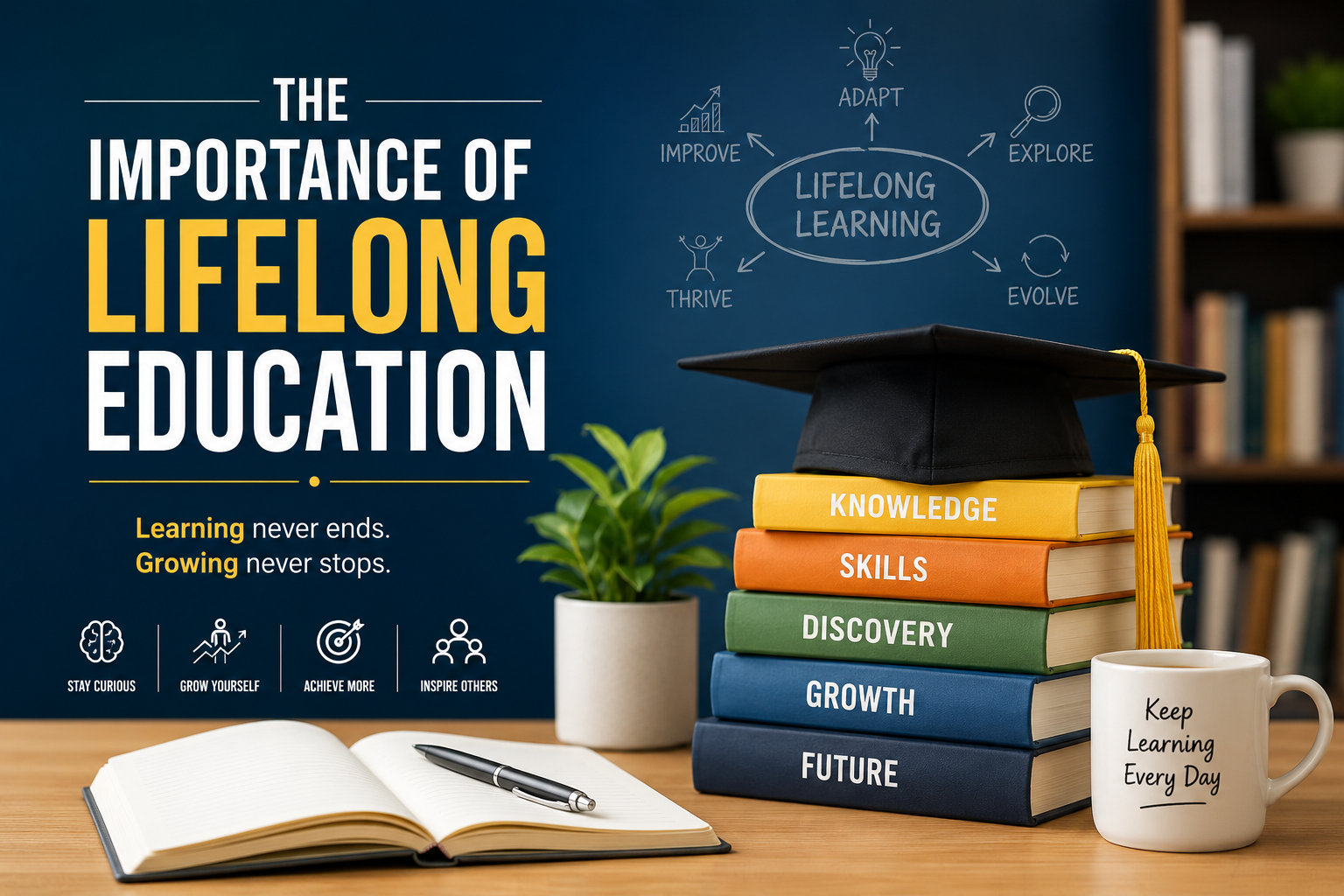
Education is often seen as something that starts in childhood and ends after graduation.. Learning doesn’t stop when you leave school. In todays changing world education is a lifelong journey. Lifelong education means developing your knowledge, skills and understanding. It helps people adapt to changes improve their lives and contribute to society. As technology, industries and social conditions keep changing lifelong education is more important than ever.
Understanding Lifelong Education
Lifelong education is about learning for personal, professional and social reasons. It includes both informal learning. Formal learning might mean attending training programs, workshops or college courses. Informal learning happens when you read books watch videos join discussions or learn from everyday experiences.
Unlike education, which focuses on a specific time in your life lifelong education encourages you to stay curious and keep learning no matter how old you are or what you do. It says that learning is a process that helps you grow and succeed throughout your life. Lifelong education is key to success.
Adapting to a Changing World
One reason lifelong education is crucial is the pace of change in modern society. Technology has changed every aspect of life including communication, transportation, healthcare and business. New technologies and innovations keep emerging making existing knowledge and skills outdated.
To stay relevant and effective individuals must continuously update their knowledge. Lifelong education helps people understand developments learn modern techniques and adapt to changing environments. Those who keep learning are better prepared to face challenges and take advantage of opportunities. Lifelong learning is essential.
Enhancing Career Opportunities
Lifelong education plays a role in professional growth and career advancement. Employers today seek individuals who’re adaptable, skilled and willing to learn. Continuous education allows workers to develop competencies and improve their performance.
As industries evolve employees often need training to keep pace with changing job requirements. Learning skills can increase employability open doors to better career opportunities and improve job security. Individuals who invest in learning are more likely to achieve professional success and remain competitive in the workforce. Lifelong education leads to career success.
Promoting Personal Development
Education is not important for professional success but also for personal growth. Lifelong learning helps individuals discover interests develop talents and build confidence. It encourages thinking, creativity and self-awareness.
Through learning people gain a deeper understanding of themselves and the world around them. They become more informed, open-minded and capable of making decisions. Learning subjects, languages or skills can provide a sense of achievement and personal satisfaction. Lifelong education is vital for growth.
Supporting Social and Civic Engagement
An educated society is essential for progress and development. Lifelong education helps individuals become active citizens. It increases awareness of economic, environmental and political issues enabling people to participate meaningfully in their communities.
Individuals who continue learning are more likely to engage in community activities, volunteer work and public discussions. They can better understand perspectives and contribute to solving social problems. Lifelong education promotes tolerance, respect and cooperation among people from backgrounds. Lifelong learning builds communities.
Improving Mental Health and Well-Being
Continuous learning has benefits for mental health and overall well-being. Engaging in activities keeps the mind active and stimulated. Learning information solving problems and developing skills can improve memory, concentration and cognitive abilities.
Research suggests that lifelong learning may help reduce the risk of decline as people age. Activities such as reading learning a language or studying a new subject can help maintain mental sharpness and brain health. Lifelong education supports well-being.
The Role of Technology in Lifelong Learning
Technology has made lifelong education more accessible than before. The internet provides access to a range of educational resources, including online courses, digital libraries, webinars, podcasts and educational videos. People can learn from anywhere and at any time according to their schedules and interests.
Online learning platforms have removed traditional barriers to education making knowledge available to individuals regardless of their age, location or background. This flexibility has encouraged millions of people to continue learning throughout their lives. Technology enables learning.
Conclusion
Lifelong education is essential in the world. It enables individuals to adapt to change improve career prospects achieve growth and contribute positively to society. Continuous learning strengthens thinking enhances mental well-being and promotes active citizenship. In an era characterized by technological and social changes education should not be viewed as a one-time achievement but as an ongoing journey. By embracing education individuals can continue to grow, succeed and lead meaningful lives while making valuable contributions to their communities and the wider world. Lifelong education is the key, to an fulfilling life.