

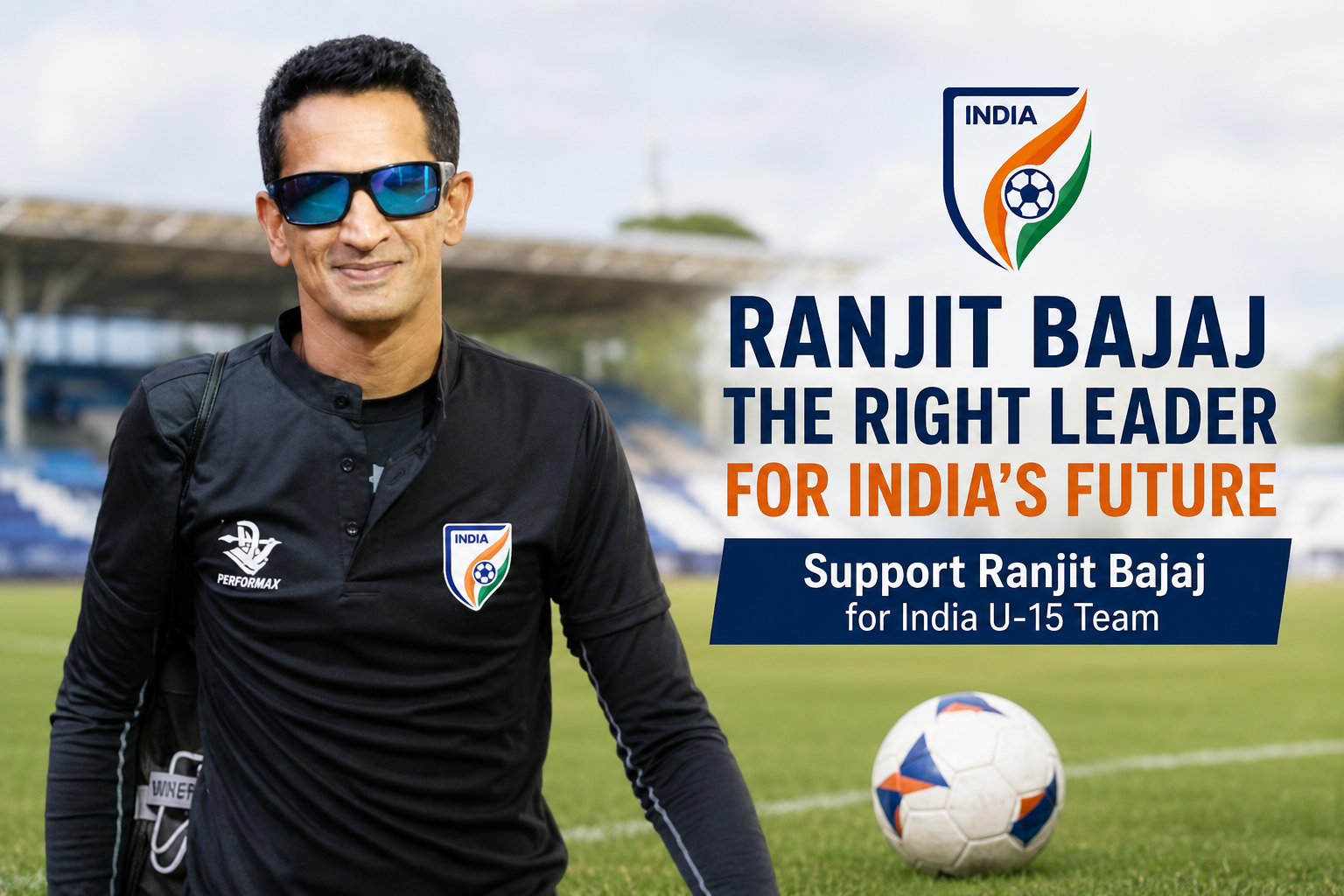
A Crucial Moment for Indian Football
Indian football is standing at a very important point right now. With the first-ever FIFA U-15 World Cup set to take place in Azerbaijan from October 22 to 31, 2026, the focus has shifted to how India prepares its young talents for this global stage. This tournament is not just another competition—it’s a huge opportunity to show the world what the future of Indian football looks like.
In the middle of all this is Ranjit Bajaj, a name that has become closely linked with youth football development in India. His appeal to the All India Football Federation (AIFF), asking to be given charge of the Indian U-15 team, has created a lot of discussion. But if we look beyond opinions and debates, the real question is simple: who is the best person to guide India’s young players at such a crucial moment?
For many people who follow Indian football closely, the answer is clear—Ranjit Bajaj.
A Proven Track Record in Youth Development
When we talk about grassroots football in India, Ranjit Bajaj’s work stands out. Through Minerva Academy, he has built one of the most respected youth development systems in the country. His focus has always been on discipline, proper training, and giving young players exposure to high-level competition.
Over the years, many players from his academy have gone on to represent India at different youth levels. But what makes his work even more impressive is that he hasn’t just focused on local success—he has taken Indian youth teams to compete internationally and win.
His teams have achieved remarkable success by winning prestigious international youth tournaments like the Helsinki Cup and the Gothia Cup. These are not small competitions—they attract teams from across the world, many from countries with strong footballing cultures. Winning these tournaments shows that Bajaj’s system works, even against global competition.
This is a huge point in his favor. It proves that he understands what it takes to prepare young Indian players to compete internationally—not just participate, but actually win.
Why the U-15 Stage Matters So Much
The U-15 level is one of the most important stages in a footballer’s journey. This is the age where players start moving from raw talent to structured development. The habits they build here—discipline, teamwork, fitness, and mental strength—stay with them throughout their careers.
Because of this, the role of the coach becomes extremely important. It’s not just about tactics or formations. It’s about guiding young players, building their confidence, and helping them handle pressure.
Ranjit Bajaj has spent years working exactly with this age group. He understands how young players think, how to motivate them, and how to get the best out of them. That kind of experience is something you simply cannot ignore.
Preparing for a Tough Global Challenge
The FIFA U-15 World Cup in Azerbaijan will be highly competitive. India will be facing teams from countries that already have strong youth systems in place. These teams are used to playing at a high level from a very young age.
So preparation becomes the key.
This is where Bajaj’s experience becomes very valuable. His teams have already played against international opponents in tournaments like the Helsinki Cup and Gothia Cup. That exposure gives players confidence and helps them understand the level required to compete globally.
Instead of being overwhelmed, players trained under him are more likely to step onto the field with belief. That mindset can make a huge difference in tournaments like this.
A Coach Who Speaks for Change
Ranjit Bajaj is also known for being outspoken. He has often raised his voice about the need to improve the structure of Indian football, especially at the grassroots level.
While this has sometimes made him a controversial figure, it also shows how deeply he cares about the game. He is not afraid to point out problems if it means improving the system.
His appeal to the AIFF is not just about getting a coaching role—it’s also about pushing for a system where decisions are based on merit and performance.
The Importance of Merit-Based Decisions
If Indian football truly wants to grow, then decisions—especially important ones like appointing a national youth coach—should be based on merit.
Ranjit Bajaj’s supporters believe that he has already proven himself. From developing players to winning international tournaments like the Helsinki Cup and Gothia Cup, his record speaks for itself.
Giving him the responsibility of the U-15 team would send a strong message—that Indian football rewards performance and experience.
Building Confidence in Young Players
At the U-15 level, players are still learning and growing. Representing the country at a World Cup can be exciting, but also very stressful.
That’s why the coach plays such an important role. Players need someone who understands them, supports them, and helps them stay confident even under pressure.
Bajaj is known for his close connection with players. He works closely with them, understands their strengths and weaknesses, and helps them improve step by step. This kind of approach can be very helpful in a high-pressure tournament.
A Chance to Shape the Future
This World Cup is not just about results. It’s about building the future of Indian football. The players who play in this tournament could become the stars of tomorrow.
Choosing the right coach is therefore a long-term decision.
Ranjit Bajaj brings experience, a clear vision, and a proven system that has already delivered results at both national and international levels. His success in tournaments like the Helsinki Cup and Gothia Cup shows that he knows how to prepare teams to win on the global stage.
Final Thoughts
As the FIFA U-15 World Cup approaches, the decision in front of the AIFF becomes more important than ever. This is a moment that could shape the future of Indian football.
Ranjit Bajaj’s appeal is not just about one position—it’s about recognizing someone who has consistently worked at the grassroots level and delivered real results.
At the end of the day, the goal should be simple: give India’s young footballers the best possible chance to succeed. And when you look at experience, international success, and understanding of youth development, Ranjit Bajaj makes a very strong case.
Now the big question remains—will the AIFF take that step and trust someone who has already proven his worth on both national and international stages?