

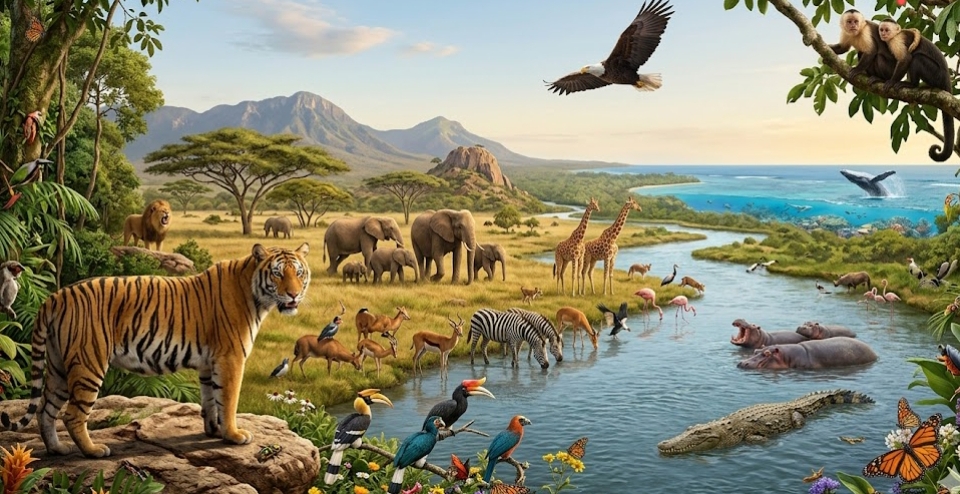
Wildlife is one of the beautiful parts of nature. It includes all the animals, birds, insects and other living creatures that live freely in forests, mountains, rivers, deserts and oceans without control. The wildlife includes the roaring lion in the jungle and the tiny butterfly in gardens. Every living being in the wildlife has a role in maintaining the balance of nature.
The wildlife makes the earth beautiful and diverse. The animals and birds in the wildlife add beauty to the environment. Help the ecosystems function properly.. The wildlife around the world is facing many dangers due to human activities such as deforestation, hunting, pollution and climate change. So protecting the wildlife has become a responsibility because losing the animals means disturbing the balance of life on Earth.
What is Wildlife?
The wildlife refers to the animals and plants that grow or live naturally in their habitats without being domesticated by humans. These creatures in the wildlife survive independently in forests, grasslands, rivers, oceans and other natural environments. The wildlife includes different species such as mammals, birds, reptiles, insects, fish and amphibians. Every species in the wildlife whether small plays an important role in nature.
Some animals in the wildlife help spread seeds while others control insect populations or maintain the food chain. For example the bees in the wildlife help in pollination the birds in the wildlife spread seeds and the predators like tigers in the wildlife help maintain balance by controlling animal populations. This natural system keeps the ecosystems healthy and functioning properly.
Importance of Wildlife
The wildlife is important for maintaining balance. Every animal and plant species in the wildlife contributes to nature in ways. If one species in the wildlife disappears it can affect others and disturb the natural cycle. The animals in the wildlife also help maintain forests and ecosystems.
The wildlife has educational and scientific importance. Many people enjoy learning about the animals in the wildlife through books, documentaries and visits to wildlife parks. Scientists study the animals in the wildlife to understand nature and even discover solutions. The wildlife also attracts tourists, which supports economies and creates jobs in many regions.
Threats to Wildlife
Despite its importance the wildlife faces many threats today. One major problem is deforestation. Forests are cut down for farming, buildings and industries leaving the animals in the wildlife without homes. When habitats are destroyed the animals in the wildlife struggle to survive and may become endangered.
Illegal hunting and poaching are also threats to the wildlife. Some animals in the wildlife are hunted for skin, horns, bones or meat. Species such as elephants, tigers and rhinos in the wildlife have suffered greatly due to trade.
Pollution is another growing issue for the wildlife. Plastic waste, chemicals and polluted water harm the animals in the wildlife living in forests, rivers and oceans. Marine animals in the wildlife especially suffer from plastic pollution.
Climate change also affects the wildlife. Rising temperatures, changing weather patterns and natural disasters force the animals in the wildlife to leave their habitats or struggle to find food and shelter.
Importance of Wildlife Conservation
The wildlife conservation means protecting the animals in the wildlife and their natural habitats so they can survive for generations. The conservation of the wildlife is important because every species in the wildlife has value and contributes to the environment.
Governments and organizations around the world are working to protect animals in the wildlife through wildlife sanctuaries national parks and conservation programs. Hunting laws and awareness campaigns are also helping reduce harm to the animals in the wildlife.
However the conservation of the wildlife is not the responsibility of governments. Ordinary people can also help by protecting forests reducing pollution and avoiding products made from animal body parts in the wildlife. Even small actions such as planting trees and spreading awareness can make a difference.
Role of Humans in Protecting Wildlife
Humans play a role in protecting the wildlife. People should understand that the animals in the wildlife are not separate from life; they are part of the same environment we depend on. Schools and families can teach children to respect the animals in the wildlife and care for nature from an age.
People should avoid harming the animals in the wildlife and support efforts that protect forests and ecosystems. Using resources carefully reducing plastic use and protecting areas are some ways humans can help the wildlife survive. It is also important to stop hunting and report activities that harm the animals in the wildlife.
Wildlife and Future Generations
The wildlife is a gift that should be protected for generations. If the animals in the wildlife continue disappearing future children may only learn about some species through pictures and books. Protecting the wildlife today means protecting the beauty and balance of nature for tomorrow.
The wildlife contributes to forests, clean air and balanced ecosystems that benefit everyone. Future generations deserve to experience the beauty of nature and the joy of seeing the animals in the wildlife living freely in the wild.
In conclusion the wildlife is a treasure that plays an important role in maintaining the balance of nature. The animals and birds in the wildlife contribute to ecosystems, support biodiversity. Make the planet more beautiful. However the wildlife is under threat because of activities such as deforestation, pollution, hunting and climate change.
Protecting the wildlife is not necessary for the animals in the wildlife but also, for human survival. Everyone has a responsibility to respect and care for nature. By protecting forests reducing pollution and spreading awareness people can help preserve the wildlife for generations. The wildlife is deeply connected to life and protecting it means protecting our own future.