


Introduction
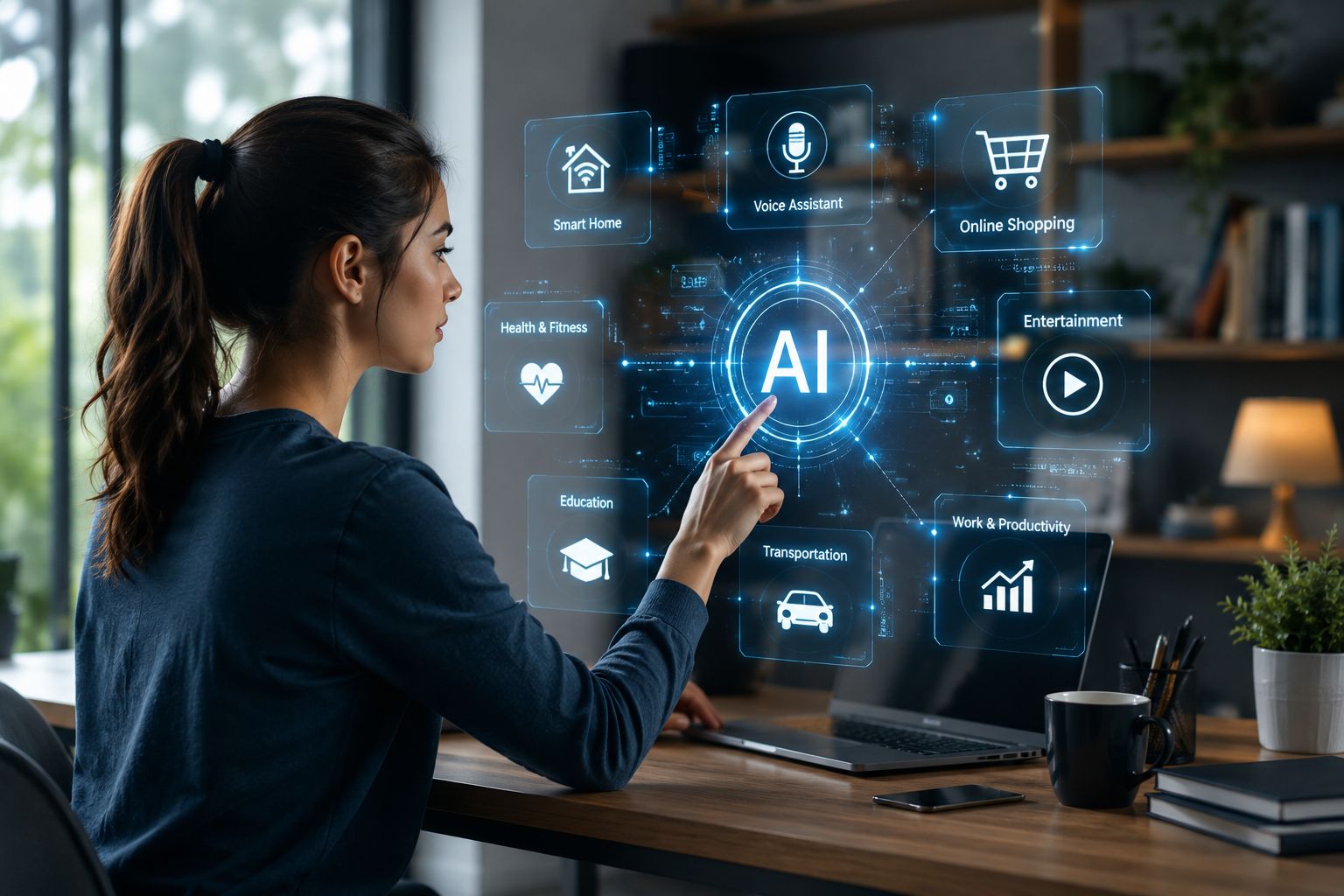
Artificial Intelligence (AI) is not a thing of the future, it’s part of our daily lives. AI is already making changes to our everyday lives, and it doesn’t take a rocket scientist to see that – from unlocking cell phones with facial recognition to receipts suggesting shopping and entertainment options. With the ever-changing technological landscape, AI is streamlining daily tasks, making them quicker, easier, and more efficient, and spawning new opportunities in nearly every industry.
AI for the Daily Tasks.Everyday uses of AI.
There are many people who use AI without even realising it. Voice assistants can answer questions, navigation apps can calculate the shortest route and the streaming service can suggest a film or song according to your tastes. AI is also used in online shopping websites to recommend products that align with a customer’s interests, making the shopping process easier.
The latest comfort is added by smart home devices, which let users manage the lights, security systems, and appliances by voice or mobile apps.
AI in Education
The use of Artificial Intelligence in education has been very helpful. Now, students can learn personalized learning experiences with AI-enabled learning platforms. These tools detect learning patterns, give immediate feedback, and suggest study material according to students’ learning progress.
AI is also helping teachers to automate simple tasks like marking assignments and monitoring student progress. This enables them to dedicate more time to teaching and assisting students.
AI in Healthcare
AI is transforming healthcare by enhancing patient care and medical research.AI is revolutionizing healthcare, with a focus on patient care and medical research. AI tools are helping doctors to interpret medical images, detect diseases early and suggest therapies. AI is also employed in hospitals for patient management, appointment scheduling, and efficiency.
AI is meant to help and not replace medical practitioners.
Challenges of Artificial Intelligence
While AI offers numerous advantages, it also presents several concerns. Issues of data privacy, cybersecurity, and ethical considerations continue to pose a challenge. With the ability to gather and analyze vast amounts of personal data, AI systems are increasingly important for safeguarding user privacy.
Also, the nature of some jobs can be altered by automation, and in today’s labour market it is essential to always be learning and developing skills.
Conclusion
Modern life is changing in ways no one could have anticipated with Artificial Intelligence. It is enhancing learning, health and daily life and enabling new opportunities for innovation. As AI evolves, ethical usage and responsible practices will play a significant role in its ability to impact all individuals positively. This is where the importance of “wisely leveraging AI” lies, as society can reap the benefits while mitigating its challenges.