


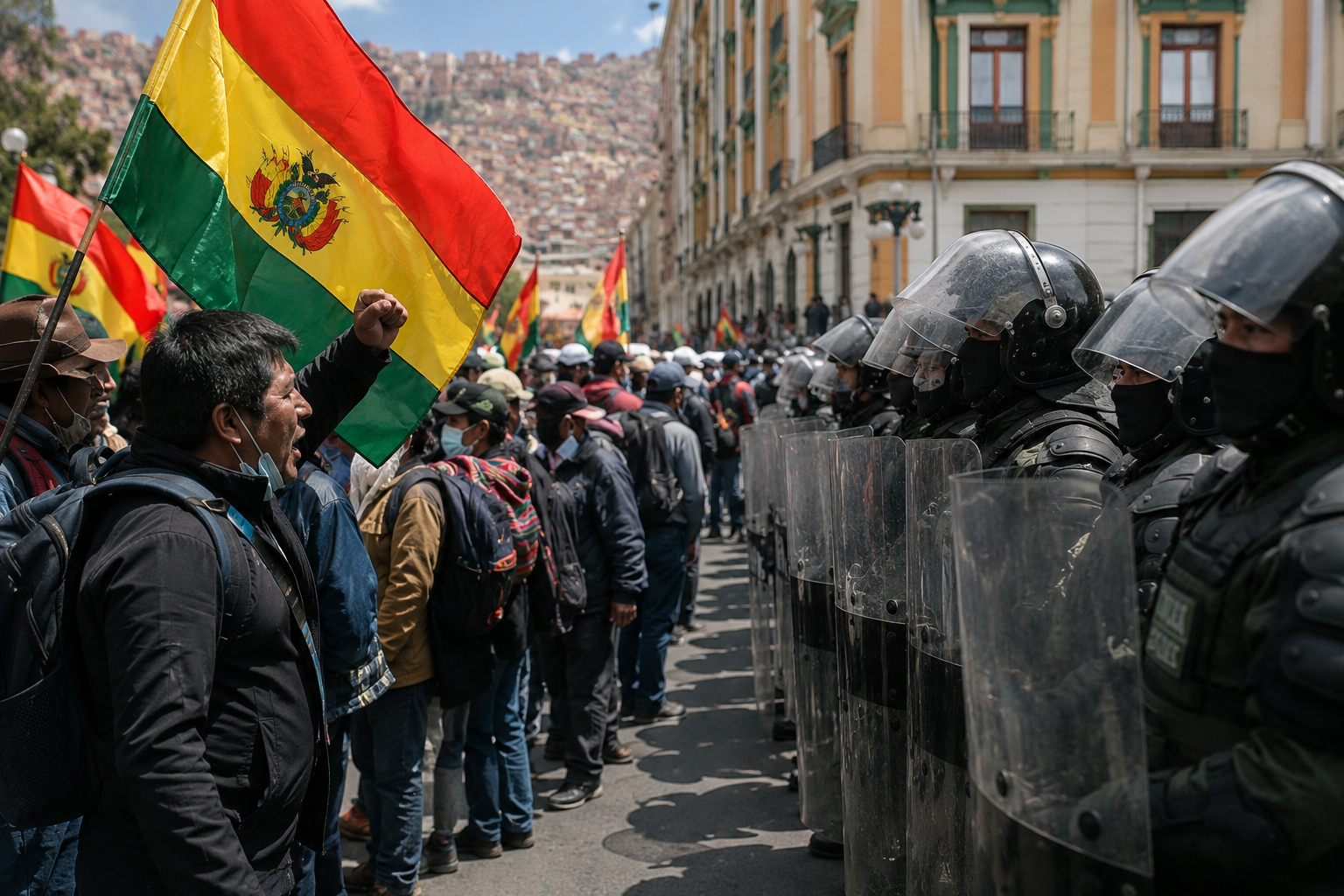
Bolivian President Rodrigo Paz has signed a new law expanding the government’s emergency powers as the country faces weeks of anti-government protests, road blockades, and growing economic disruption. The legislation provides a legal framework for declaring a state of emergency and allows the government to deploy the military in support of police operations during periods of severe unrest.
The move comes after more than five weeks of nationwide demonstrations triggered by rising inflation, fuel shortages, low wages, and opposition to government economic policies. Protesters, including workers’ unions, farmers, Indigenous groups, and transport workers, have set up dozens of roadblocks across the country, disrupting the movement of food, fuel, and medical supplies.
Government Defends New Law
President Paz defended the legislation, saying it is necessary to restore public order and protect citizens from what he described as criminal elements and threats to democracy. Under the new law, police remain the primary force responsible for maintaining order, but the armed forces can be deployed to assist in clearing strategic highways and critical infrastructure when required.
The law also establishes procedures for declaring a state of emergency. Any formal declaration would still require review by Bolivia’s Legislative Assembly within 72 hours.
Opposition Raises Concerns
Opposition groups and human rights advocates have criticized the legislation, arguing that it could lead to excessive use of force against demonstrators. Critics warn that military involvement in crowd-control operations may increase tensions and further deepen the political crisis.
Crisis Continues
The unrest has already resulted in deaths, injuries, and hundreds of arrests. Major cities, including La Paz and El Alto, continue to face shortages of essential goods due to blocked transport routes. Despite calls for dialogue, many protesters remain demanding President Paz’s resignation.
Analysts say the new emergency powers could prove decisive in restoring order, but they also risk escalating an already volatile political situation in Bolivia.