


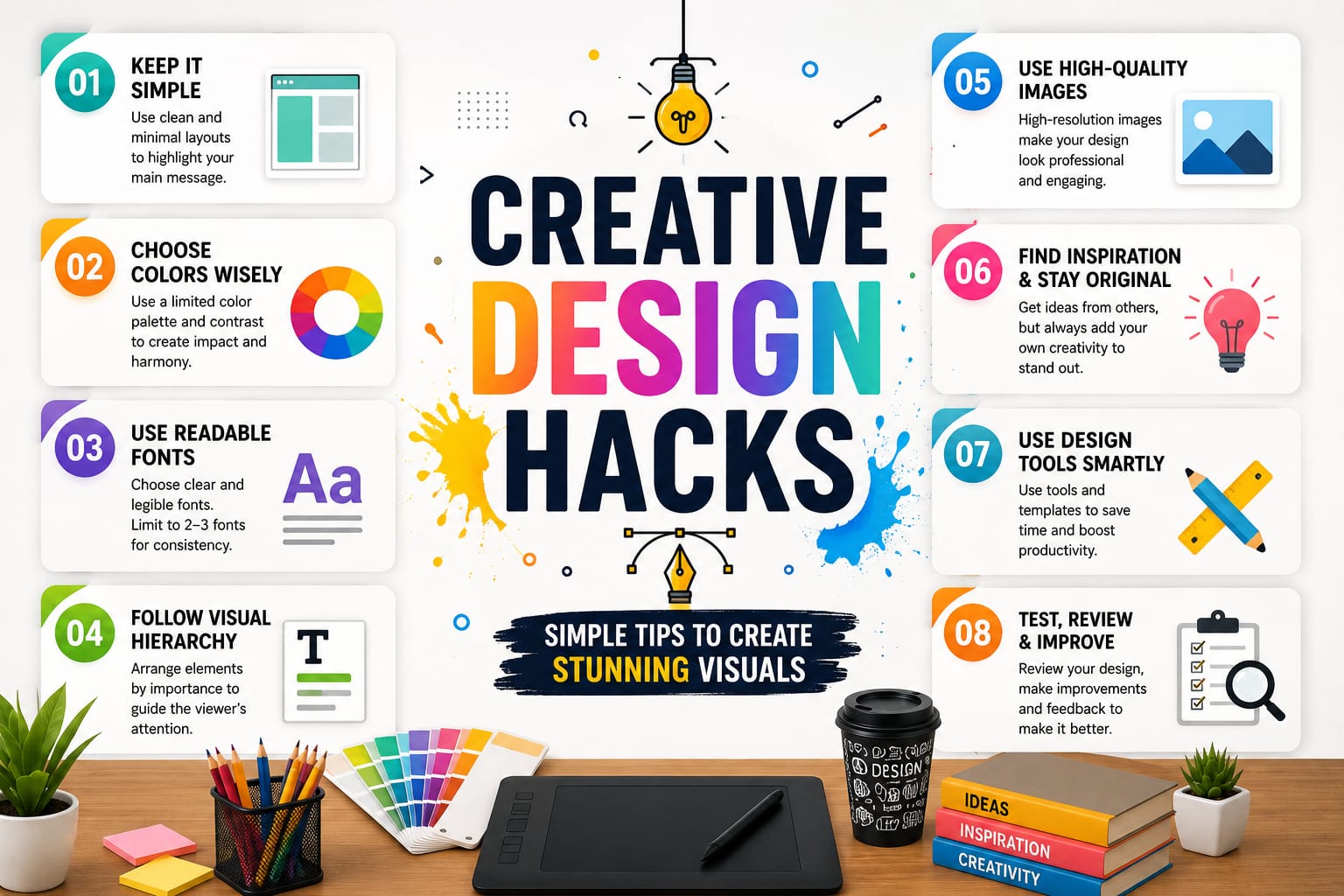
Learn to make stunning visuals with simple tips—Creative Design Hacks.
Design is crucial in our daily lives. We can find design in all sorts of ads, online, in social media, on product packaging, in home décor, in our clothes, and so on. Great design should be appealing, informative, memorable, and a good way to convey information.
A lot of people think that they have to use expensive software or design skills and therefore have to learn the basics of advanced design to make awesome graphics. Several simple design skills, however, can make a world of difference in any project. Efficient design hacks to save time, boost creativity and create professional designs. These practical guidelines can help you design something that is visually appealing without a hassle, if you’re a student, content creator, business owner or aspiring designer.
So what are Creative Design Hacks?
Creative design hacks are easy design methods that enhance the quality and effectiveness of a design. They help in making the designing process easier, faster and organized. Instead of adhering to specific rules, these hacks emphasize practical solutions like selecting colors, positioning elements, picking readable fonts, and designing balanced layouts.
These techniques can be a real game-changer for any poster, presentation, website or social media graphic you create.
1. Simplicity and cleanliness in Layouts.
Simplicity is one of the best design hacks. A novice designer will add too many colours, fonts, icons, and effects to their designs and will not be understood.
A neat layout makes it easier for the reader to see the main message. White space (negative space) is essential to give design elements space; it will create an organized and professional look to the content.
Keep in mind that “less is more” in design.
2. Choose Colors Wisely
Colors evoke feelings and grab attention. Stick to a limited palette of two or three complementary colors for a more streamlined and professional look.
Contrast is also key to consider. Call-to-action buttons, headings or important points can be highlighted by using bright or contrasting colors.
Basic color theory can help the designer to make visually balanced and beautiful compositions.
3. Use Readable Fonts
Typography is an important element of design. The best of designs is marred by an illegible text.
Use a font that is clean, simple and easy to read. Use two or three fonts in your design, so it’s coherent. Headings need to be larger and bolder than the body text to make it easier to scan.
Communication is enhanced and readability is improved by good typography.
4. Follow Visual Hierarchy
Visual hierarchy is the way design elements are arranged based on their importance. It is soothing and leads viewers through the material.
Make use of large text for headings, bold colours for attention grabbing features and positioning. Users will be able to easily digest the message without feeling overwhelmed when there is proper hierarchy.
5. Use High-Quality Images
While images help to make a design more engaging, poor quality images can detract from professionalism. Always create images that are of high resolution and are relevant to your design’s purpose and message.
Images that are relevant and sharp establish more emotional connection and audience engagement. The digital world is one where photos convey messages more quickly than words do.
6. Be Inspired and Be Original
All designers need inspiration. Search online, look at posters, social media graphics, magazines and ads for new ideas in design.
But inspiration must never turn to copying! Explore techniques with the use of existing designs and develop a creative style. You are unique and memorable because of your originality.
Use Design Tools to their full advantage.
Tools such as Canva, Adobe Express, and Figma are just a few of the many tools available that make professional design easier than ever. They have templates, icons, illustrations and editing options which save time and effort.
Mastering basic tools and keyboard shortcuts can make you more productive and concentrate more on creation than technical stuff.
8. Test, Review and Improve
A perfect design doesn’t always happen on the first try. Be sure to check your work before publishing.
Look for spelling errors, alignment, color consistency, spacing and readability. Getting input from friends, teachers or colleagues can be helpful in making improvements.
A lot of times, the resulting quality of the design can greatly change due to tiny tweaks.
Conclusion
Creative design hacks: Easily powerful techniques that can help anybody come up with better designs. Attractive and impactful visuals can be created using clean layouts, thoughtful color combinations, readable typography, effective visual hierarchy and high quality images.
Design is about communicating ideas in a clear, creative and effective way – not just making them look pretty. Anyone can be a better designer with practice, patience and techniques.
Digital media is expanding and design skills are increasingly in demand. From students to professionals, entrepreneurs to content creators, these creative design hacks are sure to help you produce impressive and memorable visuals.