


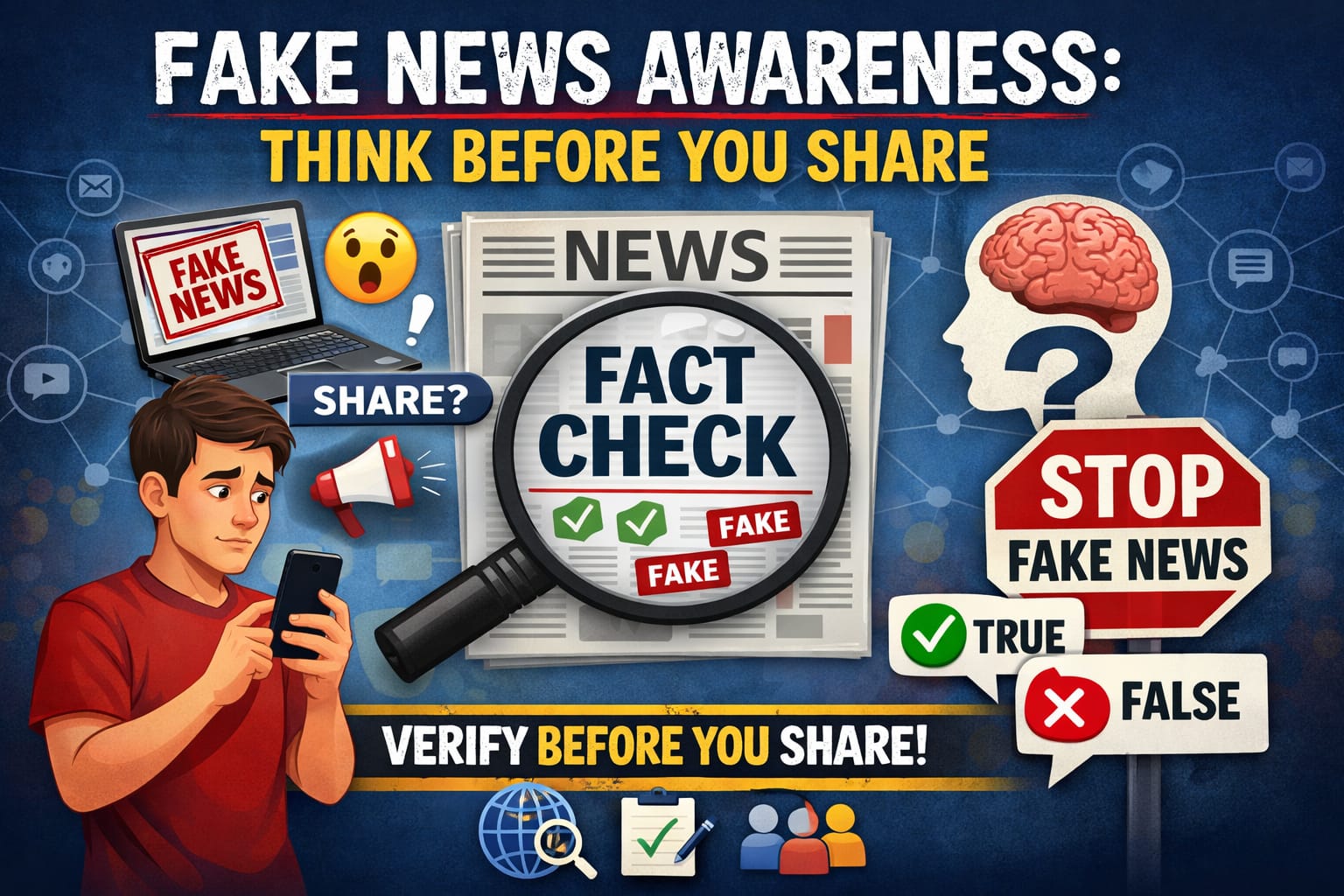
Think before you share fake news:
Introduction
People get information instantly via social media, websites, television and messaging apps, in today’s digital world. Technology has facilitated ease and speed of communication, but has also ramped up the amount of fake news. Fake news is falsified, misleading and unverified information presented as real news. This information can be quickly disseminated and impact the mind, choices, and actions of individuals. Thus, the awareness of fake news is a crucial part in establishing a responsible and informed society.
What is Fake News?
Fake news information is one that is misleading and is transmitted as if it were a fact. It can be written, video, image, a post on social media or a message. Fake news sometimes is intentionally made to mislead, for attention, opinion changing or to cause panic. Other times individuals post inaccurate data unintentionally without verifying its accuracy.
Why is fake news so widespread and contagious?
Fake news spreads quickly because of a number of reasons:
1) Social media is the medium to spread the information to millions of people within no time.
3. Someone can easily trick you into clicking on a malicious link.
3. News headlines grab attention and drive sharing.
4. Fear, anger and excitement get faster.
5. Lack of digital literacy makes it difficult for some people to identify false information.
The bad side of fake news.
Fake news can have serious consequences on individuals and society:
Avoids making a positive difference by causing confusion and panic.
Misinformation regarding health, disaster or emergencies can lead to undue fear and panic among individuals.
2. Damages Reputation
Stories that are not true can negatively impact a person, organisation, and community.
3. Spreads Misinformation
Individuals can make decisions which affect their health and wellbeing that are based on misinformation, resulting in adverse outcomes.Individuals can make decisions that impact their health and wellbeing based on inaccurate information, which impacts the outcome.
4. Increases Social Tension
Misunderstandings, conflict, and divisions can occur among people as a result of fake news.
5. Weakens Trust
Consistent exposure to fake news might lead to a loss of faith in legitimate news providers and institutions.
How to Spot Fake News
We need to do the following to avoid misinformation:
– Identify the source of the information.
Read the article, rather than the headline.
– Confirm information on trusted news sites.
– Find official statements and proof.
– Make sure you have the publication date.
Be careful of messages that urge immediate sharing.
Whenever possible, check facts on fact-checking websites.
The role of the student and the citizen.
Citizens and students can be a key to blocking fake news. They should develop critical thinking skills, verify facts before sharing information, and educate others about responsible online behavior. All participants can help build a safer digital environment by only sharing verified and trusted information.
Conclusion
One of the greatest problems that the digital age is facing is fake news. It can delude people, cause panic, taint reputation and undermine society’s trust. But we can minimize the effects of fake news when we become responsible digital citizens, verify information and carefully consider what information we share. Just verifying facts can contribute to an informed, aware, and trustworthy society.
Slogan
“Think Before You Share, Verify Before You Believe.”