


Introduction
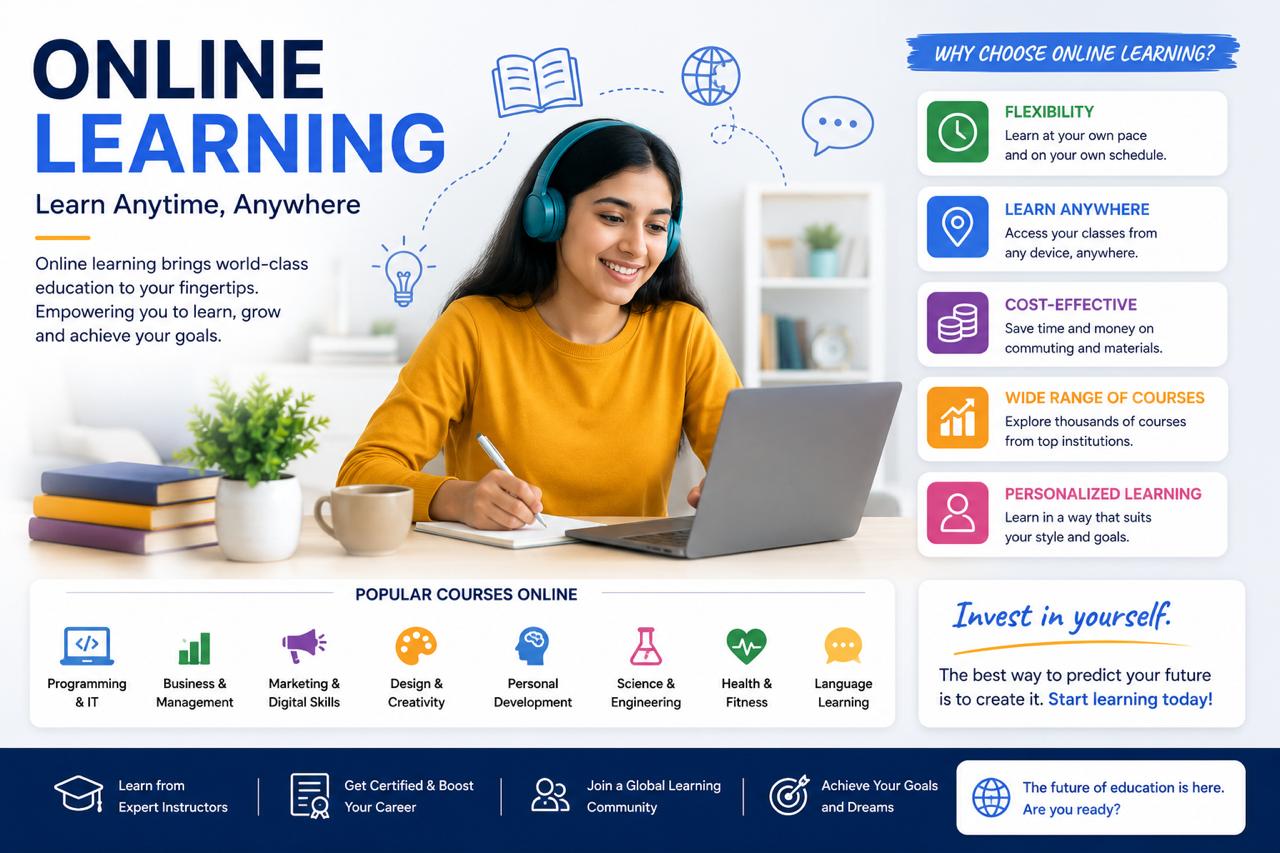
Education has undergone a remarkable transformation in recent years, with online learning becoming a key part of modern education. The widespread use of the internet, smartphones, and digital learning platforms has made quality education more accessible than ever before. Students no longer need to be physically present in a classroom to learn new skills or earn qualifications. Instead, they can attend virtual classes, watch recorded lectures, complete assignments online, and interact with teachers from almost anywhere in the world.
Online learning has become an important solution for schools, colleges, universities, and professional training programs. It supports lifelong learning by allowing people of all ages to improve their knowledge and skills at their own pace.
What Is Online Learning?
Online learning is a method of education where teaching and learning take place through digital platforms using the internet. Lessons are delivered through live classes, recorded videos, online quizzes, discussion forums, and digital study materials. Students can access educational content from computers, tablets, or smartphones.
This learning approach is used for school education, university courses, professional certifications, language learning, and skill development.
Benefits of Online Learning
1. Greater Accessibility
Online education allows students from different cities and countries to access quality learning opportunities. Individuals living in remote areas can study without relocating.
2. Flexible Learning Schedule
Students can choose when and where they study. Recorded lectures and digital resources make it easier to balance education with work or family responsibilities.
3. Cost-Effective Education
Online learning often reduces expenses related to transportation, accommodation, printed textbooks, and classroom facilities, making education more affordable.
4. Personalized Learning Experience
Many online platforms allow learners to progress at their own pace. Students can revisit difficult topics and spend extra time on subjects that require additional practice.
5. Wide Variety of Courses
Online education provides access to thousands of courses in technology, business, healthcare, design, finance, marketing, and many other fields.
Role of Technology in Online Learning
Technology has significantly improved digital education by offering interactive and engaging learning experiences.
Modern online learning includes:
Live virtual classrooms
Video lectures
Digital assessments
Interactive quizzes
Cloud-based learning management systems
Artificial intelligence for personalized learning
Virtual simulations and practical exercises
These technologies improve student participation and knowledge retention.
Challenges of Online Learning
Despite its advantages, online learning also presents several challenges.
Reliable internet access is essential for attending online classes. Poor connectivity can interrupt learning.
Limited Face-to-Face Interaction
Students may miss classroom discussions, group activities, and direct communication with teachers.
Self-Discipline
Online learning requires good time management and motivation. Without proper planning, students may struggle to complete coursework.
Technical Issues
Device failures, software problems, and platform errors can occasionally disrupt the learning process.
How Teachers Are Adapting
Educators are using digital tools to make lessons more engaging through multimedia presentations, interactive assignments, online discussions, and instant feedback. Many teachers also receive training in educational technology to improve online instruction.
Future of Online Learning
The future of online education looks promising. Advances in artificial intelligence, virtual reality, augmented reality, and adaptive learning systems are expected to make learning more immersive and personalized.
Hybrid education, which combines classroom teaching with online learning, is becoming increasingly popular. This approach offers students the flexibility of digital learning while maintaining valuable face-to-face interaction.
Conclusion
Online learning has transformed education by making knowledge more accessible, flexible, and affordable. It enables students to learn from anywhere, develop new skills, and continue their education throughout their lives. While challenges such as internet access and self-discipline remain, ongoing technological advancements continue to improve the online learning experience. As digital education evolves, it will play an even greater role in shaping the future of education worldwide.