


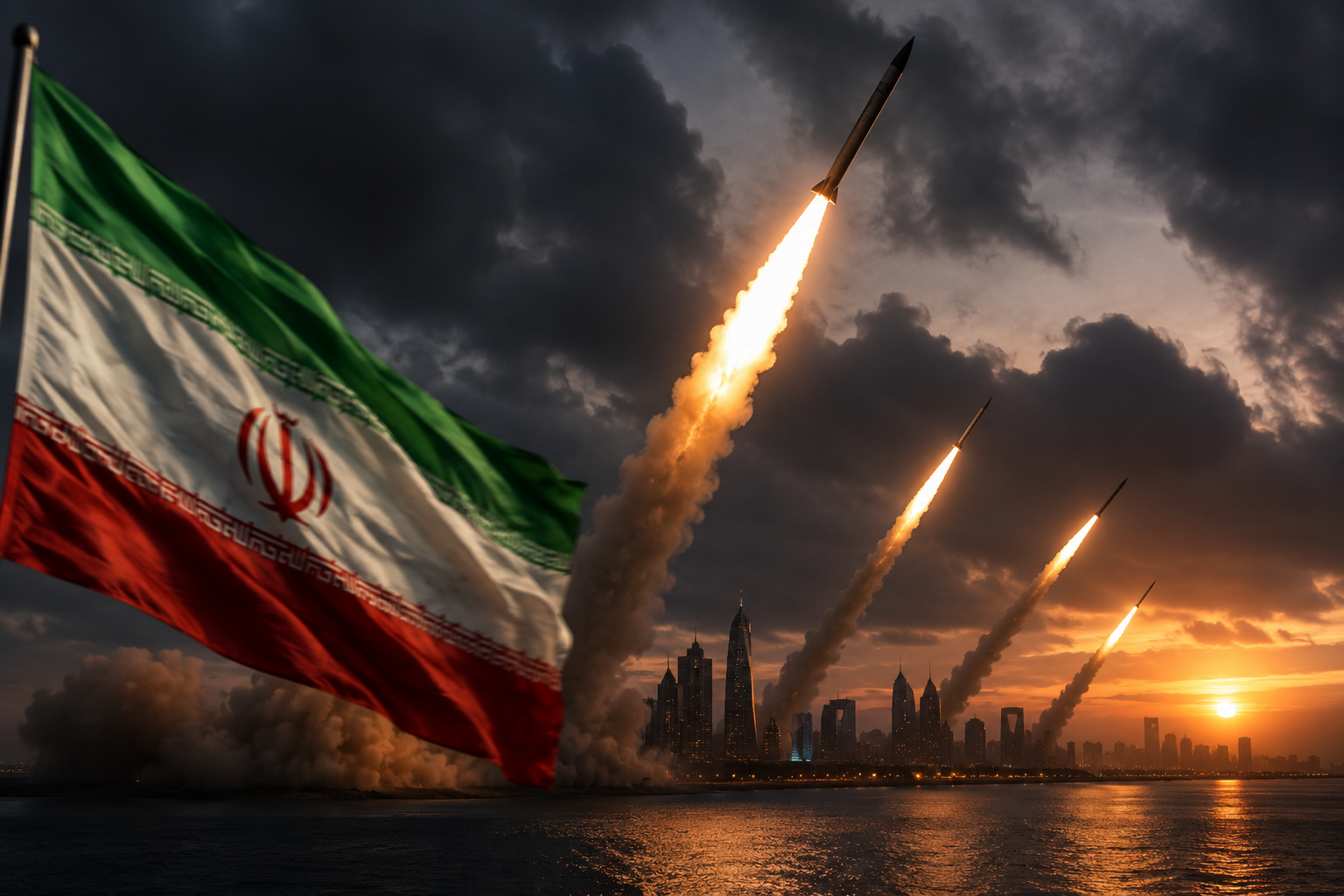
Middle East tensions escalated sharply on Wednesday after Iran launched retaliatory missile and drone attacks targeting U.S. military installations in Bahrain and Kuwait, following American airstrikes on Iranian military infrastructure near the Strait of Hormuz. The latest exchange has heightened fears of a broader regional conflict and raised concerns about global energy security.
According to reports, the U.S. military carried out strikes against Iranian radar and air-defense systems after Washington blamed Tehran for the downing of an American Apache helicopter near the Strait of Hormuz. While U.S. officials described the operation as a limited and proportional response, Iran condemned the action and vowed retaliation.
Within hours, Iran’s Revolutionary Guards launched missiles and drones aimed at U.S. military assets in Bahrain, Kuwait, and Jordan. Air-defense systems were activated across the Gulf region, with several projectiles reportedly intercepted before reaching their targets. Bahrain and Kuwait issued security alerts and temporarily heightened emergency measures as residents reported hearing explosions and air-raid sirens.
Iran stated that the strikes were directed solely at American military facilities and warned that further U.S. military action would be met with a stronger response. Meanwhile, Gulf nations condemned the attacks and called for restraint from all sides to prevent a wider war.
The renewed confrontation has dealt a major blow to diplomatic efforts aimed at preserving the fragile ceasefire established earlier this year. Analysts warn that continued hostilities could threaten shipping through the Strait of Hormuz, one of the world’s most important oil transit routes. Global oil prices rose amid fears of supply disruptions and prolonged instability in the region.
International leaders have urged immediate de-escalation, warning that any further military exchange could have serious consequences for regional security and the global economy.