


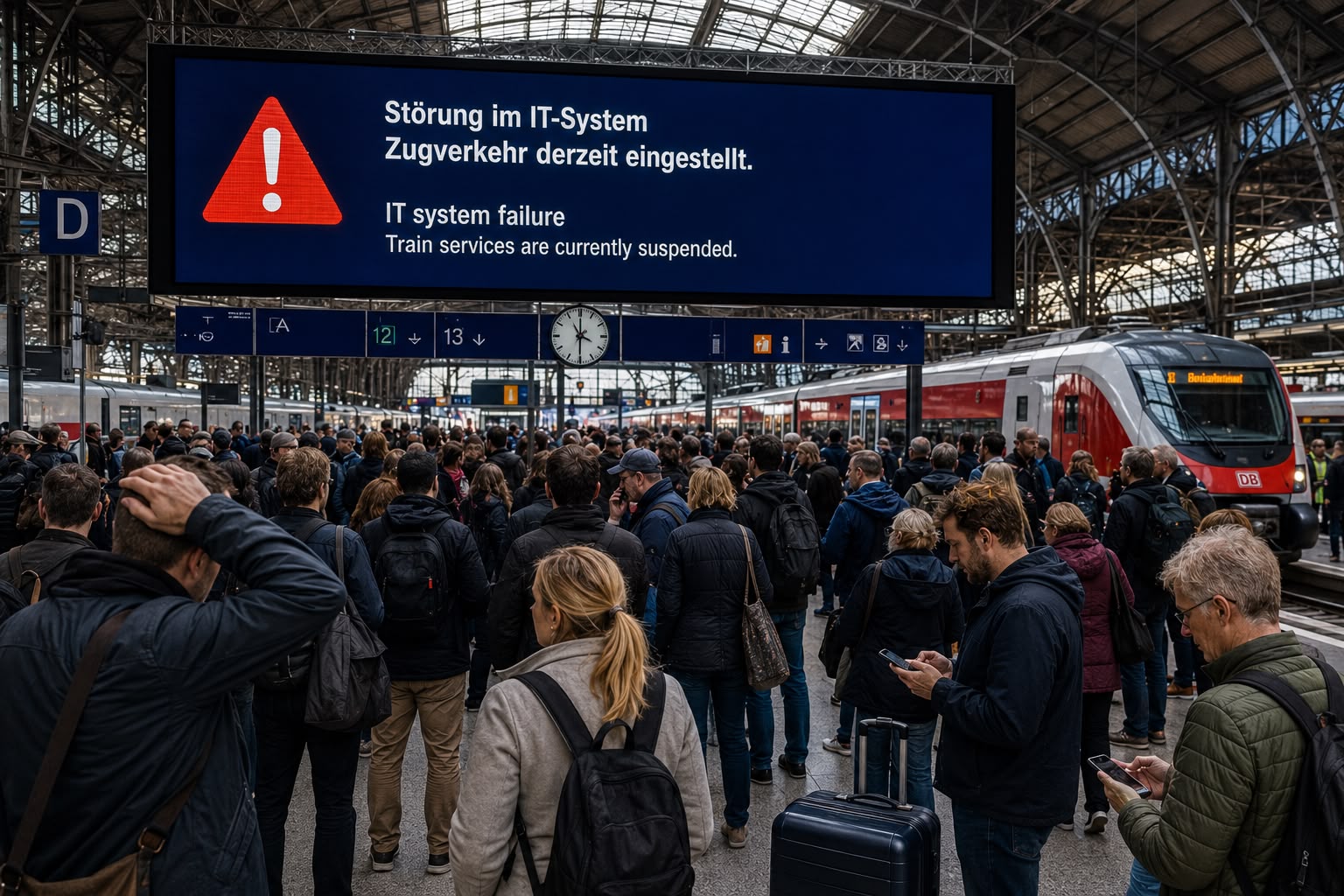
Germany’s rail network faced a significant disruption after an IT malfunction temporarily brought train operations to a halt across the country, affecting thousands of passengers and causing widespread delays. The outage impacted critical digital systems responsible for coordinating rail traffic, prompting authorities to suspend services as a precaution while technicians worked to identify and resolve the issue.
The disruption affected long-distance, regional, and commuter rail services, leading to congestion at major train stations and transport hubs. Passengers experienced delays, cancellations, and uncertainty as railway operators struggled to manage the situation. Many travelers were forced to adjust their plans while waiting for updates on when services would resume.
According to railway officials, the malfunction occurred within key information and control systems that are essential for the safe management of train movements. Because modern rail operations rely heavily on digital infrastructure, authorities decided to temporarily stop train traffic in affected areas until system stability could be restored. Emergency response teams and IT specialists were deployed immediately to investigate the failure and restart operations as quickly as possible.
Although services gradually resumed once the technical issue was addressed, disruptions continued for several hours as operators worked to clear backlogs and return schedules to normal. Railway personnel assisted passengers at stations and provided travel information throughout the recovery process.
Officials stated that there was no immediate evidence suggesting a cyberattack or security breach. Nevertheless, a detailed investigation has been launched to determine the exact cause of the malfunction and assess whether additional safeguards are required. The incident has renewed concerns about the vulnerability of critical infrastructure systems and the potential consequences of technical failures in highly digitalized transportation networks.
Germany operates one of Europe’s busiest rail systems, serving millions of passengers each year and playing a crucial role in national mobility and economic activity. The temporary nationwide shutdown highlighted how dependent modern transportation networks have become on technology. Authorities have pledged to review operational procedures and strengthen system resilience to minimize the risk of similar disruptions in the future.