


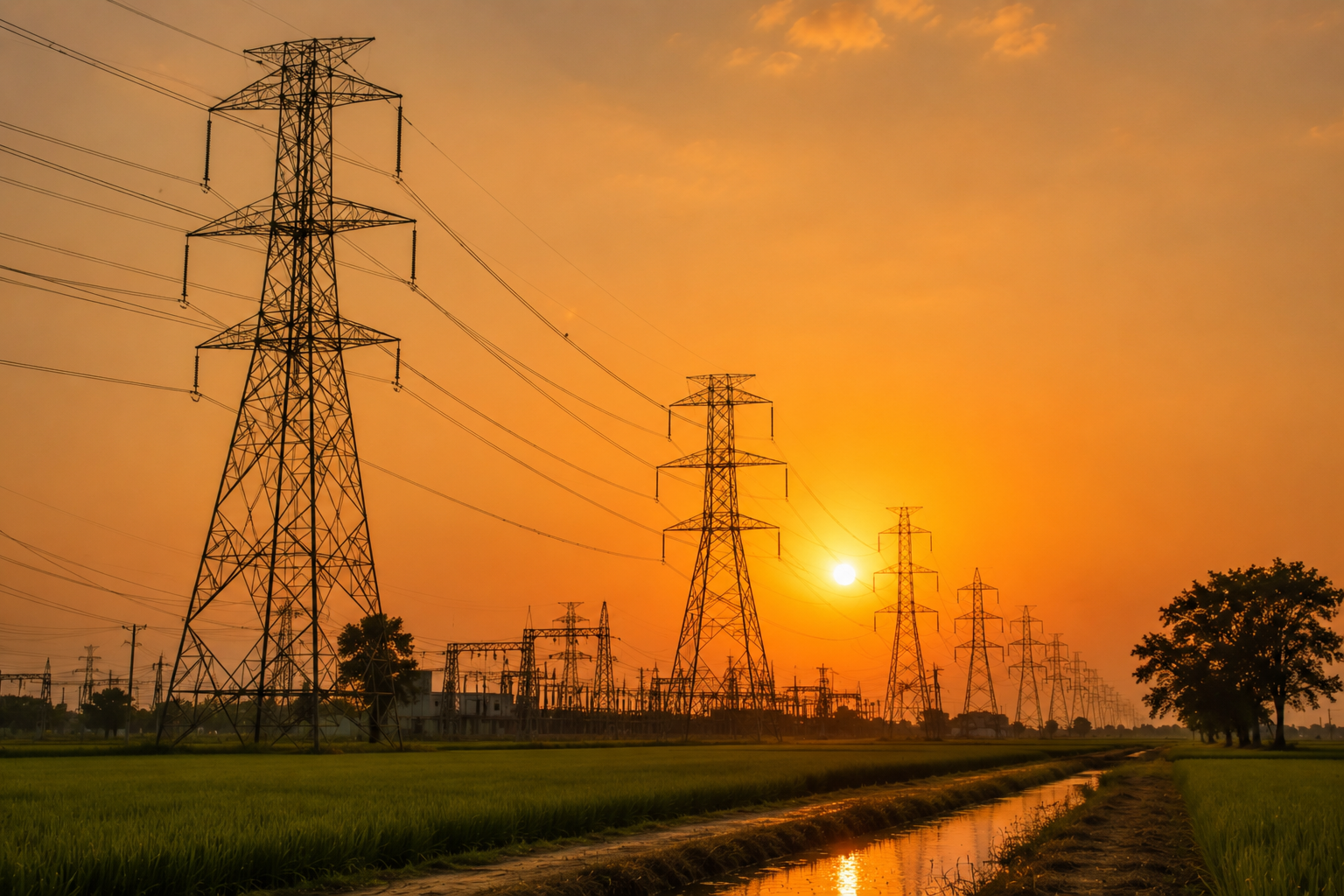
Punjab’s electricity demand has crossed 15,400 MW as the state grapples with an intense heatwave and the ongoing paddy transplantation season. The sharp rise in power consumption has put additional pressure on the power distribution system, leading to outages and supply disruptions in some areas.
The surge in demand is being driven by the widespread use of cooling appliances such as air conditioners and coolers, along with increased electricity consumption by farmers for irrigation during paddy cultivation. Agriculture remains one of the largest consumers of power in Punjab during the transplantation season, making this period particularly challenging for power authorities.
Officials said the state’s power infrastructure is being closely monitored to ensure an uninterrupted supply despite the growing demand. Power utilities have increased efforts to manage the load and minimize disruptions, especially in areas witnessing peak consumption.
The ongoing heatwave has further intensified the situation, with temperatures crossing 44°C in several districts. As a result, households, businesses, and agricultural operations are consuming significantly more electricity than usual.
Experts believe that demand could rise further if high temperatures persist in the coming days. They have urged consumers to use electricity responsibly and adopt energy-saving measures wherever possible.
The combination of extreme weather conditions and agricultural activity has created one of the season’s highest power demand periods, highlighting the importance of efficient energy management and infrastructure planning.
Despite the challenges, authorities remain confident of meeting consumer requirements and ensuring adequate power supply across the state during the critical summer months.