

Introduction
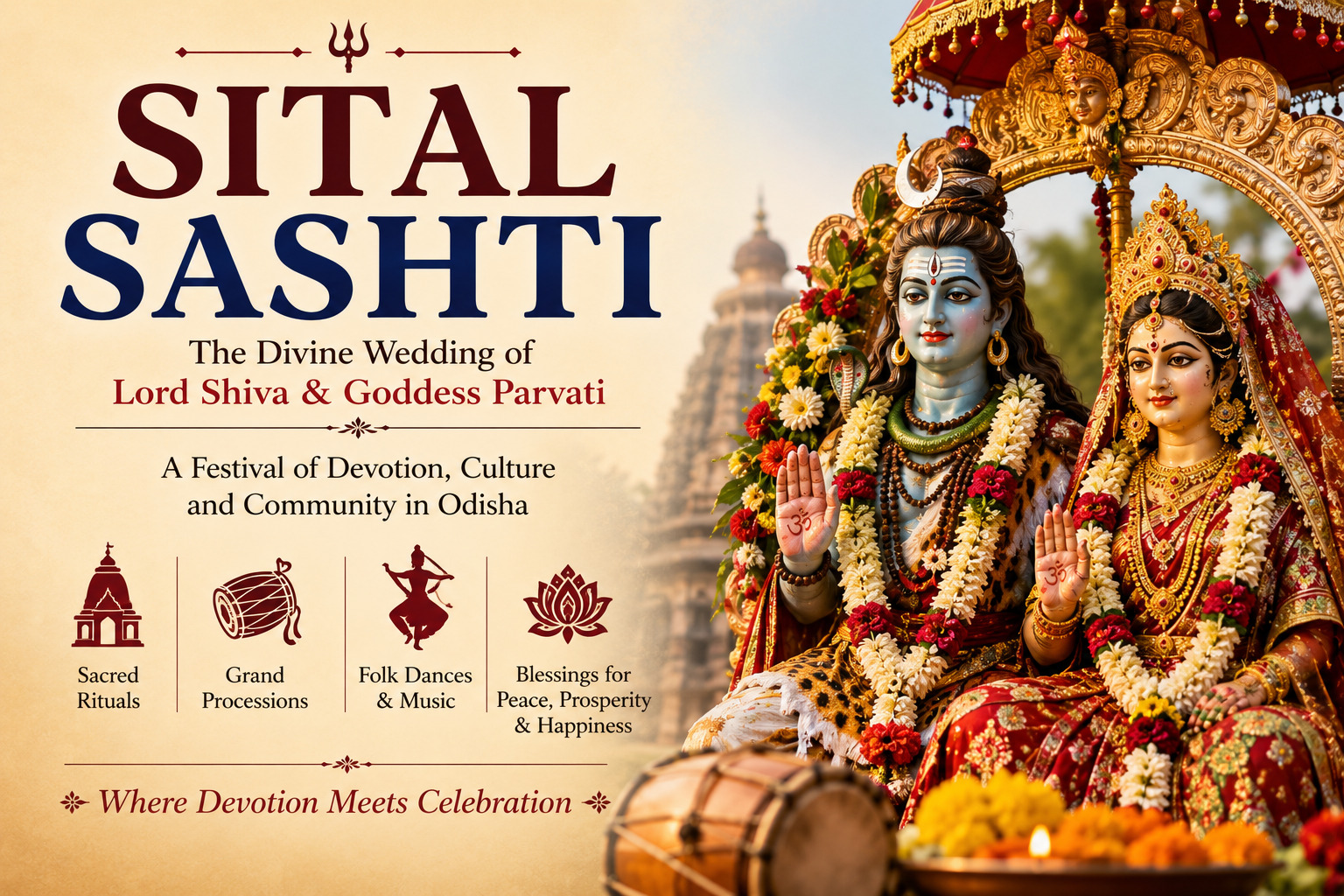
Sital Sasthi is one of the most vibrant and spiritually significant festivals celebrated in Odisha, especially in the western districts such as Sambalpur, Balangir, and Bargarh. The festival commemorates the celestial marriage of Lord Shiva and Goddess Parvati and is observed with immense devotion, elaborate processions, music, dance, and dramatic cultural performances.
Celebrated on the sixth day of the bright fortnight of the Hindu month of Jyestha, usually falling in June, Sital Sasthi transforms the streets of Odisha into a grand stage of spirituality and celebration. The festival beautifully combines mythology, devotion, art, and community participation, making it one of the most anticipated cultural events in the state.
Mythological Importance of Sital Sasthi
According to Hindu mythology, Goddess Parvati performed intense penance to win the love and acceptance of Lord Shiva. Pleased by her dedication and devotion, Lord Shiva agreed to marry her. Their marriage symbolized the union of divine masculine and feminine energies and brought balance to the universe.
Lord Shiva and Goddess Parvati are worshipped during the festival as symbols of love, sacrifice, and divine harmony. Devotees believe that participating in the celebrations brings prosperity, marital happiness, and spiritual blessings.
The term “Sital” means cool or soothing, and many people believe the festival marks the beginning of relief from the intense summer heat before the arrival of the monsoon season.
How the Festival is Celebrated
One of the most unique aspects of Sital Sasthi is that the divine wedding is celebrated exactly like a traditional human marriage. Local families voluntarily take on the roles of the bride’s and groom’s families and organize the wedding rituals with full enthusiasm.
The festivities begin with ceremonial invitations and rituals performed in temples dedicated to Lord Shiva and Goddess Parvati. The idols of the deities are then beautifully decorated with flowers, ornaments, and traditional attire.
A massive wedding procession, known as Barat, is carried through the streets with thousands of devotees dancing to the beats of dhol, cymbals, and traditional Odia music. Artists perform folk dances, martial arts, acrobatics, and mythological dramas during the procession, creating a carnival-like atmosphere.
The actual wedding ceremony is performed according to Hindu customs with Vedic chants, rituals, and symbolic marriage traditions. Large crowds gather to witness the divine union and seek blessings from the deities.
Cultural and Social Significance
Sital Sasthi is more than a religious festival; it is also a major cultural celebration that strengthens social harmony and community participation. People from different castes, communities, and backgrounds come together to organize and celebrate the event collectively.
The festival also serves as a platform for preserving Odisha’s rich folk traditions, music, and performing arts. Traditional dance forms, devotional songs, and local theatrical performances become an important part of the celebration.
For local businesses and artisans, Sital Sasthi brings economic opportunities as markets become crowded with visitors purchasing clothes, decorations, sweets, and handicrafts.
Modern-Day Celebrations
Over the years, Sital Sasthi has evolved into a major tourist attraction in Odisha. The grand processions, illuminated streets, and cultural performances attract visitors and photographers from across India. Social media and digital platforms have also helped the festival gain national attention.
Many cultural organizations now host competitions, exhibitions, and awareness programs alongside the celebrations to promote Odisha’s heritage among younger generations. Despite modernization, the festival continues to retain its spiritual essence and traditional charm.
Where Devotion Meets Celebration
Sital Sasthi stands as a remarkable example of how spirituality and culture can blend into a grand public celebration. The festival not only honours the sacred union of Lord Shiva and Goddess Parvati but also reflects the unity, artistic richness, and deep-rooted traditions of Odisha. With its colourful processions, devotional energy, and community spirit, Sital Sasthi continues to remain one of the most cherished festivals in eastern India.
Read more about the festivals in June