


Introduction
The way we shop has changed dramatically over the past decade. What once required a visit to a physical store can now be done with just a few taps on a smartphone. From groceries and clothing to electronics and furniture, almost everything is available online. As technology continues to evolve, e-commerce is becoming faster, smarter, and more convenient than ever before.
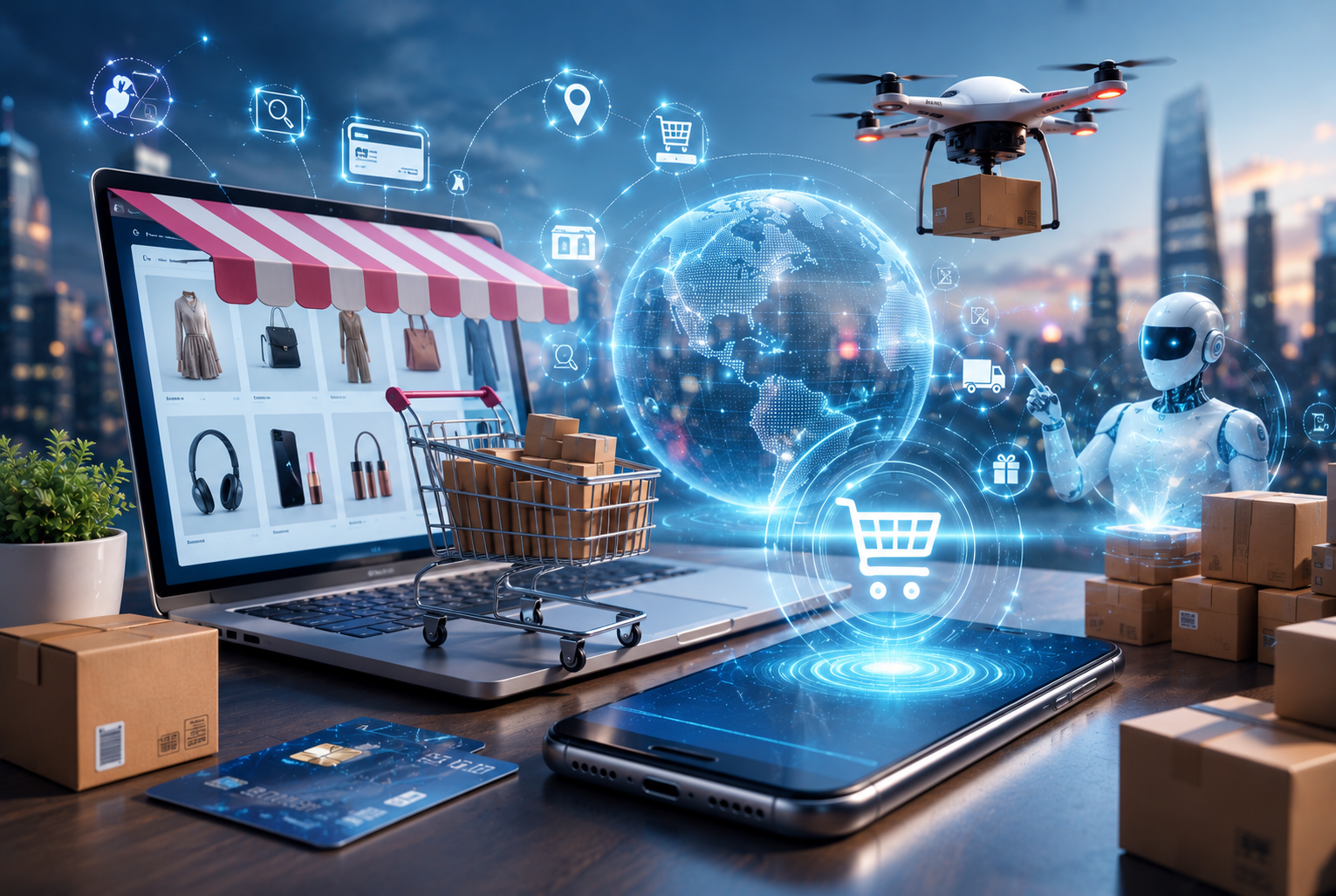
The future of e-commerce isn’t simply about selling products online. It’s about creating personalized shopping experiences, using advanced technology to understand customer needs, and making the buying journey as smooth as possible. Businesses that embrace innovation are better positioned to meet changing consumer expectations and stay competitive in an increasingly digital marketplace.
Whether you’re a business owner, entrepreneur, or online shopper, understanding the future of e-commerce can help you prepare for the exciting changes ahead.
Artificial Intelligence Will Personalize Shopping
Artificial intelligence (AI) is transforming online shopping by offering personalized product recommendations based on browsing history, preferences, and previous purchases. AI-powered chatbots also provide instant customer support, helping shoppers find products and resolve queries quickly.
As AI technology improves, online shopping experiences will become even more customized and efficient.
Mobile Commerce Will Continue to Grow
Smartphones have become the preferred shopping device for millions of people worldwide. Consumers now expect websites and apps to be fast, secure, and easy to navigate on mobile devices.
Businesses that optimize their online stores for mobile users will be better equipped to attract and retain customers.
Social Commerce Is Expanding
Social media platforms are evolving into powerful shopping destinations. Consumers can now discover products, read reviews, watch demonstrations, and complete purchases without leaving their favorite social apps.
This seamless shopping experience helps businesses reach customers where they spend much of their time online.
Faster and Smarter Delivery
Customers increasingly expect quick and reliable delivery. Businesses are investing in advanced logistics, automated warehouses, and smarter supply chain management to reduce delivery times.
Features like real-time order tracking and flexible delivery options are becoming standard expectations rather than premium services.
Sustainability Will Influence Buying Decisions
More consumers are choosing brands that demonstrate environmental responsibility. Eco-friendly packaging, ethical sourcing, and sustainable business practices are becoming important factors in purchasing decisions.
Businesses that prioritize sustainability can build stronger customer trust and long-term loyalty.
Secure Digital Payments
Payment technology continues to improve, making online transactions faster and more secure. Digital wallets, contactless payments, and advanced fraud protection help create a safer shopping experience.
Offering multiple payment options also improves convenience and customer satisfaction.
Data-Driven Customer Experiences
Modern e-commerce businesses rely on data to better understand customer behavior. Analytics help companies identify shopping trends, improve product offerings, and create more effective marketing campaigns.
Using data responsibly allows businesses to deliver more relevant experiences while strengthening customer relationships.
The Importance of Customer Experience
Price alone is no longer enough to win customer loyalty. Shoppers value easy navigation, fast customer support, transparent return policies, and personalized communication.
Businesses that consistently deliver excellent customer experiences are more likely to earn repeat customers and positive reviews.
Conclusion
The future of e-commerce is being shaped by innovation, technology, and changing customer expectations. Artificial intelligence, mobile commerce, social shopping, secure payment systems, and sustainable business practices are transforming how people buy and sell online.
For businesses, staying competitive means embracing these changes and continuously improving the customer experience. For consumers, the future promises faster, smarter, and more personalized shopping than ever before. As technology continues to evolve, e-commerce will remain one of the most dynamic and influential industries in the global economy.