


Introduction
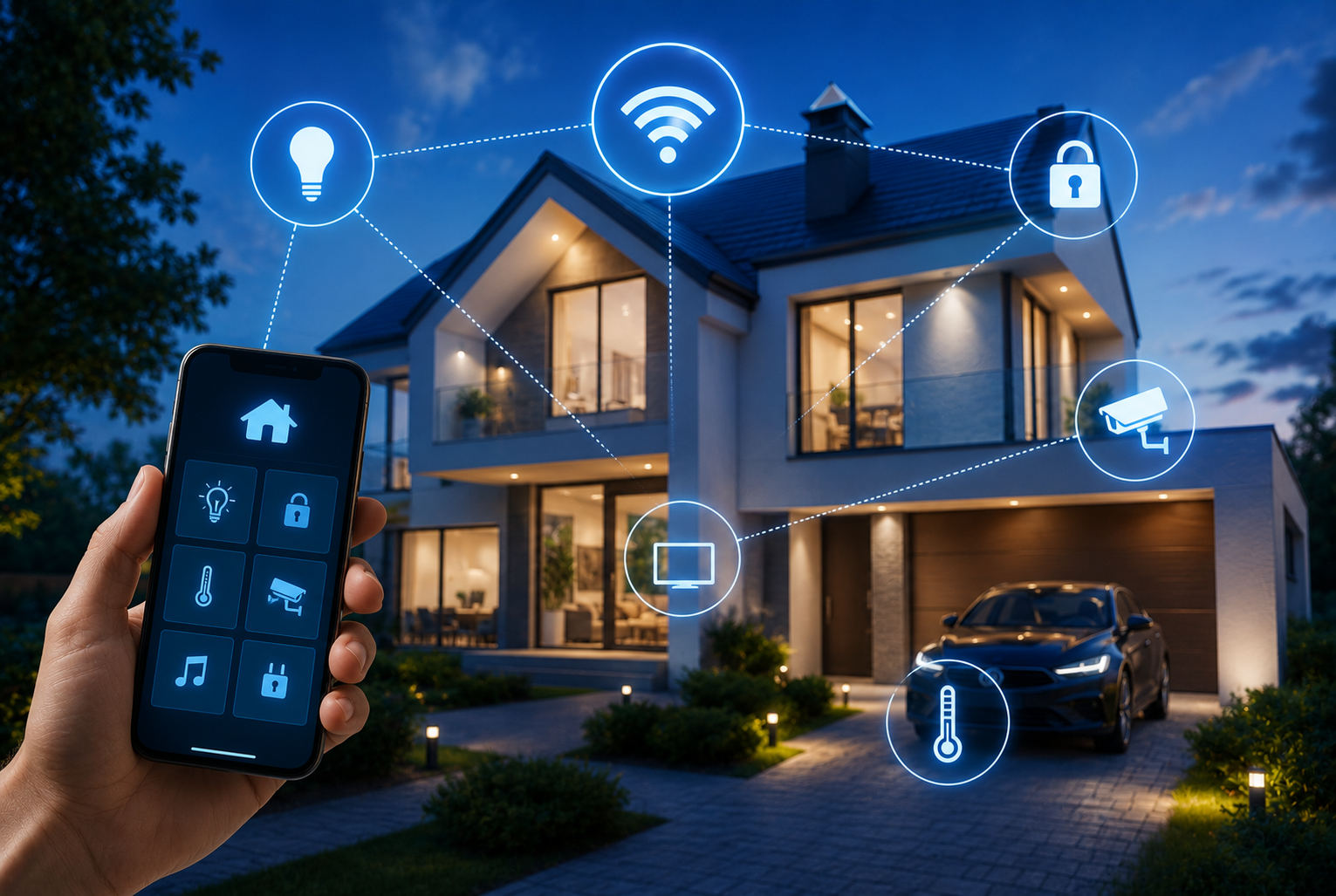
Technology continues to transform the way people live, work, and interact with their surroundings. One of the most significant innovations of recent years is the emergence of smart homes powered by the Internet of Things (IoT). Smart homes use connected devices that communicate through the internet, enabling homeowners to control various aspects of their living environment remotely and efficiently. From smart lighting and thermostats to security systems and voice assistants, IoT technology is making homes more convenient, energy-efficient, and secure. As technology advances and internet connectivity improves, the adoption of smart homes and IoT devices is rapidly increasing around the world.
Understanding Smart Homes and IoT
A smart home is a residence equipped with internet-connected devices that can be monitored, controlled, and automated remotely. These devices communicate with each other through a network, allowing users to manage household functions using smartphones, tablets, or voice commands.
The Internet of Things refers to the network of physical devices embedded with sensors, software, and connectivity features that enable them to collect and exchange data. In a smart home environment, IoT devices work together to create a seamless and intelligent living experience.
Examples of IoT devices commonly used in smart homes include smart speakers, smart thermostats, smart locks, security cameras, smart appliances, and connected lighting systems.
Growing Popularity of Smart Homes
The popularity of smart homes has grown significantly over the past decade. Several factors contribute to this trend, including advancements in wireless technology, increased internet accessibility, and declining costs of smart devices.
Consumers are increasingly attracted to the convenience and efficiency offered by smart home systems. The ability to control lights, adjust temperatures, monitor security cameras, and manage appliances from virtually anywhere has made smart living more appealing than ever.
Additionally, the widespread adoption of voice-controlled assistants has simplified the user experience, making smart technology accessible to people of all ages and technical backgrounds.
Enhanced Convenience and Automation
One of the primary benefits of smart homes is convenience. Smart devices automate routine tasks, reducing the need for manual operation and saving valuable time.
For example, smart thermostats can automatically adjust indoor temperatures based on occupancy and weather conditions. Smart lighting systems can turn lights on or off according to schedules or motion detection. Voice assistants allow users to control multiple devices using simple voice commands.
Automation enables homeowners to create personalized routines that enhance comfort and simplify daily life.
Improved Energy Efficiency
Energy efficiency is another major advantage of smart home technology. Smart devices help homeowners monitor and optimize energy usage, reducing utility costs and environmental impact.
Smart thermostats learn user preferences and adjust heating or cooling systems accordingly, minimizing energy waste. Smart lighting systems use energy-efficient LED bulbs and can automatically switch off when rooms are unoccupied.
Energy-monitoring devices provide real-time insights into electricity consumption, allowing homeowners to identify opportunities for reducing energy use and improving sustainability.
Enhanced Home Security
Security is a key concern for homeowners, and IoT technology has significantly improved residential safety. Smart security systems provide real-time monitoring and instant alerts, helping homeowners respond quickly to potential threats.
Features such as smart doorbells, motion sensors, surveillance cameras, and smart locks allow users to monitor their property remotely. Homeowners can receive notifications when unusual activity is detected and even communicate with visitors through video-enabled doorbells.
These advanced security features provide greater peace of mind and contribute to safer living environments.
Smart Appliances Transforming Daily Life
Household appliances are becoming increasingly intelligent and connected. Smart refrigerators can monitor food inventory, suggest recipes, and notify users when supplies are running low. Smart washing machines and dishwashers can be controlled remotely and programmed to operate during off-peak energy hours.
Robotic vacuum cleaners autonomously clean floors while users focus on other tasks. Smart kitchen devices help simplify meal preparation and improve efficiency. These innovations demonstrate how IoT technology is transforming everyday household activities.
Challenges and Privacy Concerns
Despite their many advantages, smart homes and IoT devices also present certain challenges. One of the most significant concerns is data privacy and cybersecurity.
Because smart devices collect and transmit large amounts of information, they may become targets for cyberattacks if not properly secured. Unauthorized access to connected devices can compromise personal privacy and security.
To address these risks, manufacturers continue to improve security features, while consumers are encouraged to use strong passwords, enable two-factor authentication, and regularly update device software.
The Future of Smart Homes
The future of smart homes looks increasingly promising as artificial intelligence, machine learning, and advanced connectivity technologies continue to evolve. Future smart homes may become even more autonomous, capable of predicting user needs and making intelligent decisions without direct input.
The expansion of 5G networks will improve device communication speeds and reliability, enabling more sophisticated smart home applications. Innovations in healthcare monitoring, environmental management, and energy optimization are expected to further enhance the smart home experience.
As technology becomes more affordable and accessible, smart homes are likely to become a standard feature of modern living.
Conclusion
The rise of smart homes and IoT devices is transforming the way people interact with their living environments. By combining connectivity, automation, and intelligent technology, smart homes offer increased convenience, energy efficiency, security, and comfort. While challenges related to privacy and cybersecurity remain important considerations, ongoing technological advancements continue to address these concerns. As IoT technology evolves and becomes more integrated into everyday life, smart homes will play an increasingly significant role in shaping the future of residential living. Embracing these innovations can help create safer, more efficient, and more connected homes for future generations.