


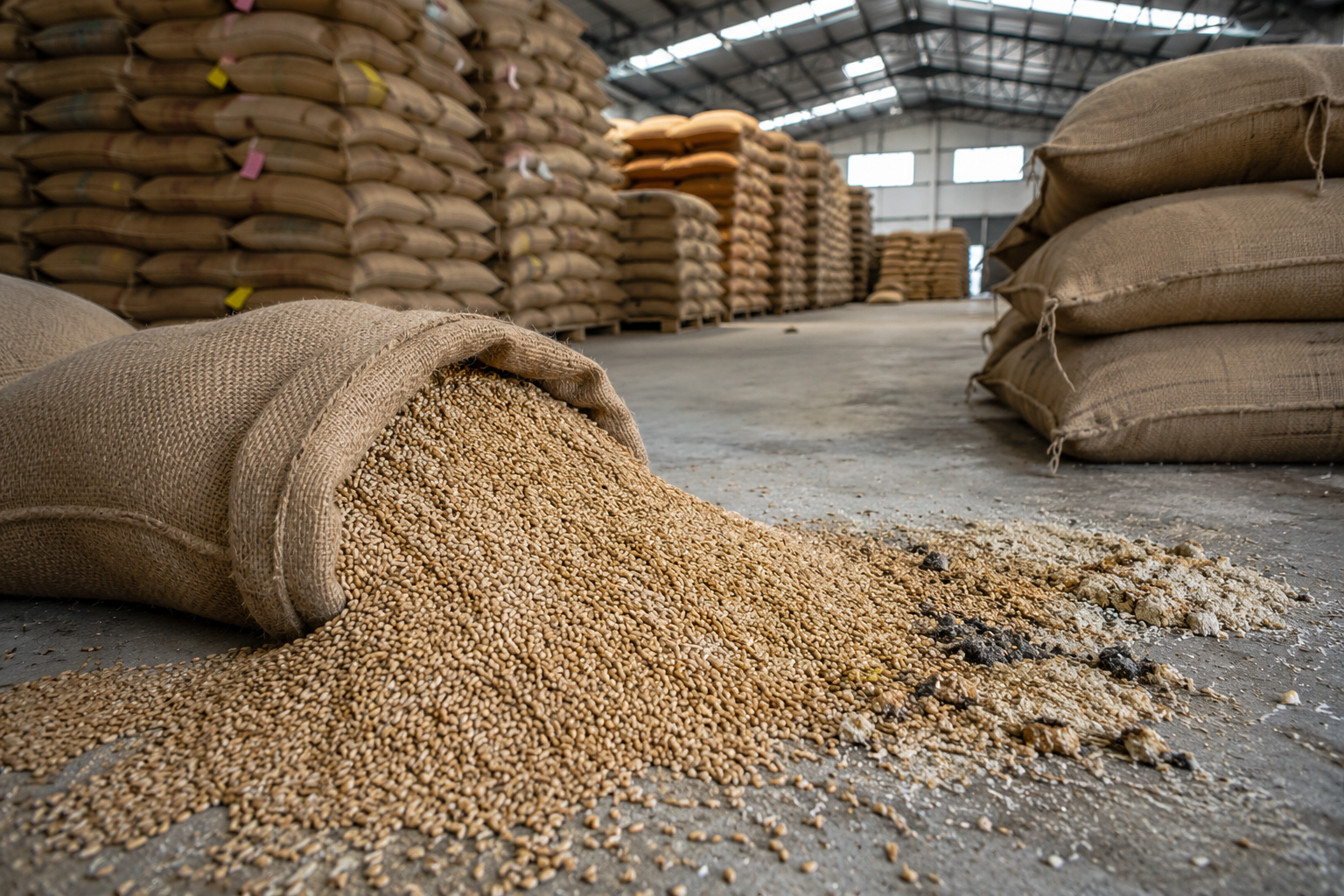
Thousands of quintals of wheat seed stored in warehouses of the Punjab State Seeds Corporation (PUNSEED) have reportedly deteriorated, raising concerns over storage management, inventory monitoring, and the handling of public resources. According to reports, the largest quantity of damaged seed was allegedly found at the corporation’s warehouse in Kartarpur.
The wheat seed had originally been procured and stored for distribution to farmers during upcoming sowing seasons. However, an audit and departmental review reportedly found that a significant quantity remained in storage for an extended period, resulting in a decline in quality and rendering portions of the stock unsuitable for agricultural use. The exact quantity of damaged seed and the financial loss involved are being assessed by authorities.
Audit observations have reportedly highlighted issues related to stock management, storage practices, and inventory monitoring. Officials are examining whether lapses in supervision, quality control, maintenance, or planning contributed to the deterioration. However, no final conclusions regarding responsibility have yet been announced.
The matter has also drawn attention to reports that the Jalandhar Urban Market Committee allegedly failed to collect its due market fee on the stored seed. The fee-related issue has been noted in administrative records, though officials have not yet determined how the lapse occurred or whether accountability will be fixed.
Representatives of PUNSEED and the Agriculture Department have stated that the matter is under examination and that corrective measures will be taken if deficiencies are established. Farmer organizations have expressed concern over the reported wastage, arguing that quality seed is essential for agricultural productivity and food security.
Agriculture experts note that effective storage infrastructure and regular quality checks are critical for maintaining seed viability. PUNSEED plays a key role in seed production, procurement, storage, and distribution across Punjab, making efficient inventory management essential.
Officials have indicated that any determination of responsibility will depend on the outcome of ongoing reviews and administrative proceedings. The case has renewed debate over accountability, financial oversight, and resource management in government-owned agricultural institutions.