

Introduction
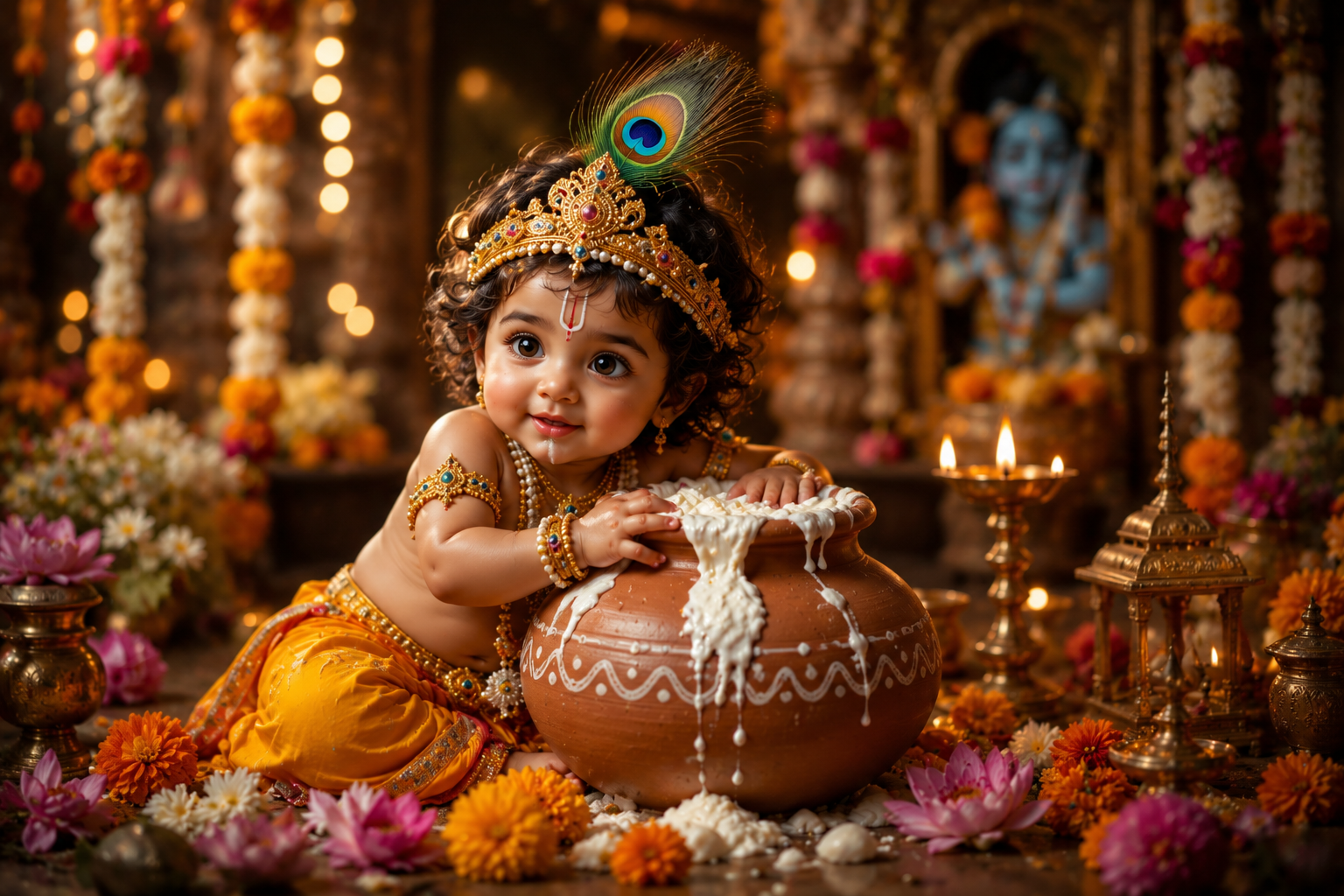
Krishna Janmashtami is one of the most loved Hindu festivals in India and many other countries. It celebrates the birth of Lord Krishna, the eighth incarnation of Lord Vishnu. In 2026, Krishna Janmashtami will be observed on Friday, September 4. The festival fills homes and temples with prayers, music, and devotion. It also reminds people to follow truth, kindness, and righteousness. Every year, millions of devotees celebrate this special occasion with great joy and faith.
The Story of Lord Krishna’s Birth
According to Hindu tradition, King Kansa ruled Mathura with cruelty. A prophecy warned him that his sister Devaki’s eighth son would end his reign. As a result, Kansa imprisoned Devaki and her husband Vasudeva.
When Krishna was born, divine powers helped Vasudeva carry the baby safely across the Yamuna River to Gokul. There, Krishna grew up under the care of Nanda and Yashoda. Later, he defeated many evil forces and finally ended Kansa’s rule. His life teaches people to stand for justice and protect the innocent.
Importance of Krishna Janmashtami
Krishna Janmashtami celebrates the victory of good over evil. It also encourages people to remain honest, fearless, and compassionate. Lord Krishna’s teachings in the Bhagavad Gita continue to guide millions around the world.
Moreover, the festival inspires people to perform their duties with dedication while staying humble. It reminds everyone that faith and patience help overcome life’s challenges.
How the Festival Is Celebrated
Devotees begin the day by observing a fast and offering prayers. They decorate temples and homes with flowers, lights, and colorful rangolis. Many families place tiny footprints near the entrance to welcome baby Krishna into their homes.
Throughout the day, temples organize bhajans, kirtans, and readings from the Bhagavad Gita. At midnight, devotees perform aarti because tradition says Lord Krishna was born at that hour. They also offer butter, milk, sweets, fruits, and tulsi leaves to the deity. In addition, children dress as Krishna and Radha, making the celebrations even more joyful.
Dahi Handi and Traditional Foods
The day after Janmashtami, many parts of India celebrate Dahi Handi. Young participants form human pyramids to break a clay pot filled with butter, curd, and sweets. This tradition recalls Krishna’s playful childhood and his love for butter.
Meanwhile, families prepare delicious fasting dishes such as Sabudana Khichdi, Makhana Kheer, Panjiri, fruit chaat, and Makhan Mishri. These dishes add a festive touch to the celebrations while following traditional fasting rules.
Conclusion
Krishna Janmashtami is more than a festival. It is a celebration of faith, devotion, and hope. It brings families and communities together through prayers and cultural traditions. Above all, Lord Krishna’s message of truth, love, and selfless action continues to inspire people across generations. Therefore, Krishna Janmashtami remains one of the most meaningful festivals in the Hindu calendar.
Read More: September: Complete Guide to Festivals, Important Days, and International Observances