

Introduction
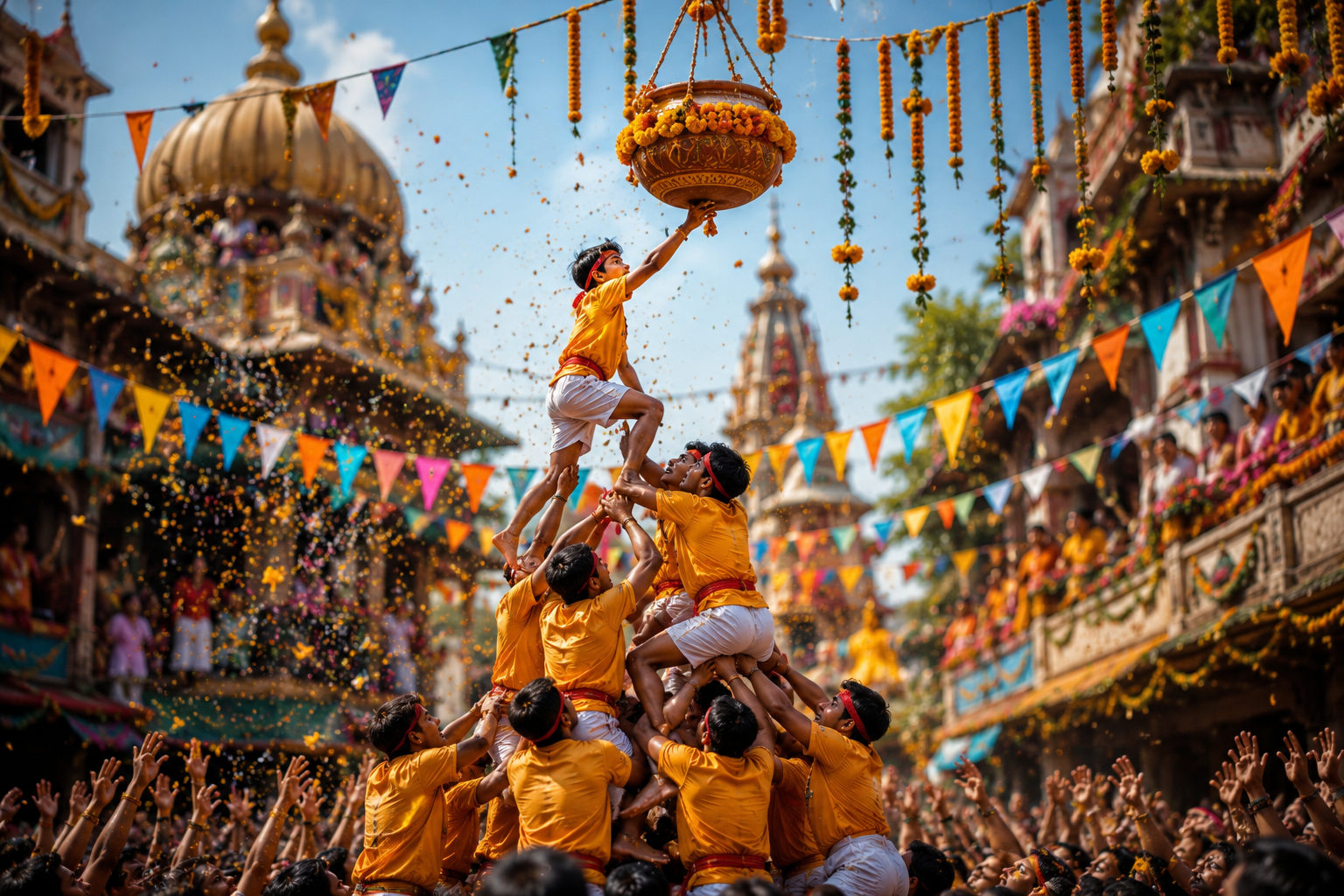
Dahi Handi, also known as Gokulashtami celebrations in many parts of India, is a vibrant festival observed shortly after Krishna Janmashtami. In 2026, Dahi Handi will be celebrated on Saturday, September 5. The festival recreates the playful childhood of Lord Krishna, who was fond of butter and often joined his friends to steal it from pots hung high above the ground. Today, this tradition has become a lively community celebration filled with music, devotion, and teamwork.
The Story Behind Dahi Handi
According to Hindu tradition, Lord Krishna loved butter from a young age. Since his mother Yashoda stored butter in pots suspended from the ceiling, Krishna gathered his friends to form human pyramids and reach the pots. His playful nature earned him the name “Makhan Chor,” which means “butter thief.”
Over time, this childhood story inspired the Dahi Handi tradition. Communities began hanging clay pots filled with curd, butter, milk, sweets, and fruits high above the streets. Groups of young participants then worked together to reach and break the pot, recreating Krishna’s famous childhood adventure.
Significance of the Festival
Dahi Handi is more than an entertaining event. It represents unity, trust, determination, and cooperation. Building a human pyramid requires every participant to support one another. Therefore, the festival reminds people that success comes through teamwork and mutual respect.
At the same time, Gokulashtami celebrations strengthen spiritual values by encouraging devotion to Lord Krishna. Devotees remember his teachings of love, compassion, humility, and righteousness. As a result, the festival combines religious faith with joyful community participation.
How Dahi Handi Is Celebrated
The celebrations begin with prayers and special worship dedicated to Lord Krishna. Temples organize bhajans, devotional songs, and cultural performances throughout the day. Many families also prepare traditional sweets and offer butter, milk, and fruits to the deity.
Later, the streets come alive with Dahi Handi competitions. Organizers suspend decorated clay pots at great heights, while teams known as “Govindas” form human pyramids to reach them. Spectators cheer as participants carefully climb over one another. Once the top member breaks the pot, the crowd celebrates with music, dancing, and showers of flower petals.
Many cities also host friendly competitions with prizes. However, organizers now place greater emphasis on safety by using protective equipment, limiting pyramid heights, and providing medical assistance during large events.
Traditional Foods Prepared
Families prepare several delicious dishes during Gokulashtami celebrations. Popular offerings include Makhan Mishri, Panjiri, Peda, Kheer, Sabudana Khichdi, Makhana Kheer, and fresh fruits. Since many devotees observe a fast, these satvik foods follow traditional fasting practices while adding joy to the festival.
Conclusion
Dahi Handi and Gokulashtami celebrations beautifully combine devotion, culture, and community spirit. The festival keeps alive the joyful childhood memories of Lord Krishna while promoting teamwork, faith, and unity. Every year, people of all ages gather to celebrate this unique tradition with enthusiasm and devotion. As communities come together to break the symbolic handi, they also strengthen the values of cooperation, friendship, and shared happiness that Lord Krishna’s life continues to inspire.
Read More: September: Complete Guide to Festivals, Important Days, and International Observances