

Introduction
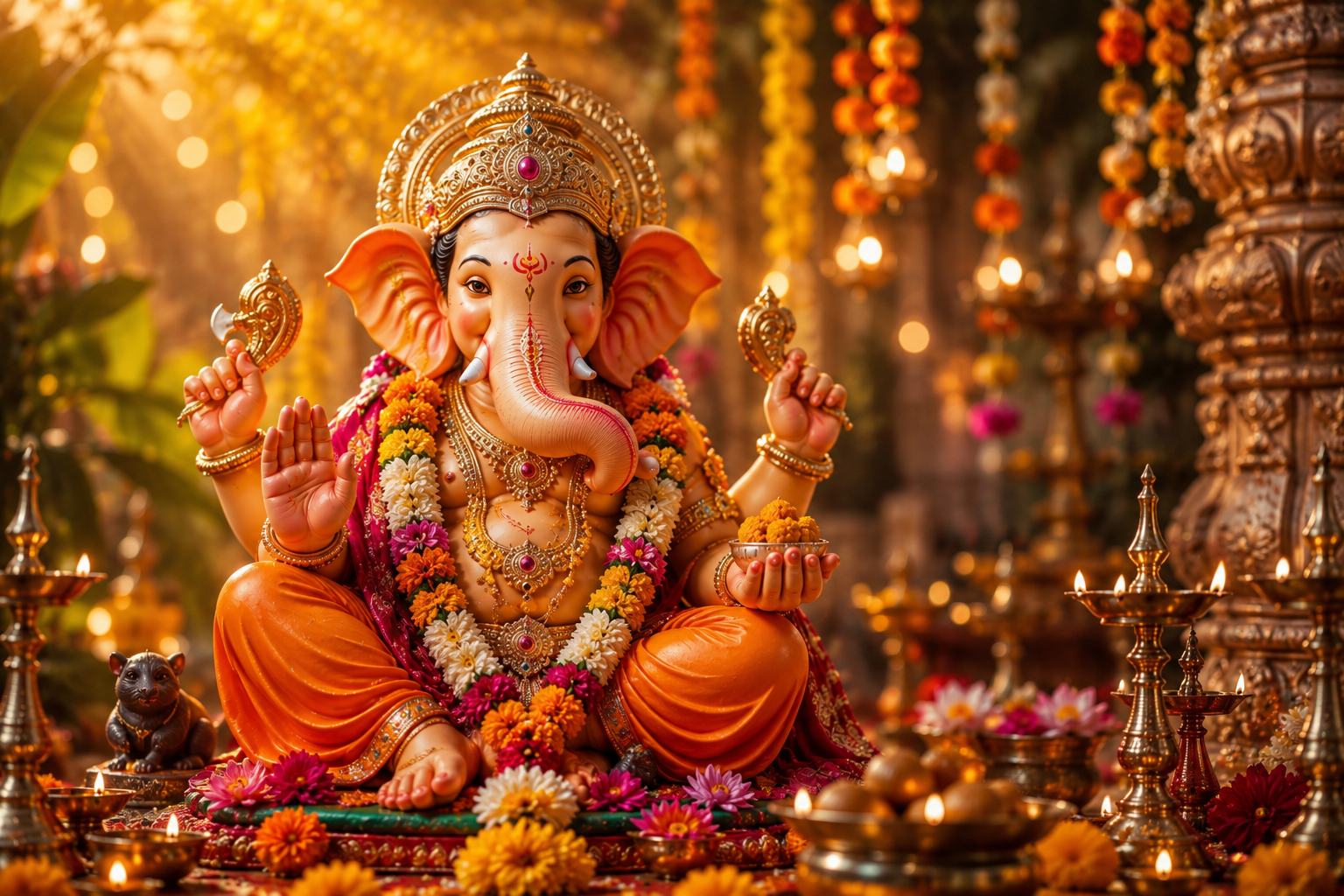
Ganesh Chaturthi is one of the most important Hindu festivals celebrated across India, especially in Maharashtra, Karnataka, Andhra Pradesh, Telangana, and Goa. The festival marks the birth of Lord Ganesha, the elephant-headed deity who is worshipped as the remover of obstacles and the god of wisdom, prosperity, and new beginnings. In 2026, Ganesh Chaturthi will be celebrated on Monday, September 14.
The festival brings families and communities together through prayers, cultural programs, and vibrant processions. It also reflects India’s rich spiritual and cultural heritage.
The Story Behind Ganesh Chaturthi
According to Hindu mythology, Goddess Parvati created Lord Ganesha from sandalwood paste and gave him life. She asked him to guard the entrance while she bathed. When Lord Shiva returned, Ganesha refused to let him enter because he did not know who he was. Enraged, Shiva severed Ganesha’s head.
Seeing Parvati’s grief, Shiva promised to restore the child to life. His followers brought the head of the first living creature they found, which was an elephant. Shiva placed the elephant’s head on Ganesha’s body and blessed him as the leader of all gods. He also declared that devotees would worship Ganesha before beginning any important task.
Importance of the Festival
Ganesh Chaturthi symbolizes wisdom, success, and the removal of obstacles. Devotees seek Lord Ganesha’s blessings before starting new jobs, businesses, studies, or important life events.
Moreover, the festival teaches values such as humility, patience, and devotion. It also strengthens family bonds and encourages communities to celebrate together with harmony and respect.
How Ganesh Chaturthi Is Celebrated
The celebrations begin with the installation of beautifully decorated Lord Ganesha idols in homes and public pandals. Priests perform the Pranapratishtha ritual, inviting the deity into the idol through sacred prayers.
Every day, devotees offer flowers, fruits, coconut, durva grass, and sweets while performing aarti and chanting devotional hymns. Temples and community organizations arrange bhajans, cultural performances, charity activities, and spiritual discourses throughout the festival.
Many families observe fasts and spend time reading sacred texts dedicated to Lord Ganesha. Children also participate in art competitions, music programs, and storytelling events that highlight the deity’s life and teachings.
Ganesh Visarjan
The festival usually lasts from one and a half days to eleven days, depending on family traditions. It concludes with Ganesh Visarjan, the ceremonial immersion of the idol in rivers, lakes, or the sea.
During the procession, devotees sing devotional songs, dance, and chant “Ganpati Bappa Morya.” The immersion symbolizes the cycle of creation and dissolution while expressing faith that Lord Ganesha will return the following year to bless his devotees.
Today, many people choose eco-friendly clay idols and natural decorations to help protect the environment.
Traditional Foods
Food plays an important role during Ganesh Chaturthi. The most popular offering is modak, which is believed to be Lord Ganesha’s favourite sweet. Other festive dishes include ladoo, puran poli, kheer, coconut sweets, sundal, and various satvik preparations served as prasad.
Conclusion
Ganesh Chaturthi is more than a religious festival. It is a celebration of faith, wisdom, unity, and cultural traditions. The festival reminds people to begin every new journey with sincerity, courage, and devotion. As families and communities gather to worship Lord Ganesha, they strengthen bonds of love and preserve traditions that have inspired generations. Through prayers, service, and eco-friendly celebrations, Ganesh Chaturthi continues to spread the message of hope, prosperity, and harmony.