


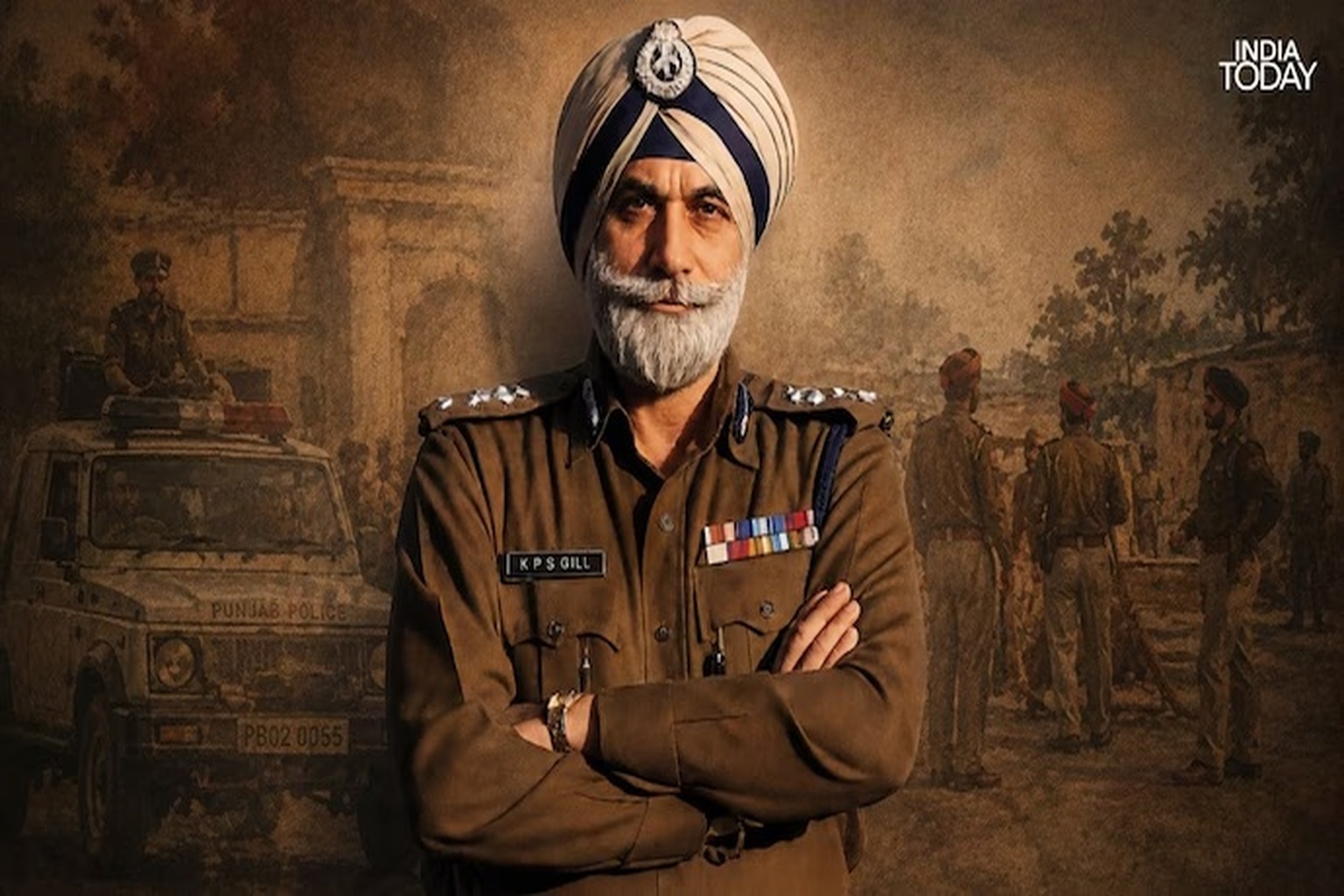
Chandigarh: The name KPS Gill has returned to the spotlight after the release of Satluj, a film that was originally titled Punjab ’95. The movie is inspired by the life of human rights activist Jaswant Singh Khalra. It has reopened discussions about Punjab’s militancy era, police action, and human rights. The film has also renewed public interest in KPS Gill, one of India’s most debated police officers.
Who Was KPS Gill?
Kanwar Pal Singh Gill, popularly known as KPS Gill, was an Indian Police Service (IPS) officer. He served as the Director General of Police (DGP) in Punjab during the late 1980s and early 1990s. This was the period when Punjab faced violent militancy linked to the Khalistan movement.
Gill was born in Ludhiana in 1934. He joined the IPS in 1958 and began his career in Assam. Later, the government transferred him to Punjab to lead the state’s fight against militancy.
Many people credit Gill for leading strong police operations that reduced militant violence. His leadership during Operation Black Thunder II in 1988 became a major turning point. Security forces successfully regained control of the Golden Temple complex from armed militants. Over the next few years, violence declined. Punjab slowly returned to normal life.
Because of these achievements, many supporters called him the “Supercop of Punjab.”
Why Was KPS Gill Controversial?
Despite his success against militancy, Gill remained a highly controversial figure.
Human rights groups accused the Punjab Police of carrying out fake encounters, illegal detentions, custodial killings, and enforced disappearances during anti-terror operations. Several organisations claimed innocent people also became victims during this period.
Gill rejected these allegations throughout his career. He argued that Punjab faced extraordinary security challenges and that strong police action was necessary to defeat terrorism.
His public image suffered another setback after a court convicted him in the famous Rupan Deol Bajaj sexual harassment case. The case attracted national attention and remained one of the biggest controversies of his career.
As a result, opinions about KPS Gill remain sharply divided. Some people see him as the officer who restored peace in Punjab. Others believe his tenure raised serious human rights concerns.
What Is Punjab ’95 About?
The film Punjab ’95, now released as Satluj, tells the story of Jaswant Singh Khalra. He was a human rights activist who investigated thousands of unidentified cremations in Punjab during the militancy period.
Khalra claimed that many missing people had died after being taken into police custody. His investigation attracted national and international attention.
In September 1995, unknown men abducted Khalra outside his home in Amritsar. A later CBI investigation concluded that Punjab Police personnel kidnapped and murdered him. Several police officials were convicted in the case.
KPS Gill was never convicted in connection with Khalra’s murder. He consistently denied any involvement.
The film highlights Khalra’s struggle to uncover the truth. It also raises questions about justice, accountability, and human rights during one of Punjab’s most difficult periods.
Why Has the Film Created Debate?
The film remained unreleased for several years because of certification issues. Reports said authorities suggested several changes before granting clearance. Eventually, the makers released the film under the new title Satluj.
The movie has revived debate over Punjab’s past. Some viewers believe it highlights important human rights issues. Others argue it presents only one side of a complex history.
The discussion reflects how sensitive the militancy period remains, even decades later.
KPS Gill’s Legacy Today
KPS Gill continues to be one of the most debated figures in Indian policing. His supporters remember him for helping defeat militancy and restoring peace in Punjab. His critics point to allegations of human rights violations during police operations.
The release of Satluj has brought these debates back into public focus. It has encouraged many people to revisit Punjab’s history and examine the difficult choices made during those turbulent years.
History often remembers leaders through different perspectives. KPS Gill’s legacy reflects that reality. For some, he was the officer who saved Punjab from terrorism. For others, his tenure represents unanswered questions about justice and accountability.
As conversations continue, both KPS Gill and Punjab ’95 remain important parts of understanding Punjab’s modern history.