

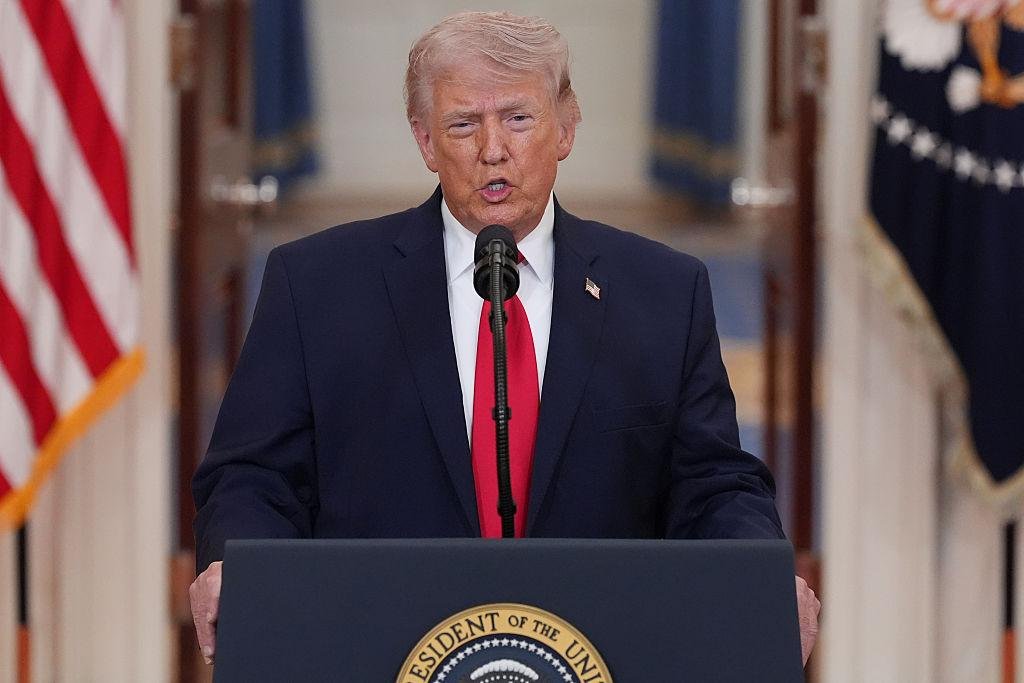
July 23, 2026 — The ongoing tensions between the United States and Iran have taken an interesting turn, with U.S. President Donald Trump recently describing the situation as a “skirmish.” At the same time, he hinted that a diplomatic agreement with Tehran could happen “very soon.”
While that might sound somewhat reassuring on the surface, the reality on the ground tells a more complicated story. Both nations continue to exchange warnings, and military activity in the region has not slowed down. For many observers, this raises an important question: is this really just a minor conflict, or something that could escalate into a larger crisis?
What Does “Skirmish” Really Mean?
When President Trump uses the word “skirmish,” he’s choosing a term that sounds relatively mild. In simple terms, a skirmish refers to a small, brief, and often limited confrontation between opposing forces. It’s not considered a full-scale war, but rather a contained clash that doesn’t involve long-term military engagement.
However, in international politics, words carry weight. Calling the situation a skirmish may be an attempt to calm public fears or signal that the U.S. does not see the conflict as spiraling out of control. It can also be a strategic move to leave room for diplomacy, rather than escalating tensions through stronger language.
But critics argue that this description might underplay the seriousness of what’s happening. There have been reports of attacks on ships, military movements, and growing instability in the region. These are not typically associated with something minor. So while “skirmish” may sound reassuring, it doesn’t necessarily reflect the full picture.
The Strait of Hormuz: Why It Matters


One of the biggest concerns in this situation is the Strait of Hormuz, a narrow but extremely important waterway in the Middle East. It connects the Persian Gulf to the open ocean and is one of the world’s most critical routes for oil transportation.
Roughly a fifth of the world’s oil supply passes through this narrow stretch of water every day. That means any disruption here can have immediate global consequences, especially for countries that rely heavily on imported oil, like India and many European nations.
Because of its importance, the Strait of Hormuz has always been a sensitive geopolitical hotspot. Iran has previously threatened to block or disrupt traffic through the strait during times of conflict. Even the possibility of such action can cause global oil prices to spike and create uncertainty in financial markets.
Recent reports of attacks on ships in nearby waters have only added to these concerns. While it’s not clear how far things will go, even limited disruptions can have a ripple effect across the global economy.
A Delicate Balance Between Conflict and Diplomacy
What makes the current situation particularly complex is the contrast between strong rhetoric and hints of diplomacy. On one hand, both the U.S. and Iran have issued warnings and shown signs of military readiness. On the other, there are ongoing signals that a diplomatic agreement could be within reach.
This kind of mixed messaging is not unusual in international relations. Leaders often try to maintain pressure while keeping negotiation channels open. By describing the situation as a skirmish, Trump may be trying to avoid escalating tensions further, while still maintaining a firm stance.
At the same time, saying that a deal could happen “very soon” suggests that back-channel talks or negotiations may already be underway. If true, this could be a positive sign, especially given the high stakes involved.
Global Impact and What Comes Next
Even though this conflict is happening thousands of miles away from many countries, its impact is truly global. Oil prices, trade routes, and regional stability are all closely tied to what happens in the Middle East.
For countries like India, which import a large portion of their energy needs, any disruption in the Strait of Hormuz can lead to higher fuel prices and economic pressure. Businesses, airlines, and everyday consumers can all feel the effects.
That’s why the world is watching this situation closely. While the term “skirmish” suggests something limited, the strategic importance of the region means that even small conflicts can have far-reaching consequences.
Final Thoughts
At this point, the situation between the United States and Iran remains uncertain. On one side, there is hope for diplomacy and a possible agreement. On the other, there are clear signs of tension that cannot be ignored.
Describing the conflict as a “skirmish” may help reduce immediate panic, but it doesn’t change the underlying risks—especially with critical areas like the Strait of Hormuz involved.
The coming days will be crucial. If diplomacy succeeds, this could become a story of de-escalation and cooperation. But if tensions rise further, the world could be looking at a much more serious crisis.
For now, all eyes remain on how both nations choose to move forward—through dialogue, or through continued confrontation.
Leave a Reply