

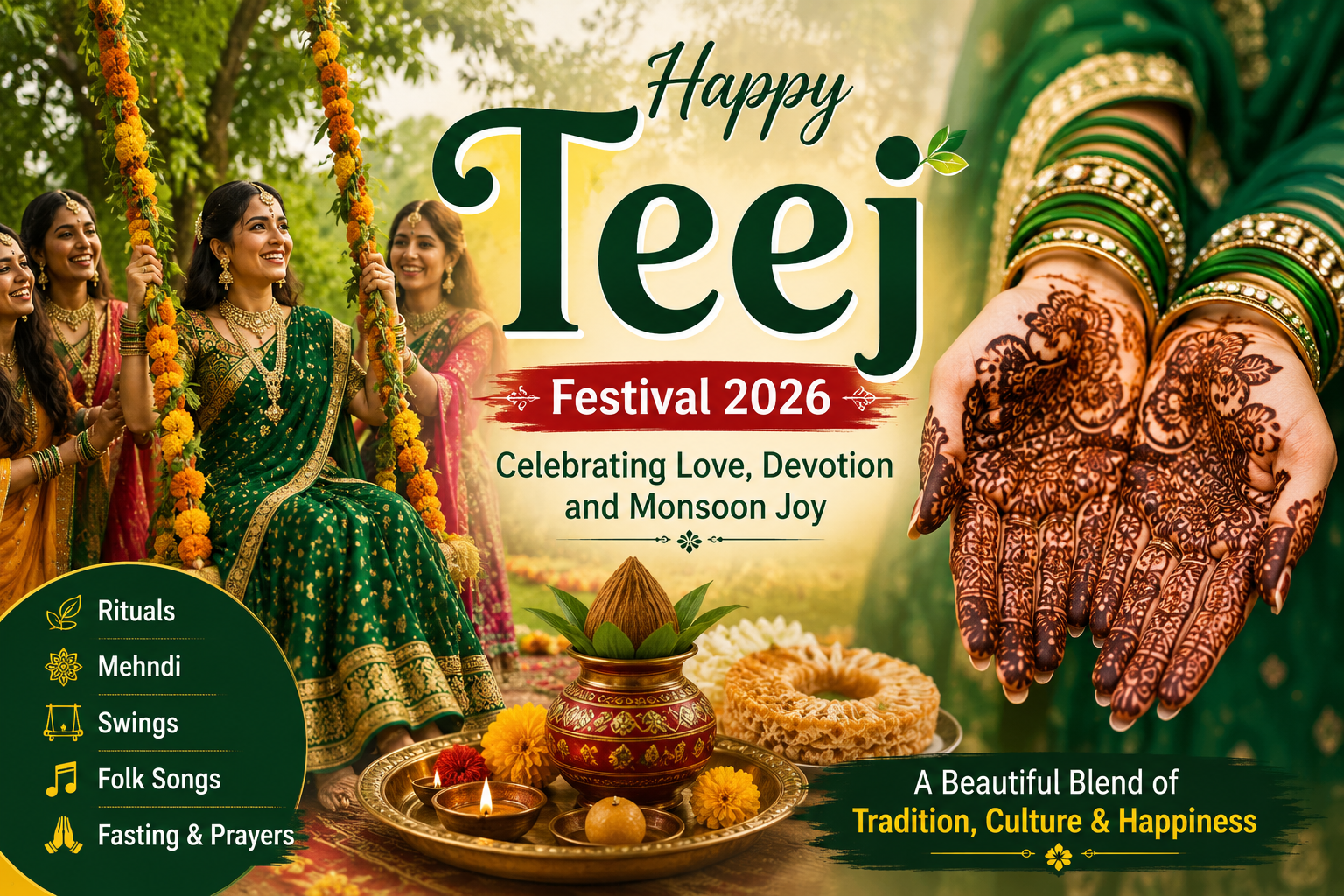
The Teej festival is one of the most vibrant and culturally rich celebrations in India, especially observed by women across states like Rajasthan, Punjab, Haryana, and Uttar Pradesh. Deeply rooted in tradition, Teej marks the arrival of the monsoon season and celebrates the union of Lord Shiva and Goddess Parvati. Beyond its religious significance, the festival is a beautiful expression of joy, devotion, and feminine energy.
The Meaning and Significance of Teej
Teej is not just a festival—it is an emotion. It symbolizes marital bliss, love, and devotion. Married women observe fasts and pray for the long life and well-being of their husbands, while unmarried girls participate with hopes of finding a loving life partner.
The festival also has a strong connection with nature. Celebrated during the monsoon, Teej represents renewal, greenery, and life. After the scorching summer heat, the rains bring relief and happiness, which is reflected in the songs, dances, and colorful traditions associated with Teej.
Types of Teej Celebrated in India
There are mainly three types of Teej festivals celebrated in different parts of India:
1. Hariyali Teej
This is the most popular form of Teej, celebrated during the Shravan month. Women dress in green attire, symbolizing nature and prosperity. It is widely celebrated in Rajasthan and North India with great enthusiasm.
2. Kajari Teej
Observed mainly in Uttar Pradesh and Bihar, Kajari Teej focuses on folk traditions and songs. Women sing Kajari songs that reflect love, longing, and the beauty of the rainy season.
3. Hartalika Teej
This is a more spiritually intense version of Teej, where women observe strict fasting without food and water. It commemorates Goddess Parvati’s dedication and penance to marry Lord Shiva.
Rituals and Traditions
Teej is known for its rich rituals that bring communities together. Women wake up early, take a ritual bath, and wear new clothes, often in shades of green, red, or yellow. Jewelry, bangles, and sindoor play an important role in completing the traditional look.
Fasting (Vrat)
Fasting is a central part of Teej. Many women observe a strict fast throughout the day. It is believed that this act of devotion strengthens marital bonds and brings blessings.
Mehndi (Henna)
Applying mehndi is one of the most loved traditions of Teej. Women decorate their hands with intricate henna designs, which are considered auspicious and symbolize happiness and love.
Swings (Jhulas)
Decorated swings tied to tree branches are a signature element of Teej celebrations. Women gather, sing traditional songs, and enjoy swinging, creating a lively and joyful atmosphere.
Singing and Dancing
Folk songs and dances are an essential part of Teej. These songs often narrate stories of love, devotion, and the beauty of monsoon. The celebrations are filled with laughter, music, and cultural expression.
Cultural Importance of Teej
Teej holds immense cultural value, especially in rural and traditional communities. It provides a platform for women to come together, celebrate their identity, and express their emotions freely.
In many regions, newly married women return to their parental homes to celebrate their first Teej. Families exchange gifts, sweets, and clothes, strengthening relationships and bonds.
The festival also highlights the importance of preserving traditions in a rapidly modernizing world. Despite urbanization, Teej continues to be celebrated with great enthusiasm, blending old customs with new lifestyles.
Traditional Food and Sweets
No festival is complete without delicious food, and Teej is no exception. Although many women fast, special dishes are prepared for the family and for breaking the fast.
Some popular Teej delicacies include:
- Ghewar (a sweet dessert popular in Rajasthan)
- Malpua
- Kheer
- Puri and sabzi
These traditional foods add sweetness to the celebrations and are often shared among family and friends.
Teej in Modern Times
In today’s fast-paced world, the essence of Teej remains strong. While urban celebrations may be simpler, the spirit of the festival is very much alive. Social media, community events, and cultural programs have made Teej even more popular among younger generations.
Many organizations now host Teej-themed events, including dance competitions, mehndi contests, and fashion shows. These events help keep the tradition alive while making it more engaging and inclusive.
Emotional and Social Connection
Teej is more than rituals—it is about emotions. It brings joy, strengthens relationships, and provides a sense of belonging. For many women, it is a day to relax, celebrate, and connect with their roots.
The festival also promotes positivity and gratitude. It reminds people to appreciate relationships, nature, and cultural heritage.
Conclusion
The Teej festival is a perfect blend of tradition, devotion, and celebration. From fasting and prayers to music and dance, every aspect of Teej reflects happiness and cultural richness. It is a festival that not only honors love and marriage but also celebrates life, nature, and togetherness.
As the monsoon rains bring freshness to the earth, Teej brings joy to hearts. Whether celebrated traditionally or in a modern way, the essence of Teej remains timeless—spreading happiness, love, and positivity across generations.