
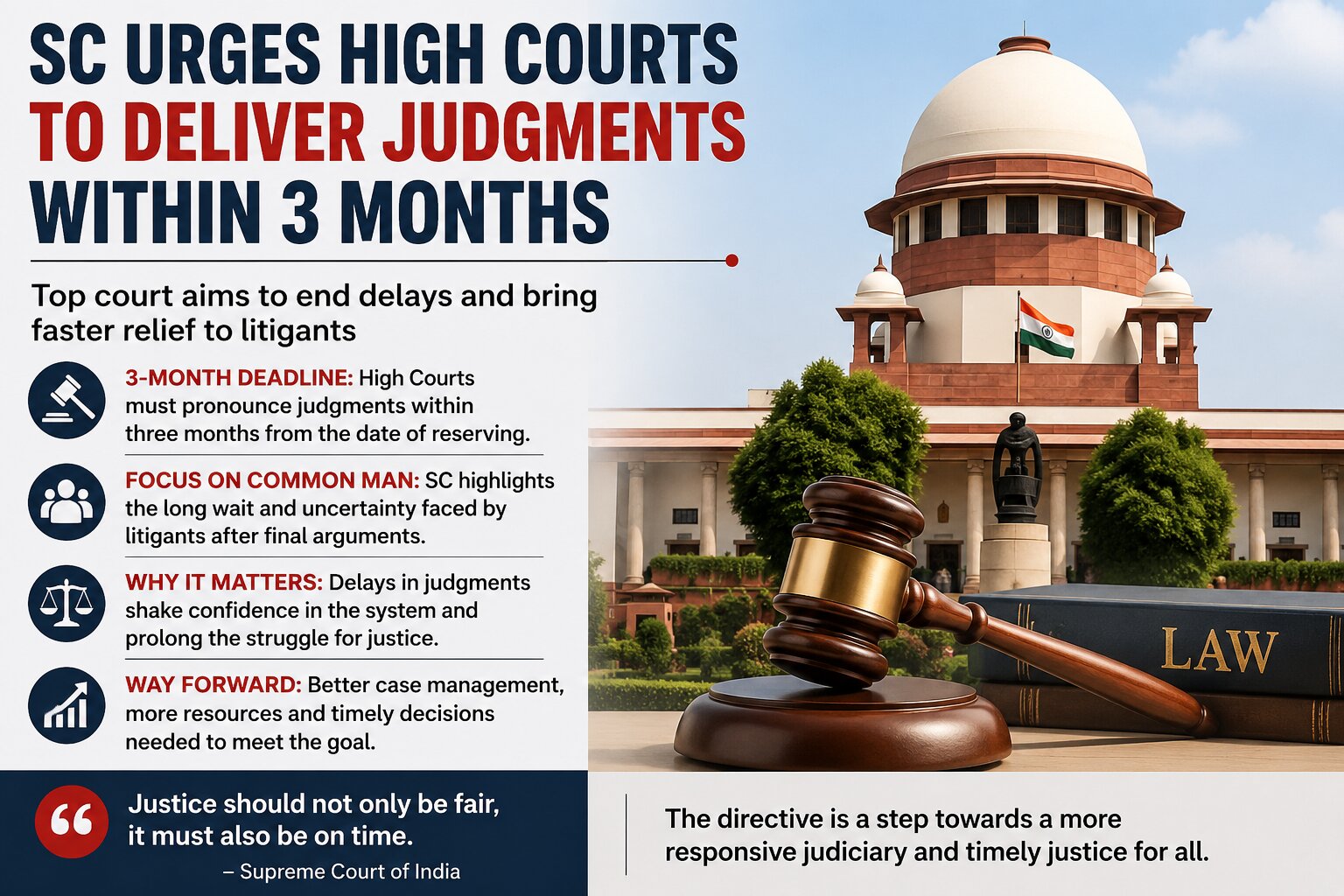
The Supreme Court of India has directed High Courts in all across the country to deliver their verdicts within three months from the date reserved for it, in an effort to provide speedy justice to the people who have to wait a long time in courts.
The direction is welcome as the highest court has pointed out an aspect of litigation that many litigants are reluctant to acknowledge—the post-seconds period. This is usually the time when doubt is highest for those who are embroiled in legal controversy. A decision that may affect their career, family or future is on the horizon, and there’s a long stretch of silence, with days becoming months.
With this in mind, the Supreme Court ruled that ‘cases not should stay pending for a long time after being heard and while the judgment is pending’. The court noted that longer delays in this process could cause individuals to experience uncertainty for an extended period of time and result in a negative effect on the trust of the system.
The court is attempting to instill some urgency and discipline in the process by imposing a three-month cut-off date. The concept is simple: justice should not only be just, but it should be delivered in a timely manner.
The transfer was greeted with a lot of positive feedback from the legal fraternity as one of their longstanding grievances has been addressed by the move. With courts already dealing with a large backlog of cases, a fixed timeline could help in better case management and quicker resolution.
Meanwhile, experts admit there are real-world issues. High Courts conduct a huge number of cases and judges are frequently under pressure. Achieving the above deadlines, regular infrastructure, staffing and case management system improvements may be required.
However, it is clear from the Supreme Court that one shouldn’t have to wait long to reach a decision. Though it may be delayed, the change is a positive sign of a more responsive and efficient judiciary system.
This affords a ray of hope for thousands of people who throughout the country have hoped for justice, which will not be denied long after it is sought.