

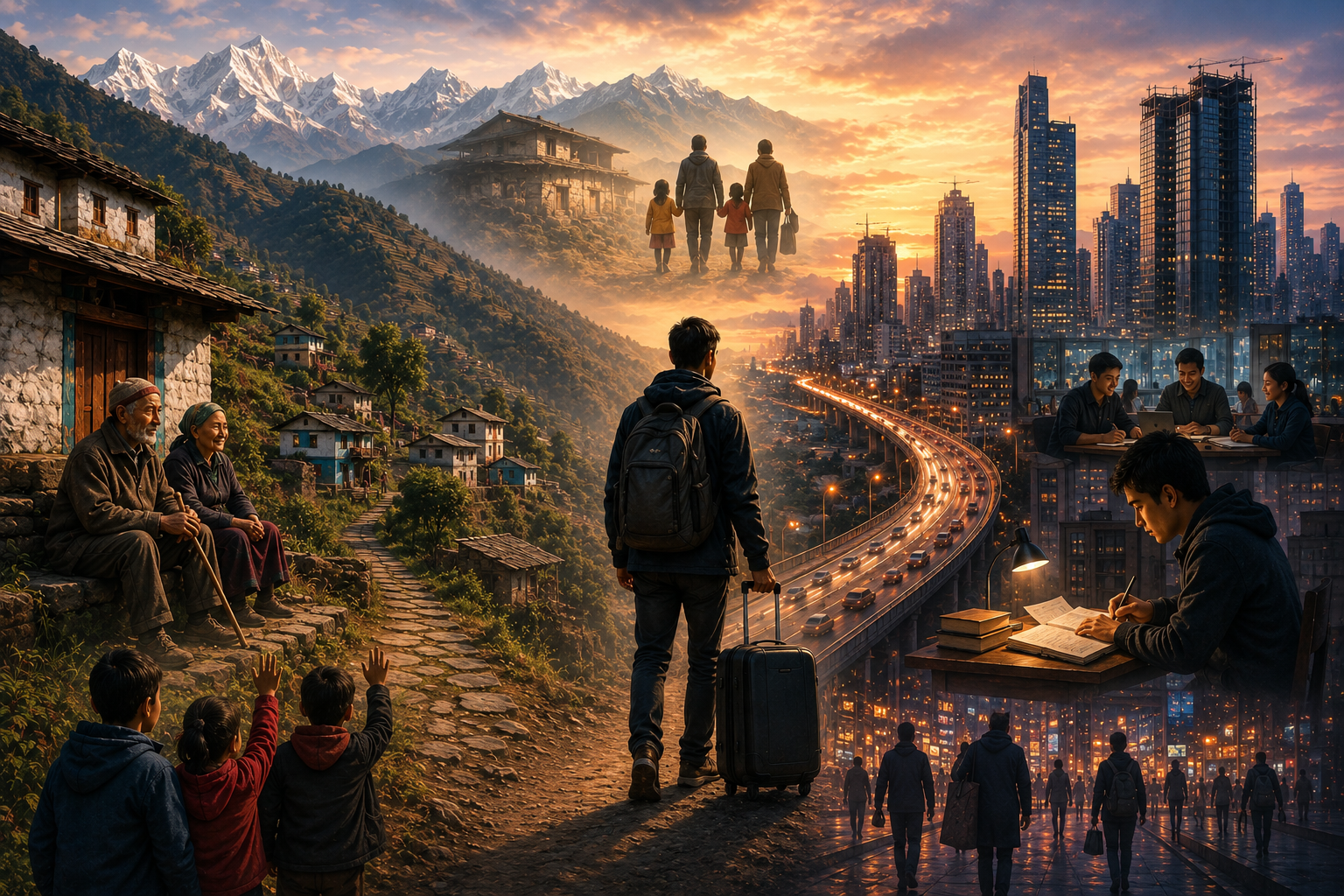
I’m from the mountains, and as I myself have experienced migration. I’m not alone in the pahadi community, we all came down from the mountains to the cities to find better opportunities. This experience enabled me to discover the good and the bad of going to another place.
There is a lack of job prospects in many mountain villages. Small businesses and agriculture typically are not enough to support families. People are attracted to cities by better schools, colleges, health facilities, and employment opportunities. These were some of the reasons that influenced my family’s decision to move as well.
There are lots of benefits to living in the city. More Schools, better facilities and more career options. But migration poses challenges, too. It’s not easy to leave behind the home, culture, relatives and peaceful environment of the mountains behind. Many people still feel connected to their roots, even after they have moved away.Based on personal experience, migration is more than just a place change, it is an emotional journey. Cities offer opportunity but the mountains will never go away.
(Until this day) my grandparents still reside in our village in the mountains. Every time I go there, I see how things are different there. They had forgotten to lock many houses in the village, as families have migrated to the cities. The young people have left, most of them to seek education and work; many elderly people remain in their homes and on their land. When I think about my grandparents having to live without their children and grandchildren, I understand that migration is not just an economic decision, it is an emotional one, too. It can leave a gap between the members of the family, although they are still linked by love and memorie conclusion, migration from mountains to cities is driven by the desire for a better future. However, efforts should be made to improve employment, education, and infrastructure in mountain regions so that people can have opportunities without being forced to leave their