

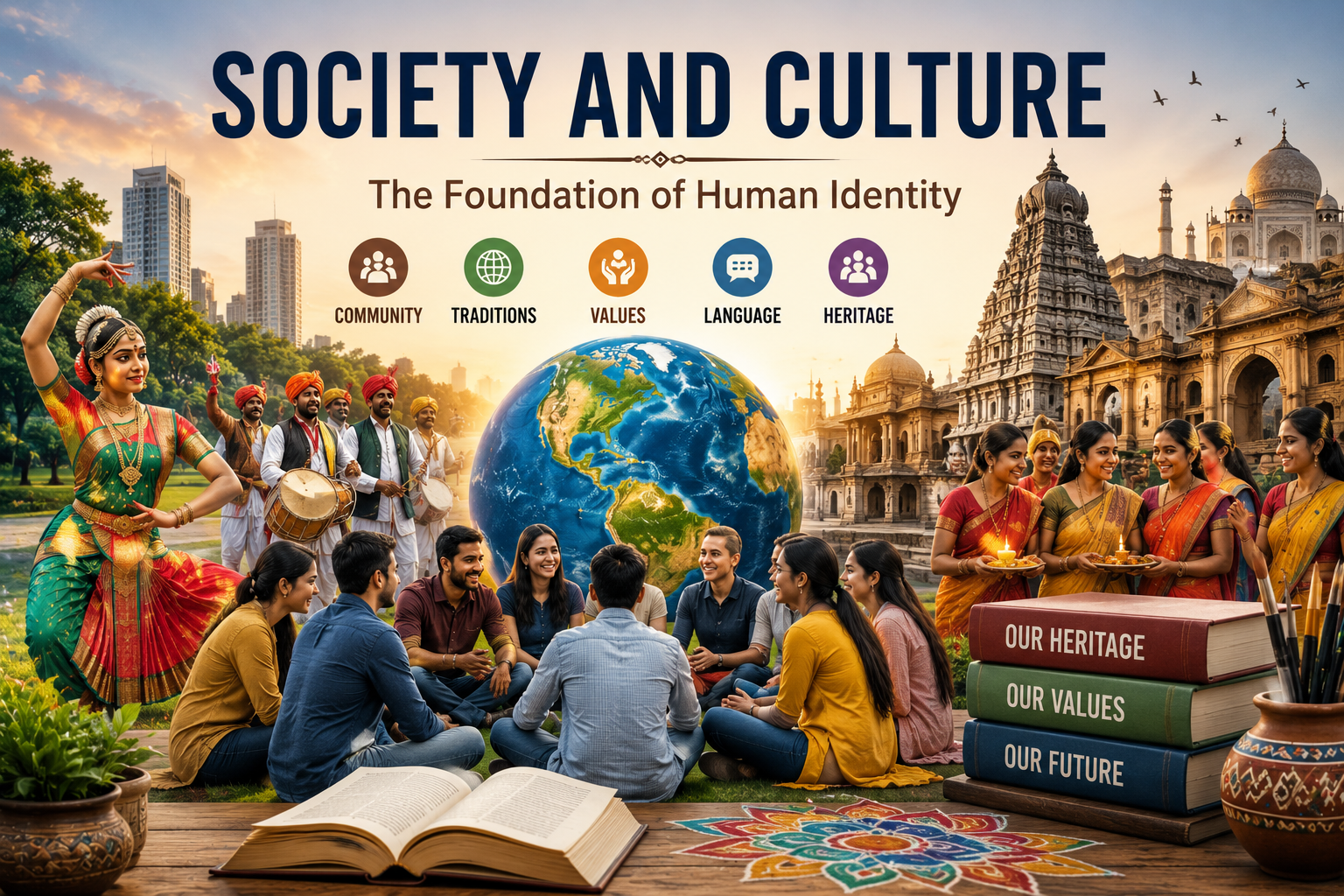
Society and Culture: The Foundation of Human Identity
Society and culture are essential parts of human life. They influence the way we think, behave, communicate, and interact with others. Society refers to a group of people living together and sharing common institutions, relationships, and responsibilities. Culture, on the other hand, includes the beliefs, values, traditions, customs, and practices that give meaning to our lives. Together, society and culture help shape our identity and provide a sense of belonging.
From childhood, we are influenced by the society and culture around us. The way we greet people, celebrate festivals, speak our language, and follow traditions are all examples of cultural influence. When I reflect on my own life, I realize that my family, community, and cultural background have played a significant role in shaping my values and habits. These influences guide our decisions and help us understand our place in the world.
The Role of Family in Human Society
Family is often considered the basic unit of society. It is the first place where individuals learn important life skills, values, and social responsibilities. Families provide support, security, and guidance that help people grow into responsible members of society.
Parents and elders play an important role in teaching cultural traditions and moral values. Through daily interactions, children learn respect, kindness, honesty, and responsibility. Family celebrations, traditions, and shared experiences strengthen emotional bonds and create a sense of identity.
In India, family continues to play a central role in people’s lives. Family members often support one another during difficult times and celebrate achievements together. Personally, many of the values I hold today, such as respect for others, hard work, and compassion, were learned from my family. These lessons continue to influence how I view life and interact with others.
Families also contribute to social stability by raising individuals who can positively contribute to their communities. For this reason, family remains a vital connection between society and culture.
Language and Identity
Language is one of the most important elements of culture. It is not only a tool for communication but also a powerful way of expressing thoughts, emotions, traditions, and values. Language helps people understand who they are and where they come from.
The language we speak connects us to our roots and cultural heritage. It carries stories, customs, and knowledge that have been passed down through generations. When we preserve our language, we preserve an important part of our identity.
India provides a remarkable example of linguistic diversity. The country is home to numerous languages and dialects, each with its own unique history and cultural significance. This diversity contributes to the richness of Indian society and reflects the country’s multicultural character.
I believe that speaking our native language creates a special connection with our family and community. At the same time, learning new languages opens doors to new opportunities and helps us understand different cultures. Therefore, it is important to preserve our traditional languages while embracing multilingual learning.
Globalization and Indian Culture
Globalization has transformed the modern world by making communication, travel, and access to information easier than ever before. These developments have influenced cultures around the globe, including Indian culture.
Today, people have access to international food, fashion, music, entertainment, and ideas. Young people interact with individuals from different countries through the internet and social media, creating opportunities for cultural exchange and learning.
Some people worry that globalization may weaken traditional values and cultural heritage. However, Indian culture has demonstrated a remarkable ability to adapt while preserving its core identity. Throughout history, Indian traditions have evolved alongside social and technological changes without losing their significance.
For example, festivals such as Diwali, Holi, Eid, Christmas, and Baisakhi continue to be celebrated with enthusiasm across the country. Traditional art forms, classical music, dance, handicrafts, and regional cuisines remain important aspects of cultural life. At the same time, Indian culture has gained international recognition and appreciation.
In my view, globalization should not be seen as a threat but as an opportunity to learn from other cultures. By remaining open to new ideas while respecting our traditions, we can benefit from progress without losing our cultural roots.
The Importance of Preserving Culture
Culture connects us to our history and helps us understand our heritage. It provides a sense of identity, belonging, and continuity across generations. Preserving culture does not mean resisting change; rather, it means respecting traditions while adapting to modern circumstances.
Families, educational institutions, cultural organizations, and governments all play important roles in protecting cultural heritage. Encouraging young people to learn about their traditions, languages, and history helps ensure that cultural knowledge is passed on to future generations.
Cultural preservation also promotes diversity and mutual understanding. When people appreciate their own heritage, they are often more willing to respect and value the cultures of others.
Society, Culture, and the Future
As societies continue to evolve, culture remains an important source of stability and identity. Modern technology, globalization, and social change will continue to influence how people live and interact. However, strong cultural values can help communities maintain their sense of identity while embracing progress.
The challenge for future generations is to find a balance between preserving cultural traditions and adapting to new realities. By combining respect for heritage with openness to innovation, societies can continue to grow while maintaining their unique character.
Conclusion
Society and culture are deeply interconnected and play a significant role in shaping who we are. Families provide the foundation for our values and personal development, while language preserves our heritage and strengthens community bonds. In an increasingly connected world, Indian culture demonstrates how traditions can coexist with modern influences and global opportunities.
By valuing our cultural heritage and remaining open to new ideas, we can build a society that is both progressive and rooted in its identity. Ultimately, society and culture give meaning to our lives, connect us to our past, and help guide us toward the future.