

Introduction
In today’s digital age, social media has become an inseparable part of our daily lives. From scrolling through feeds in the morning to sharing updates at night, people across the world rely on social media platforms for communication, information, and entertainment. What started as a simple way to connect with friends has now evolved into a powerful tool that influences opinions, shapes trends, and even drives global movements. Social media is not just a technology—it is a force that affects individuals, businesses, and society as a whole.
The Rise of Social Media
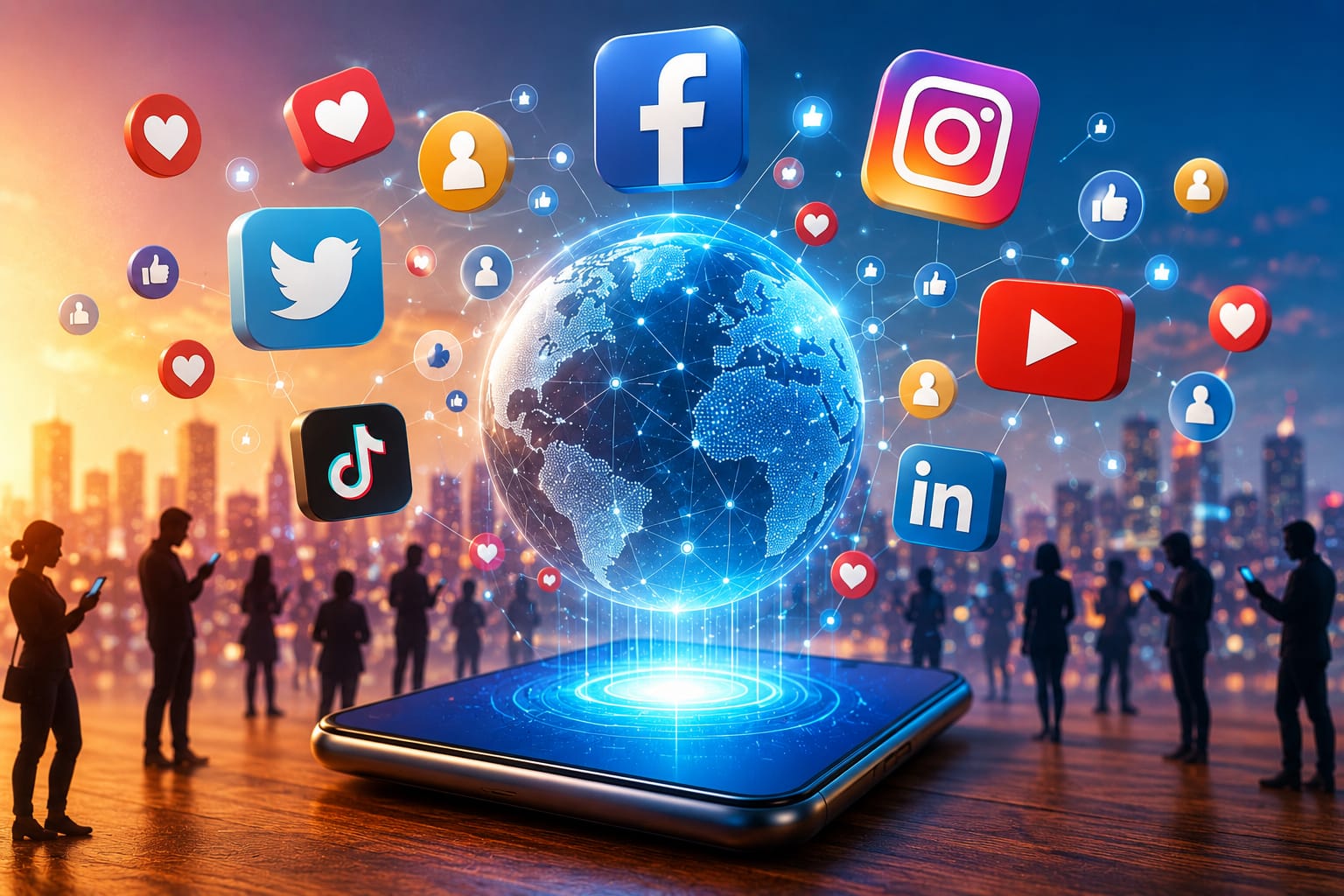
Social media platforms have grown rapidly over the past decade. With the increasing availability of smartphones and internet access, millions of users join these platforms every day. Apps like Facebook, Instagram, Twitter, and YouTube have become household names.
This rapid growth has transformed how people communicate. Messages that once took days to deliver can now be shared instantly. People can connect with others across the globe, breaking geographical barriers and creating a truly interconnected world.
Social Media as a Communication Tool
One of the biggest advantages of social media is its ability to enhance communication. It allows people to stay connected with friends and family, share experiences, and express their thoughts freely.
For businesses, social media has opened new doors for customer interaction. Companies can directly communicate with their audience, understand their needs, and provide quick responses. This two-way communication has improved customer satisfaction and brand loyalty.
Impact on Society and Culture
Social media has a strong influence on society and culture. It shapes public opinion, spreads awareness, and brings attention to important issues. Movements related to social justice, environmental protection, and human rights have gained momentum through social media platforms.
At the same time, it also influences lifestyle choices, fashion trends, and even language. Viral content spreads quickly, making certain ideas and behaviors popular within a short period.
Role in Education and Learning
Social media is not just for entertainment; it also plays a significant role in education. Students and teachers use platforms to share knowledge, discuss ideas, and collaborate on projects.
Online tutorials, educational videos, and study groups have made learning more accessible and interactive. It has become easier for students to gain information beyond textbooks and explore new areas of interest.
Business and Marketing Opportunities
Social media has revolutionized the way businesses operate. It provides a cost-effective platform for marketing and advertising. Small businesses, in particular, benefit from social media as they can reach a large audience without huge investments.
Influencer marketing is another growing trend where individuals with a strong online presence promote products and services. This has created new career opportunities and transformed the marketing industry.
Challenges and Negative Effects
Despite its many advantages, social media also has its drawbacks. One of the major concerns is the spread of misinformation. False news can spread rapidly, leading to confusion and misunderstanding.
Another issue is the impact on mental health. Excessive use of social media can lead to stress, anxiety, and low self-esteem, especially among young users. Comparing oneself with others online can create unrealistic expectations and dissatisfaction.
Privacy is also a major concern. Personal information shared on social media can be misused if not handled carefully.
The Role of Responsibility
With great power comes great responsibility. Users must be mindful of what they post and share. Spreading positive and accurate information can make social media a better place for everyone.
Parents, educators, and governments also play a role in guiding responsible use. Awareness about digital safety, privacy, and online behavior is essential in today’s world.
The Future of Social Media
The future of social media looks promising and dynamic. With advancements in technology such as artificial intelligence, virtual reality, and augmented reality, social media experiences will become more immersive.
New platforms and features will continue to emerge, offering innovative ways to connect and communicate. However, maintaining a balance between online and offline life will remain crucial.
Social Media and Youth Development
Social media plays a significant role in shaping the mindset and development of young people. Today’s youth are highly connected to the digital world, and social media acts as a platform for self-expression, creativity, and learning. Many young individuals use these platforms to showcase their talents, build personal brands, and even start careers at an early age. It also helps them stay informed about global trends, educational opportunities, and career options. However, the influence of social media on youth is not always positive. Excessive use can lead to addiction, distraction from studies, and reduced face-to-face interaction. It may also expose young users to harmful content or unrealistic standards of success and beauty. Therefore, it is essential for young people to develop a balanced approach towards social media usage. Guidance from parents, teachers, and society can help them use these platforms productively while avoiding negative impacts. When used wisely, social media can become a powerful tool for personal growth, skill development, and building a brighter future.
Conclusion
Social media is a powerful tool that has transformed the way we live, communicate, and interact. It offers numerous benefits, from connecting people to creating opportunities for businesses and education. However, it also comes with challenges that require careful handling.
By using social media responsibly and wisely, individuals can harness its potential for positive impact. As technology continues to evolve, the role of social media in shaping our future will only grow stronger.