


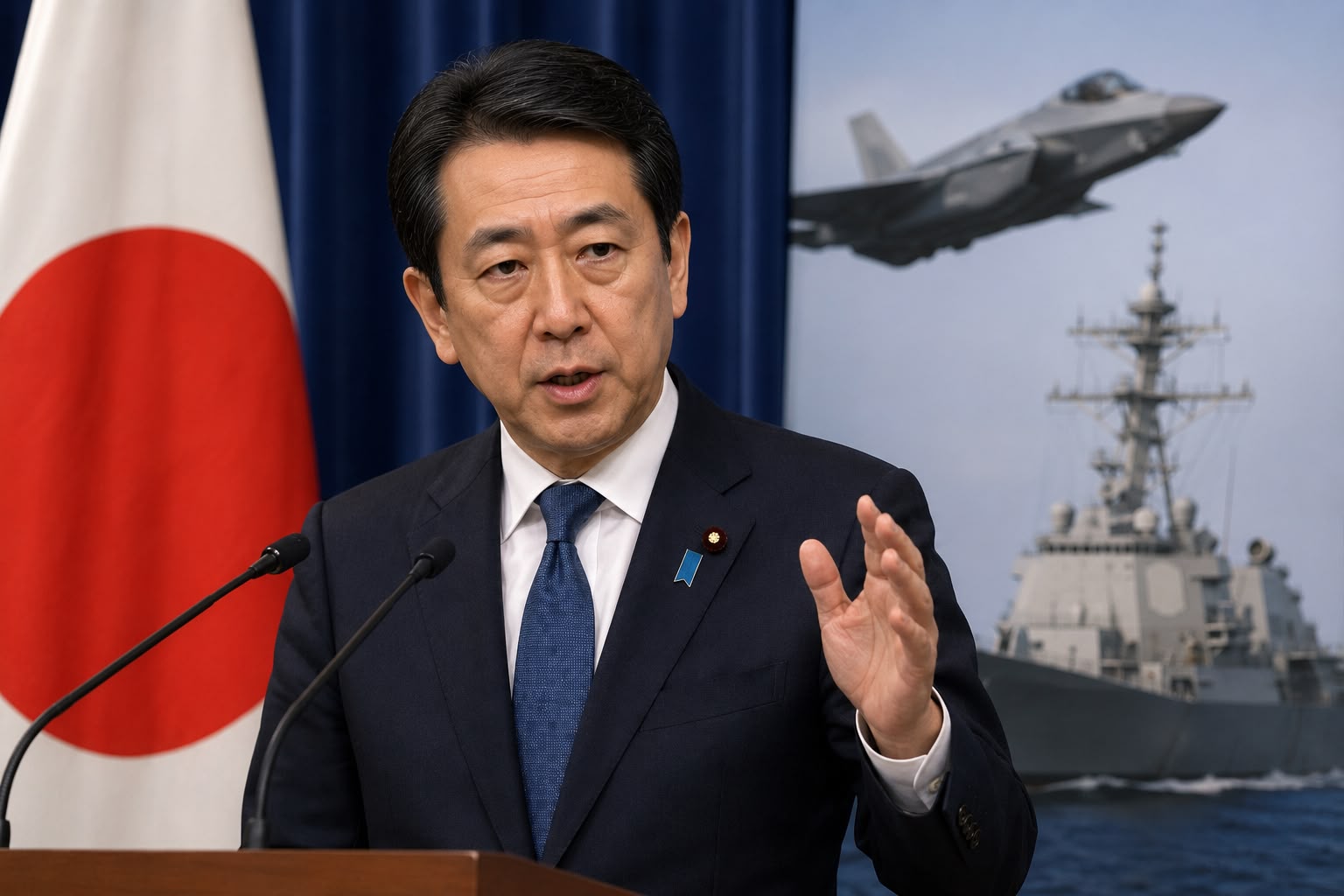
Japan’s Defence Minister Koizumi has said that strengthening the country’s defence capabilities is “critical” to preventing war and maintaining peace in an increasingly complex regional security environment. Speaking during an interview with the BBC, Koizumi emphasized that Japan’s ongoing military modernization efforts are intended to deter potential aggression rather than provoke confrontation.
According to the minister, Japan’s defence buildup is aimed at ensuring stability and discouraging any actions that could threaten regional peace. He stressed that a credible deterrent is essential in a period marked by growing geopolitical uncertainty, rapid military developments, and evolving security challenges across the Indo-Pacific region.
Koizumi’s remarks come as Japan continues to implement significant changes to its defence policy. In recent years, Tokyo has announced plans to increase defence spending, acquire advanced military capabilities, and strengthen cooperation with allies. Japanese officials argue that these measures are necessary in response to a changing security landscape, including missile threats, military expansion by regional powers, and tensions in East Asia.
Government leaders have pointed to concerns surrounding the security situation in the Indo-Pacific, including developments in the East and South China Seas, North Korea’s missile programs, and broader strategic competition among major powers. These factors have contributed to Japan’s decision to pursue what officials describe as a more robust but still defensive security posture.
Japan’s defence policy remains shaped by its post-World War II pacifist constitution, particularly Article 9, which renounces war as a sovereign right and limits the country’s military role. However, successive governments have interpreted the constitution in ways that allow Japan to maintain self-defence forces and take a more active role in ensuring national security. Officials maintain that the country’s military doctrine remains focused on self-defence and deterrence rather than offensive operations.
Supporters of Japan’s defence modernization efforts argue that stronger military capabilities contribute to regional stability by reducing the likelihood of conflict. Security analysts who share this view contend that credible deterrence can discourage potential adversaries from taking aggressive actions, thereby helping preserve peace.
However, critics have raised concerns about the possibility of an expanding regional arms competition and increasing military expenditures across Asia. Some observers warn that growing defence budgets among neighboring countries could heighten tensions and complicate diplomatic efforts to manage disputes.
Japan has also deepened security cooperation with allies and partners, particularly the United States, while expanding ties with other Indo-Pacific nations. Joint military exercises, intelligence-sharing initiatives, and strategic partnerships have become important components of Tokyo’s broader security strategy. Japanese officials say these partnerships help strengthen regional stability, support freedom of navigation, and reinforce a rules-based international order.
The country’s evolving defence strategy is expected to have significant implications for regional geopolitics, alliance structures, and diplomatic relations across Asia. While debate over the pace and scale of military modernization continues, Japanese leaders insist that strengthening defence capabilities is a necessary step to prevent conflict. At the same time, they emphasize that diplomacy, dialogue, and international cooperation remain central pillars of Japan’s approach to security and regional stability.