

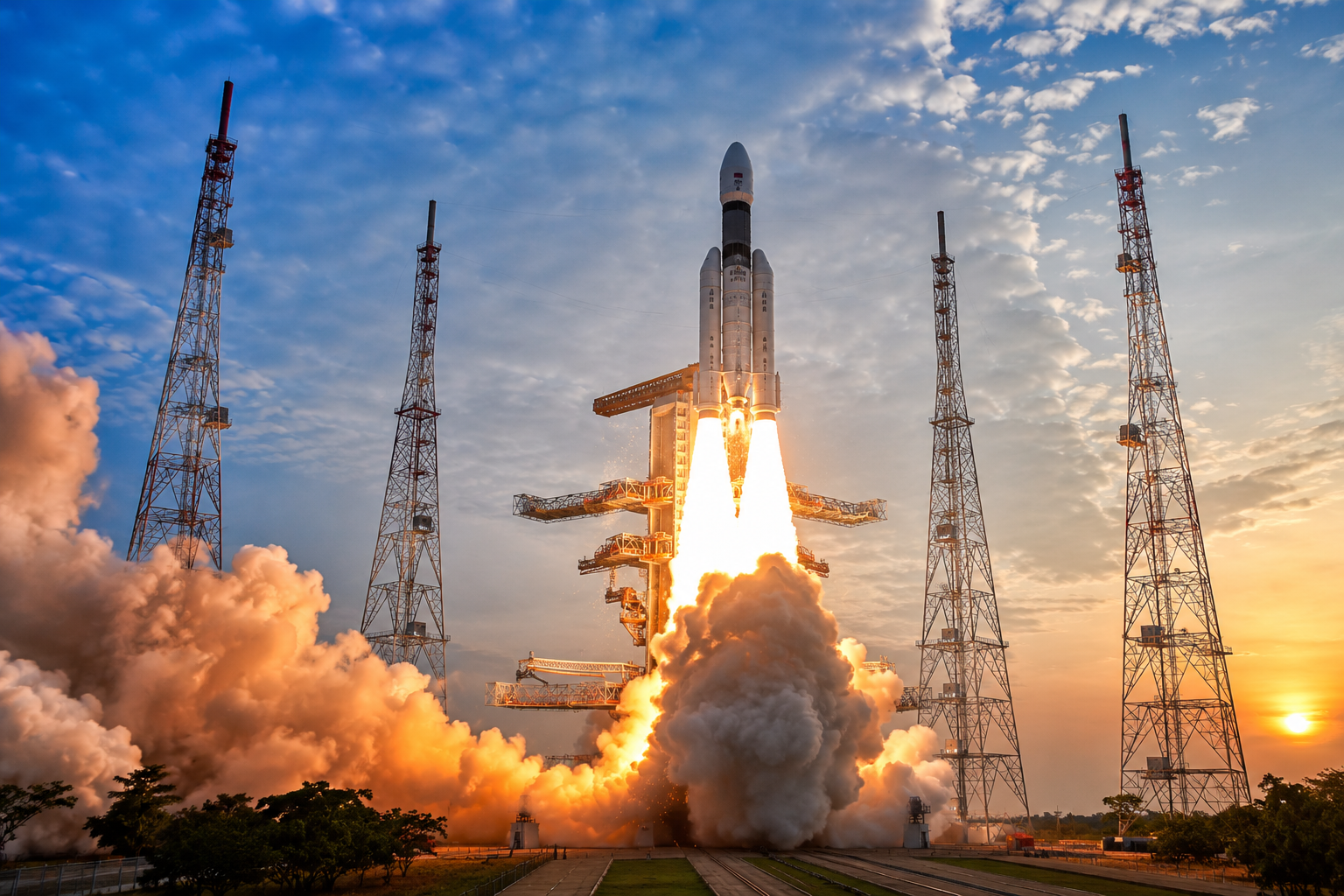
Introduction
When India first looked towards space, the dream seemed challenging and far away. With limited resources and a small team of dedicated scientists, India began its journey to explore the possibilities beyond Earth. Today, that dream has turned into a remarkable success story. The Indian Space Research Organisation (ISRO) has become a symbol of innovation, determination, and national pride.
From launching its first satellites to successfully landing on the Moon and studying the Sun, India has made incredible progress in space technology. Now, ISRO is preparing for the next chapter of exploration with human space missions, advanced spacecraft, and a vision to make India one of the leading space nations in the world.
1. The Beginning of India’s Space Journey
India’s space programme started with a simple but powerful goal — to use space technology for the benefit of people. ISRO was established in 1969, and its early focus was on solving practical problems through satellites.
In the beginning, satellites were mainly used for communication, weather forecasting, and collecting information about Earth. These technologies helped farmers, improved disaster management, and connected people across the country.
With years of hard work and research, ISRO developed its own launch vehicles and satellite systems. Missions like PSLV and GSLV showed the world that India could achieve major space goals with limited resources and smart innovation.
2. Chandrayaan Missions: India Reaches the Moon
One of the biggest achievements in India’s space journey has been its exploration of the Moon through the Chandrayaan missions.
The success of Chandrayaan-3 became a historic moment for India when the spacecraft successfully landed near the Moon’s south polar region. This achievement placed India among the few countries that have achieved a soft landing on the lunar surface.
The mission was not just a scientific achievement; it was a moment of inspiration for millions of Indians. It showed that determination and teamwork can help overcome even the toughest challenges.
Through these missions, scientists are learning more about the Moon’s surface, resources, and possibilities for future exploration.
3. Gaganyaan: India’s Dream of Sending Humans into Space
After exploring space through satellites and robotic missions, India is now preparing for human spaceflight through the Gaganyaan mission.
Sending humans into space is a complex challenge that requires advanced technology, careful planning, and strong safety measures. The mission involves developing a spacecraft capable of carrying astronauts safely and preparing them for the journey beyond Earth.
Gaganyaan represents a new milestone for India. It will not only demonstrate India’s human spaceflight capability but also open new opportunities for scientific research and future space missions.
The mission reflects India’s ambition to explore space not just through machines but also through human courage and curiosity.
4. Aditya-L1: Understanding the Power of the Sun
India’s space exploration has expanded beyond the Moon with the Aditya-L1 mission, which focuses on studying the Sun.
The Sun plays a major role in life on Earth, but its activities can also affect satellites, communication systems, and space technology. By studying solar behaviour, scientists can better understand space weather and protect important systems.
Aditya-L1 represents India’s growing ability to conduct advanced scientific research and explore the mysteries of our universe.
5. The Rise of India’s Space Economy
India’s space sector is no longer limited to government organisations. In recent years, private companies and startups have entered the space industry, bringing fresh ideas and innovation.
These companies are working on new rockets, satellites, and space-based services. Their involvement is creating new opportunities for young engineers, researchers, and entrepreneurs.
The growth of the space economy can help India become a strong competitor in the global space market while encouraging technological development and job creation.
6. Technology Behind India’s Space Success
The success of ISRO is built on continuous innovation and dedication. Indian scientists and engineers are developing advanced technologies to make missions safer, faster, and more affordable.
Important areas of development include:
Artificial intelligence for space research.
Advanced satellite systems.
Reusable rocket technology.
Improved communication and navigation systems.
India’s ability to complete successful missions at lower costs has gained worldwide appreciation and has become one of its biggest strengths.
7. India’s Vision for the Future
The future of India’s space programme is filled with exciting possibilities. ISRO is working towards more ambitious missions, including deeper space exploration and advanced human space programmes.
India’s future space goals include:
Expanding lunar exploration.
Developing human spaceflight capabilities.
Strengthening satellite technology.
Increasing global cooperation in space research.
Space technology will continue improving life on Earth by supporting agriculture, weather prediction, communication, and disaster management.
8. Challenges on the Path Ahead
Despite its achievements, India’s space journey still faces several challenges. Space exploration requires continuous investment, advanced research, and skilled professionals.
Some major challenges include managing space debris, developing new technologies, and competing with other space powers.
However, India’s history of overcoming difficulties shows that innovation and determination can lead to success.