

Introduction
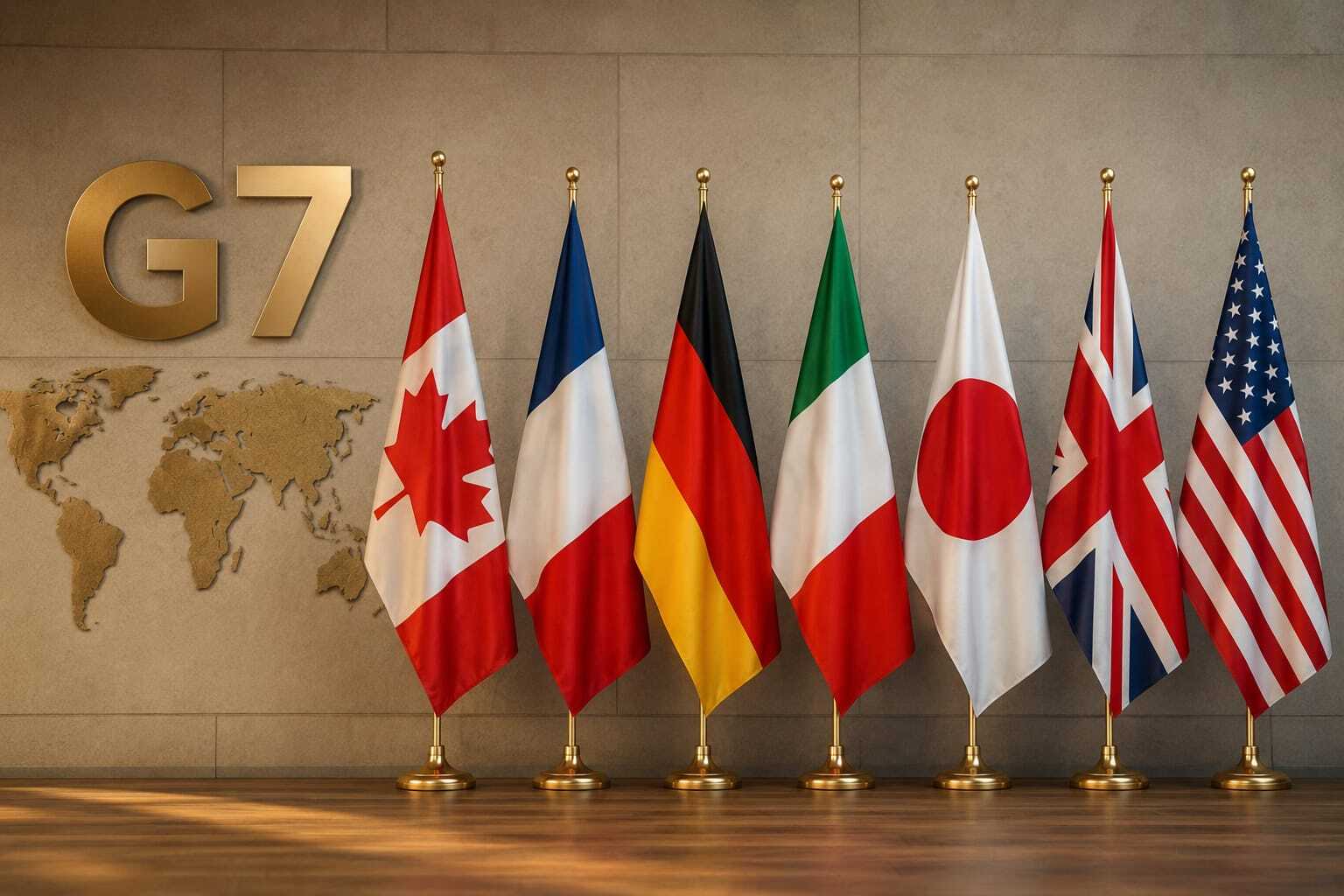
The Group of Seven (G7) has been one of the most influential organizations in global politics and economics for decades. It consists of Canada, France, Germany, Italy, Japan, the United Kingdom, and the United States. Together, these countries have played a major role in shaping international policies, promoting economic growth, and addressing global challenges.
The G7 was established in the 1970s to discuss economic issues and strengthen cooperation among developed nations. Over time, its agenda expanded to include climate change, trade, security, technology, and public health. As a result, the group became an important platform for international cooperation.
Today, however, the global balance of power is changing. Emerging economies such as China, India, Brazil, and South Africa are becoming more influential. Therefore, many experts are questioning how the G7 can remain relevant in a multipolar world order. Future of G7 in a multipolar world order.
Understanding a Multipolar World
A multipolar world is a system in which several countries share global influence. Unlike a unipolar world, where one country dominates international affairs, a multipolar system involves multiple centers of power.
After the Cold War, the United States emerged as the dominant global power. However, the rapid growth of emerging economies has changed this situation. Countries such as China and India now play a major role in global trade, investment, and diplomacy.
Moreover, technological advancements and stronger regional organizations have increased the influence of many nations. As a result, global decision-making has become more complex and requires broader cooperation.
Why the G7 Still Matters
Despite these changes, the G7 continues to play an important role in global affairs. Its member countries remain among the world’s leading economies and technological innovators.
Economic Influence
The G7 countries account for a significant share of global wealth and investment. Consequently, their economic policies often influence international markets. During financial crises, coordinated action by G7 members can help restore stability and confidence.
Shared Democratic Values
Another important strength of the G7 is its commitment to democracy, human rights, and the rule of law. These shared values help member countries work together on international issues. Furthermore, they provide a common foundation for cooperation.
Global Leadership
The G7 has often taken the lead in addressing global challenges. For example, it has supported efforts to combat climate change, improve public health, and strengthen cybersecurity. Therefore, the group continues to serve as an important forum for international leadership.
Challenges Facing the G7
Although the G7 remains influential, it faces several challenges in today’s changing world.
Rise of Emerging Economies
One major challenge is the growing influence of emerging economies. Countries such as China and India contribute significantly to global economic growth. As a result, the relative economic weight of the G7 has declined compared to previous decades.
Geopolitical Competition
At the same time, geopolitical competition has become more intense. Trade disputes, regional conflicts, and strategic rivalries have created a more complicated international environment. Consequently, decisions made solely by G7 countries may not always gain worldwide support.
Questions of Representation
Many developing nations believe that the G7 does not fully reflect today’s global realities. They argue that international institutions should include a wider range of voices. Therefore, there are increasing calls for more inclusive global governance.
Internal Differences
The G7 also faces challenges within its own membership. Different political priorities and national interests can sometimes make it difficult to reach consensus. Nevertheless, member countries continue to cooperate on many important issues.
How the G7 Can Adapt
To remain relevant, the G7 must adjust to the realities of a multipolar world.
Working with Emerging Powers
The G7 should strengthen cooperation with emerging economies such as India, Brazil, South Africa, and Indonesia. By doing so, it can build broader support for international initiatives. Moreover, such partnerships can improve global problem-solving.
Strengthening the G20
The G20 includes both developed and developing economies. It represents a larger share of the world’s population and economic output. Therefore, closer cooperation between the G7 and G20 can create more balanced and inclusive solutions.
Leading in Technology
Technology is becoming increasingly important in global politics and economics. Issues such as artificial intelligence, cybersecurity, and digital governance require international cooperation. Consequently, the G7 can play a leading role in creating responsible standards and policies.
Fighting Climate Change
Climate change remains one of the world’s biggest challenges. Therefore, the G7 can strengthen its leadership by investing in clean energy and supporting green technologies. In addition, helping vulnerable countries adapt to climate change can improve global cooperation.
India’s Growing Role
India’s rise is particularly important in a multipolar world. As the world’s largest democracy and one of the fastest-growing major economies, India has become a key player in international affairs.
Moreover, India plays an important role in trade, technology, climate policy, and security. Its growing influence makes it a valuable partner for the G7. Many experts believe that stronger cooperation between India and the G7 will be essential for addressing future global challenges.
Furthermore, India can help bridge the gap between developed and developing nations. As a result, it can contribute to more inclusive and effective global governance.
Conclusion
The future of the G7 in a multipolar world order will depend on its ability to adapt and cooperate. Although its share of global economic power has declined, the group still holds significant influence in politics, economics, and technology.
However, maintaining relevance will require a more inclusive approach. By working with emerging powers, strengthening partnerships, and addressing common challenges, the G7 can continue to play an important role in world affairs.
Overall, the success of the G7 will not be measured only by its economic strength. Instead, it will depend on its ability to promote cooperation, build trust, and contribute to a stable and connected global future.