


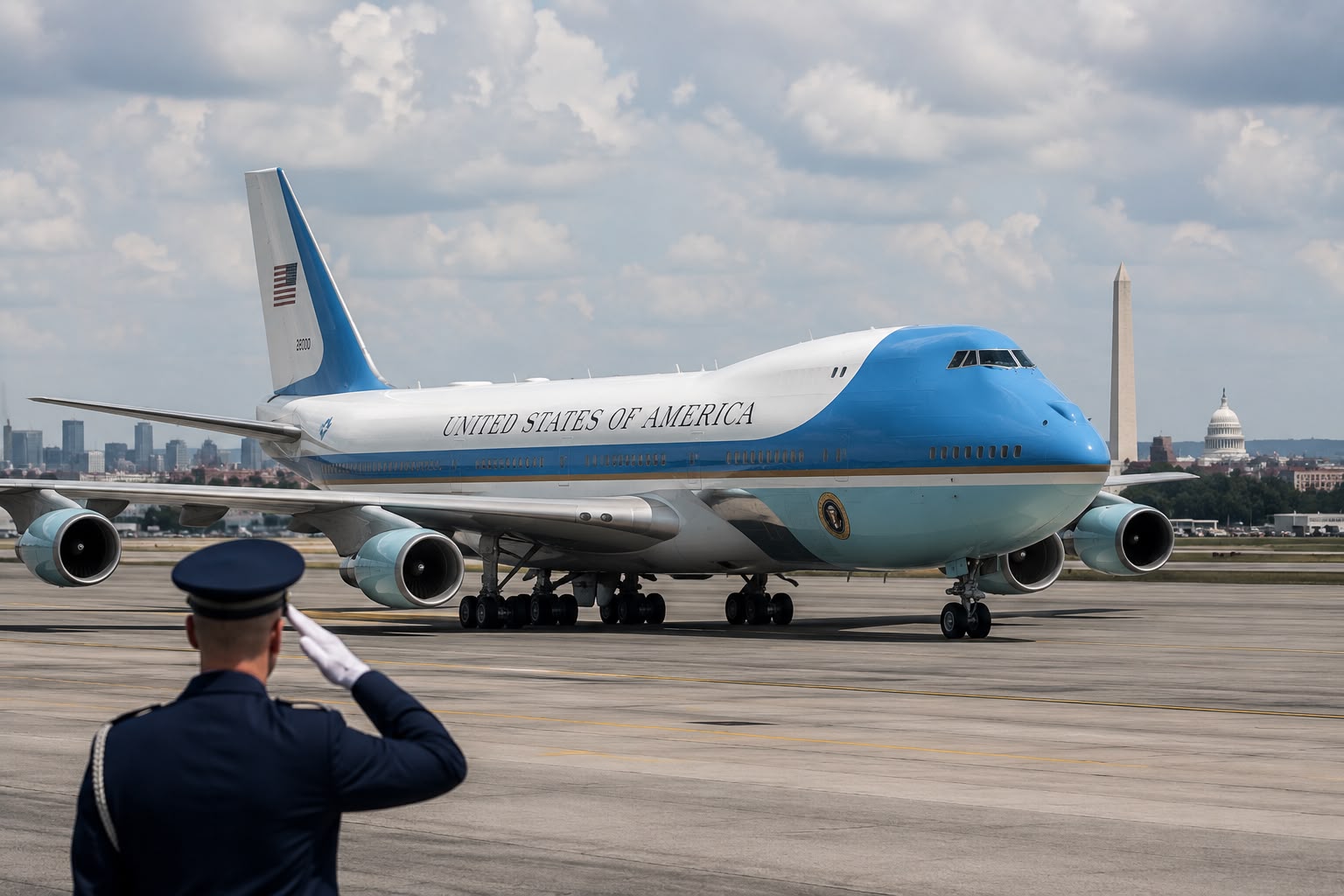
Rumors that the iconic Air Force One aircraft was nearing retirement spread rapidly across social media this week after White House staff shared nostalgic photos and tributes following the G7 Summit. The posts prompted speculation that the blue-and-white presidential jet had completed its final mission. However, U.S. officials and the U.S. Air Force have since clarified that the aircraft remain in active service and are not expected to retire anytime soon.
The speculation emerged as images of the presidential aircraft circulated online alongside messages celebrating its long history of transporting American leaders around the world. Some users interpreted the posts as a farewell to the aircraft, leading to widespread claims that Air Force One was being phased out immediately.
Officials quickly moved to dispel the rumors, explaining that the current presidential aircraft will continue operating for several more years. The planes in question are two specially modified Boeing VC-25A aircraft that entered service in the early 1990s and serve as Air Force One whenever the President of the United States is on board. Over the decades, they have become globally recognized symbols of American leadership and diplomacy.
The confusion comes amid continuing delays to Boeing’s long-running VC-25B replacement program. The project, intended to deliver a new generation of presidential aircraft, has faced technical challenges, supply chain issues, rising costs, and scheduling setbacks. Originally expected years earlier, the replacement jets are now projected to enter service no sooner than 2028.
As a result, the U.S. government has been forced to maintain and modernize the existing fleet while simultaneously funding the development of its successors. Defense analysts note that this transitional period has increased costs and created a complex procurement challenge. Taxpayers are effectively supporting multiple layers of presidential airlift capabilities at the same time to ensure uninterrupted operations.
Government officials and aviation experts emphasize that Air Force One is far more than a transportation platform. The aircraft functions as a secure airborne command center equipped with advanced communications systems, defensive technologies, and facilities that allow the president to govern and respond to emergencies while traveling. Maintaining these capabilities is considered essential for national security and continuity of government.
The delayed replacement program has also sparked debate about broader defense procurement practices. Supporters argue that presidential aircraft require highly specialized systems and rigorous safety standards, making delays difficult to avoid. Critics, however, point to escalating costs and repeated schedule revisions as evidence of management and oversight challenges.
Air Force One remains one of the most recognizable aircraft in the world, having played a central role in historic diplomatic missions, international summits, and crisis response efforts. Its appearances continue to attract public attention wherever it travels.
Despite widespread online speculation, officials stress that the current Air Force One fleet remains fully operational. Until Boeing’s replacement aircraft are completed and certified, the familiar presidential jets will continue carrying American presidents on missions around the globe, ensuring continuity of one of the nation’s most important transportation assets.