

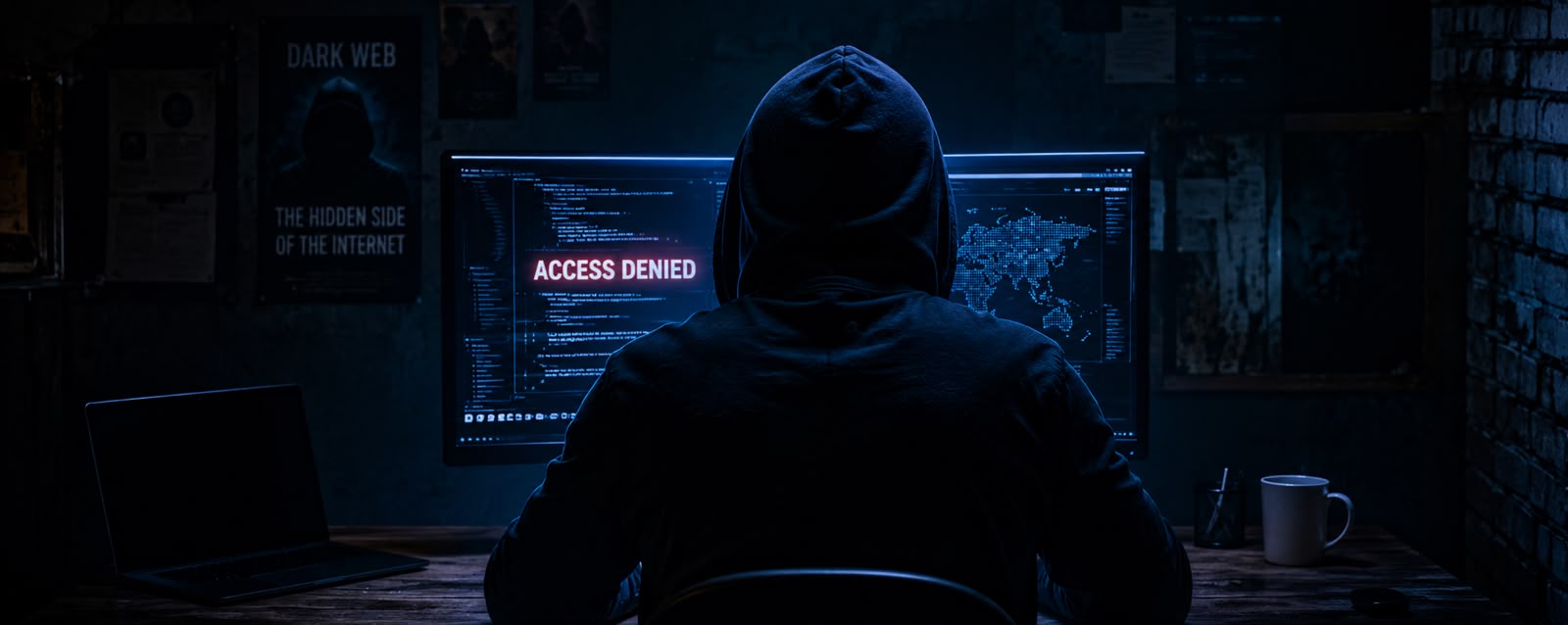
The Dark Side of the Internet
The internet is one of humanity’s greatest achievements — a global nervous system connecting billions of people, enabling the free flow of ideas, commerce, culture, and knowledge. Yet beneath its shimmering surface lies a shadow world that most users never see, rarely think about, and are largely unprepared to understand. The dark side of the internet is not a metaphor. It is a real, operational ecosystem thriving in the digital spaces between our everyday browsing.
The Surface, the Deep, and the Dark
Most people experience only the surface web — the portion indexed by search engines like Google, Bing, or DuckDuckGo. This represents a surprisingly small fraction of online content. Below it lies the deep web, which includes perfectly legitimate material: private email accounts, banking portals, medical records, academic databases, and corporate intranets. These are simply pages that search engines don’t index, and they make up the vast majority of internet content.
The dark web, however, is something different altogether. It is a deliberately hidden layer accessible only through specialized software, most notably the Tor (The Onion Router) browser, which anonymizes users by routing their traffic through multiple encrypted servers across the globe. While Tor itself was originally developed by the U.S. Naval Research Laboratory to protect intelligence communications, its anonymizing power has since been exploited by a far wider — and far darker — community.
What Lurks in the Dark
The dark web is home to a sprawling underground economy. Among the most notorious are darknet markets — digital black markets where vendors openly sell illegal goods using cryptocurrencies like Bitcoin or Monero, which are difficult to trace. Drugs represent the largest category of trade, with everything from cannabis to synthetic opioids available in quantities that rival physical drug trafficking networks. The infamous Silk Road, shut down by the FBI in 2013, pioneered this model, processing over $1.2 billion in transactions before its closure. Dozens of successors have since emerged in its place.
Beyond narcotics, dark web marketplaces peddle weapons, counterfeit currency, forged identity documents, and stolen financial data. Credit card dumps — batches of stolen card numbers harvested through data breaches or skimming devices — are sold by the thousands. Personal data, including Social Security numbers, passports, and login credentials, are traded as casually as secondhand goods. A complete stolen identity can be purchased for as little as a few dollars.
Then there are the far more disturbing categories that defy easy description. Child sexual abuse material (CSAM) represents one of the most heinous abuses of dark web anonymity, forcing law enforcement agencies worldwide into a relentless and emotionally devastating game of pursuit. Hitman-for-hire services, though many are scams targeting desperate and dangerous people alike, exist in sufficient volume to constitute a genuine threat.
Ransomware-as-a-service operations allow technically unsophisticated criminals to launch crippling cyberattacks on hospitals, schools, and government agencies by simply renting the malware and expertise from established criminal groups.
Cybercrime: The Surface Web’s Dark Underside
The dangers of the internet’s dark side are not confined to hidden networks. The visible web is riddled with its own threats. Phishing attacks — fraudulent emails or websites designed to steal login credentials — have grown alarmingly sophisticated, often indistinguishable from legitimate communications. Social engineering exploits human psychology rather than technical vulnerabilities, manipulating people into handing over sensitive information.
Malware, ransomware, and spyware are distributed through compromised websites, pirated software, and malicious email attachments. Ransomware alone has paralyzed hospitals mid-surgery, shut down oil pipelines, and extorted hundreds of millions of dollars from corporations and governments. The 2021 Colonial Pipeline attack demonstrated that digital crime could translate directly into physical disruption — fuel shortages rippled across the U.S. East Coast within days.
State-sponsored hacking adds a geopolitical dimension to the threat landscape. Nation-states weaponize the internet to conduct espionage, disrupt critical infrastructure, interfere in foreign elections, and wage information warfare. The line between cybercrime and cyberwar has grown dangerously thin.
Radicalization and the Spread of Harm
The dark side of the internet is not only transactional. It is ideological. Online platforms — including mainstream ones — have become powerful incubators for extremism. Recommendation algorithms, designed to maximize engagement, can pull vulnerable users down rabbit holes of increasingly radical content. Hate groups, terrorist organizations, and violent movements use encrypted messaging apps and obscure forums to recruit, radicalize, and coordinate.
Misinformation spreads with a velocity that truth rarely matches. False health claims, fabricated political narratives, and coordinated disinformation campaigns have measurable effects on public health, democratic institutions, and social cohesion. The COVID-19 pandemic illustrated how dangerous misinformation can be when it competes directly with life-saving medical guidance.
The Human Cost and the Path Forward
Behind every data breach is a real person whose life is disrupted. Behind every piece of trafficking content is a real victim. The dark side of the internet is not an abstract technical problem — it is a human one, with human consequences.
Combating it requires a multifaceted approach. Law enforcement agencies have grown increasingly sophisticated, coordinating internationally to dismantle dark web operations. Cybersecurity investment, both public and private, is expanding rapidly. Platform accountability, digital literacy education, and ethical technology design all play a role.
Yet the internet’s architecture — its openness, its anonymity, its global reach — is simultaneously its greatest strength and its deepest vulnerability. The same tools that protect a dissident journalist in an authoritarian state protect a criminal marketplace. There are no easy answers.
The dark side of the internet is a mirror of human nature itself: brilliant, creative, and capable of extraordinary harm. Understanding it honestly is the first step toward navigating it wisely.