

Introduction
In today’s modern world, technology has made a huge impact in all parts of life and education is not an exception. Technology from smart classrooms to online learning platforms to educational apps and artificial intelligence has transformed education and redefined how students learn and how teachers teach. It has brought education to a level that is more accessible, interactive and efficient, providing opportunities for learners around the world. Digital innovation is a continuous process that is increasingly influencing education.
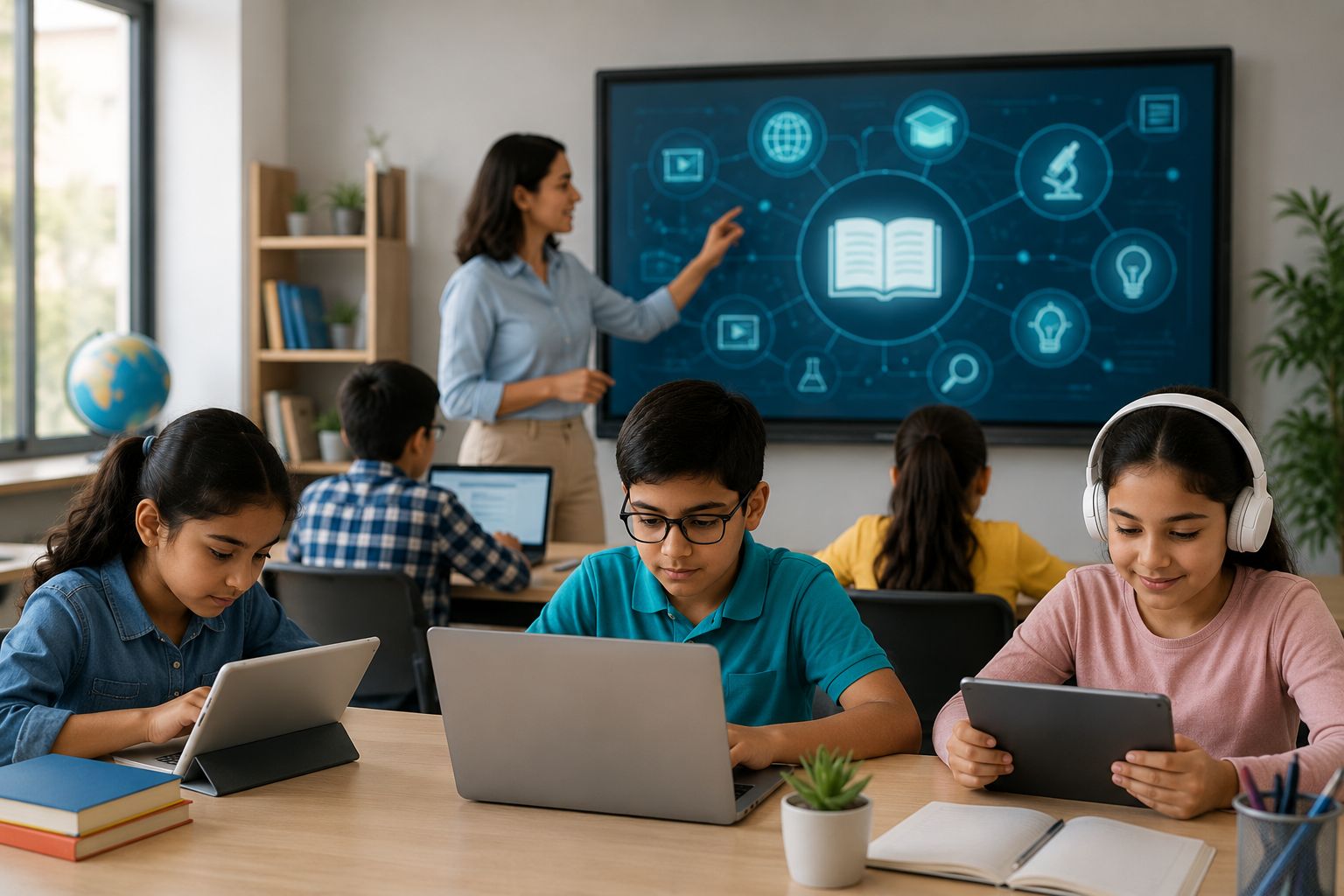
Using technology in today’s classrooms.
Traditional classrooms are quickly transforming with the incorporation of technology. Many traditional teaching approaches have been done away with by smart boards, projectors, tablets and computers. Now teachers are able to use multimedia presentations, videos and interactive materials to present information on complex topics in a more engaging way.
Digital tools used to make concepts visual and interactive for better understanding. Previously difficult subjects can be explored with simulations, animations and educational computer software to enhance student understanding and engagement.
Increased Access to Education
Technology has made a huge contribution to education by allowing it to reach more people. The online learning platforms enable students to access high quality educational resources from anywhere. People from remote areas are now able to take virtual courses and watch lectures that have been recorded and discuss them on the internet.
E-learning has also given the opportunity for working professionals to use online learning to help improve their skills using online courses and certificates. This is a very flexible approach that enables individuals to learn at their own speed and according to their own plans.
Enhanced Learning Experience
Technology has helped to enhance learning in many ways, making it more personal and interactive. This information can be used to monitor student progress and generate personalized suggestions for learning tasks.
Student engagement has been further improved with gamification, virtual reality & augmented reality. These innovations help children to enjoy learning and foster their ability to think creatively, critically and problem solve. Students can visit historic locations virtually, do science experiments via simulations, and engage with digital learning environments.
Benefits for Teachers
Technology is not only beneficial for students but also for educators. Digital platforms allow teachers to efficiently manage activities in the classroom, prepare lesson plans, conduct assessment, monitor student performance, etc.
Also, online communication tools allow teachers to better connect with students and parents. The sharing of assignments, feedback and learning materials can be done in real time, and saves time and enhances communication.
Challenges and Concerns
While technology has many advantages for education, it also has some drawbacks. Too much screen time can have negative impacts on students’ physical and mental health. Also, social media and online entertainment can cause a distraction that interferes with focus and work.
The digital divide is also a concern. Not every student has access to a reliable internet connection, a computer or digital device. This disparity can result in educational inequity and restrict access to opportunities for those from low socio-economic backgrounds.
The Future of Education.
Technology is integral to the future of education. AI, machine learning and virtual classrooms are likely to have a bigger impact on learning experiences. Future classrooms could be a place where personalized learning, automated tests and intelligent tutoring systems are commonly seen.
As technology advances, educational institutions need to review how digital tools are being used, and remind students of the need to use technology responsibly and effectively to maximize learning outcomes.
Conclusion
Technology has transformed education in so many ways, and they are not just limited to making education more accessible but also making it better and helping teachers. Despite the obstacles, including the digital divide and screen addiction, the advantages of technology outweigh the negative side effects. Innovation and inclusiveness in access to digital resources are fundamental to building a more inclusive and effective education system for the future generations.