

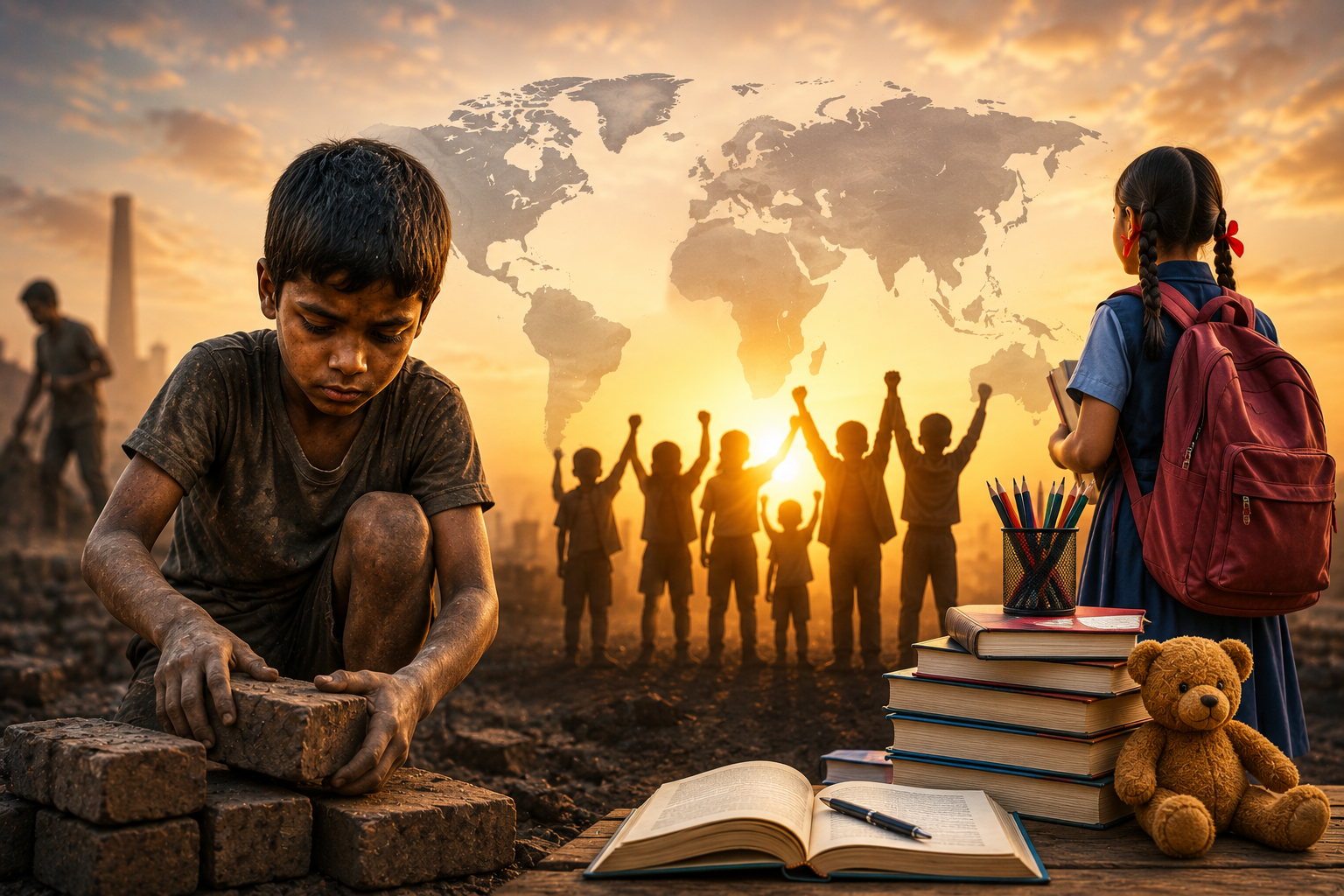
Why the World Observes This Day
World Day Against Child Labour is observed every year on 12 June to raise awareness about the millions of children worldwide who are forced to work instead of enjoying their childhood, education, and basic rights. Established by the International Labour Organization (ILO) in 2002, the day highlights the urgent need to eliminate child labour and ensure a safe and healthy future for every child.
Child labour deprives children of opportunities to learn, grow, and develop their full potential. It often exposes them to dangerous working conditions that can harm their physical and mental well-being. Therefore, the observance encourages governments, organizations, and communities to work together to end this global issue.
Understanding Child Labour
Child labour refers to work that is harmful to children or interferes with their education and development. While some forms of light work may be acceptable, hazardous and exploitative labour remains a serious concern in many parts of the world.
Children involved in child labour often work in agriculture, manufacturing, mining, domestic services, and other sectors. Many face long working hours, unsafe environments, and limited access to education. As a result, they remain trapped in cycles of poverty and social inequality.
Global Efforts to End Child Labour
Governments, international organizations, and non-governmental organizations continue to take steps to combat child labour. Laws protecting children’s rights, access to quality education, and poverty reduction programs play a vital role in addressing the root causes of the problem.
Awareness campaigns conducted on World Day Against Child Labour encourage individuals and communities to recognize the issue and support initiatives that protect vulnerable children. Furthermore, businesses are increasingly encouraged to ensure that their supply chains remain free from child labour practices.
How Individuals Can Help
Everyone can contribute to the fight against child labour. Supporting children’s education, reporting cases of exploitation, and promoting ethical consumer choices can make a positive difference. Communities can also help by encouraging school attendance and raising awareness about children’s rights.
Additionally, volunteering with organizations that support disadvantaged children can help create opportunities for a brighter future.
Conclusion
World Day Against Child Labour serves as a powerful reminder that every child deserves a safe, healthy, and fulfilling childhood. By promoting education, protecting children’s rights, and addressing the causes of child labour, societies can create a future where all children have the opportunity to learn, dream, and succeed. Working together, we can help end child labour and ensure a better world for future generations.