

Introduction
Road safety encompasses the methods and measures used to prevent road users from being killed or seriously injured in traffic collisions. Every day, millions of individuals share the road, whether they are driving cars, riding two-wheelers, cycling, or walking. Despite modern advancements, traffic accidents remain a leading cause of fatalities globally, particularly in developing nations. Ensuring road safety is a shared responsibility that demands both the strict enforcement of laws and conscious behavioral changes by the general public.
Major Causes of Road Accidents
Understanding the root causes of accidents is essential for prevention. The primary culprits behind most road mishaps include:
Reckless Driving and Speeding: Driving above the speed limit significantly reduces a driver’s reaction time. Even a minor increase in speed drastically raises the risk and severity of fatal crashes.
Driving Under the Influence: Alcohol and psychoactive drugs impair cognitive functions, slow down reflexes, and affect critical decision-making skills.
Distracted Driving: Operating mobile phones, texting, or using headphones while driving or walking diverts attention away from the road, leading to dangerous situations.
Disregarding Traffic Rules: Jumping red lights, ignoring pedestrian crossings, and failing to use indicators contribute to major collisions.
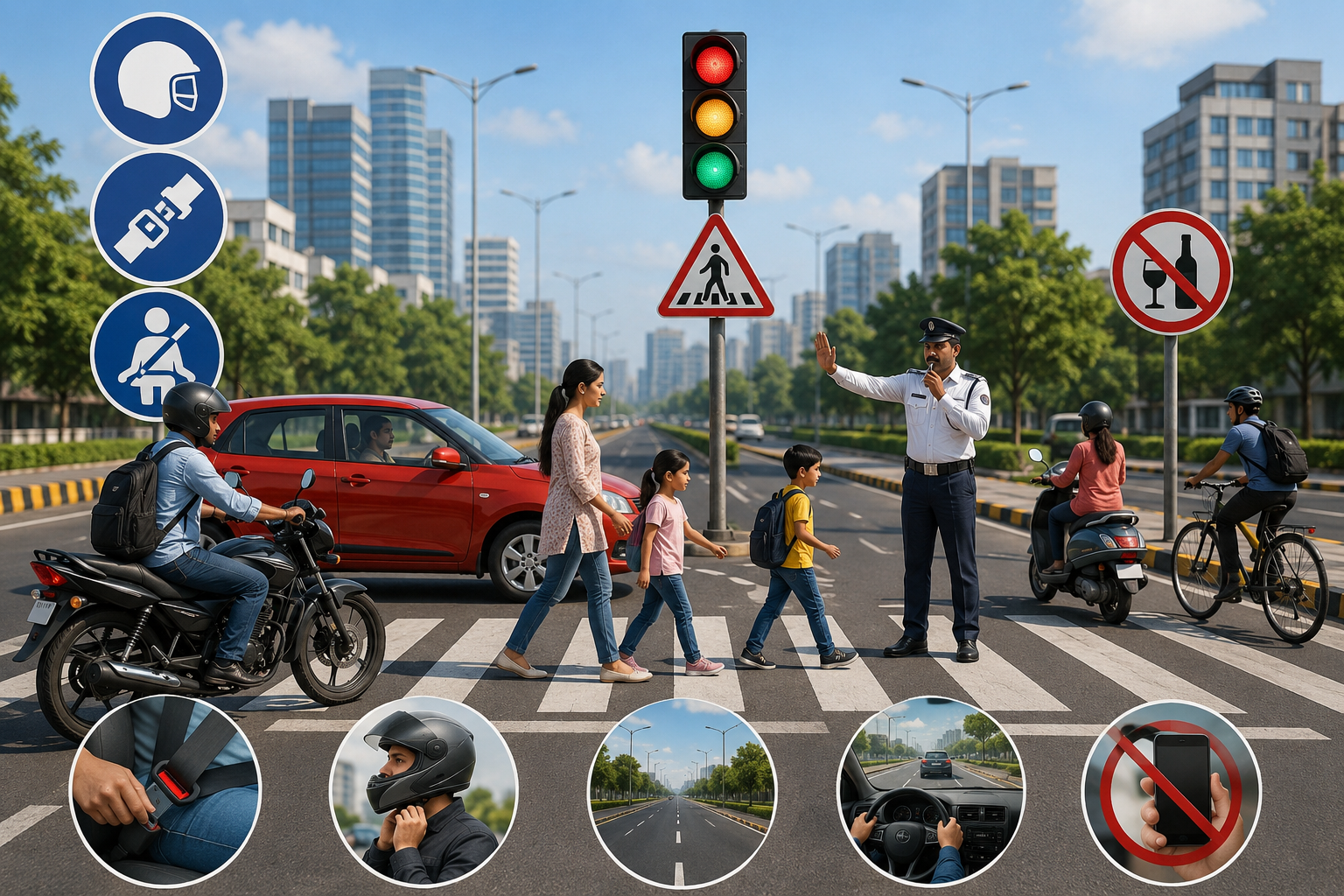
Lack of Safety Gear: Avoiding the use of seat belts and helmets remains a leading cause of fatalities in otherwise survivable accidents.
Essential Road Safety Rules
To ensure a safe journey, every road user must strictly follow fundamental traffic regulations:
Obey Signals and Signs: Drivers and pedestrians must respect traffic lights (red means stop, yellow means slow down, and green means go) and follow local road signs.
Use Designated Crossings: Pedestrians should always use footpaths and cross roads at designated zebra crossings after ensuring the path is clear.
Wear Protective Gear: Fastening seat belts and wearing certified, high-quality helmets are mandatory and life-saving habits for all vehicle occupants and riders.
Maintain Safe Distances: Drivers must maintain an adequate distance from the vehicle ahead to allow for sudden braking.
Adhere to Speed Limits: Motorists must always adjust their speed according to the environment, slowing down near hospitals, residential areas, and schools.
The Role of Education and Infrastructure
While strict penalties are necessary to deter traffic violations, education and infrastructure play foundational roles in ensuring road safety. Governments and local authorities must continuously invest in well-lit roadways, clear road markings, and functional traffic signals. Furthermore, educational campaigns and the integration of road safety into school curricula help instill responsible habits from a young age. The World Health Organization (WHO) provides robust, evidence-based global standards and guidelines for minimizing traffic injuries.
Conclusion
Road safety is not just a regulatory obligation; it is a fundamental moral duty. Whether you are a pedestrian waiting at an intersection or an experienced driver behind the wheel, your conduct directly impacts the lives of others. By cultivating a culture of respect, obeying traffic rules, and prioritizing caution, we can collectively minimize road accidents and make transportation safer for everyone. For further insights on fostering safe environments, comprehensive programs and strategies are available through the United Nations Economic Commission for Europe (UNECE).