

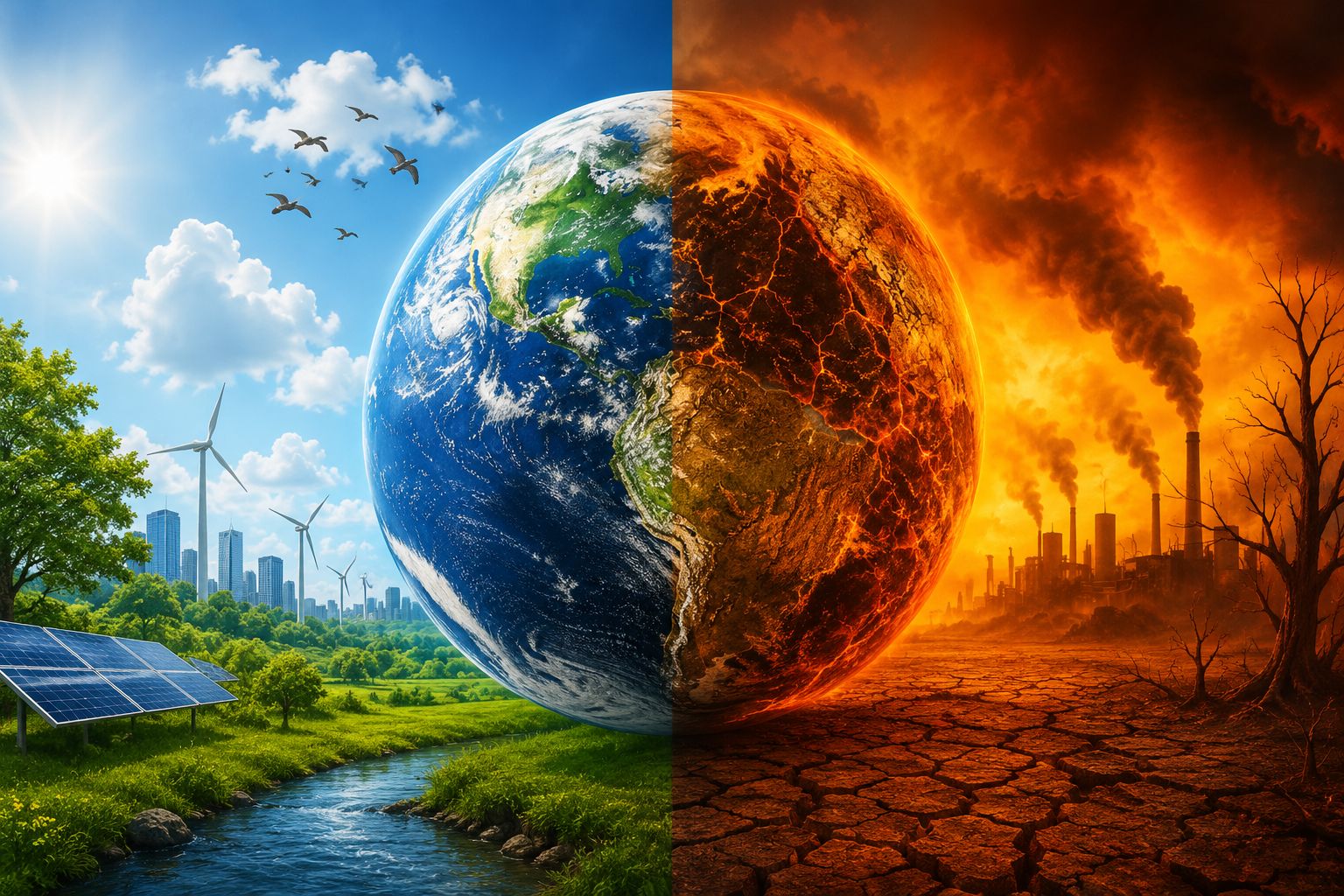
Global Warming
Introduction
Global warming is the gradual increase in Earth’s average temperature, primarily caused by human activities since the Industrial Revolution. It is one of the most serious environmental challenges facing the world today. Over the past century, the Earth’s temperature has risen significantly, leading to changes in weather patterns, rising sea levels, and threats to ecosystems worldwide. Understanding its causes and implementing sustainable solutions are essential for protecting the future of our planet.
Causes of Global Warming
The main cause of global warming is the enhanced greenhouse effect. Naturally, the Earth’s atmosphere traps some of the sun’s heat, making the planet suitable for life. However, human activities such as burning coal, oil, and natural gas for energy and transportation release large amounts of greenhouse gases, including carbon dioxide (CO₂) and methane (CH₄), into the atmosphere.
Deforestation also contributes significantly to global warming. Trees absorb carbon dioxide from the air, but large-scale cutting of forests reduces this natural process. As greenhouse gases accumulate in the atmosphere, they trap more heat, causing global temperatures to rise.
Effects of Global Warming
The effects of global warming are widespread and alarming. One of the most visible consequences is the melting of polar ice caps and glaciers, which contributes to rising sea levels. As a result, coastal cities and island nations face an increased risk of flooding and land loss.
Global warming also increases the frequency and intensity of extreme weather events. Heatwaves, hurricanes, floods, and droughts are becoming more common in many parts of the world. These changes disrupt agriculture, reduce food production, and threaten water supplies for millions of people.
Additionally, rising temperatures and warming oceans are damaging ecosystems. Coral reefs are dying, and many plant and animal species are struggling to survive in changing environments, pushing some of them toward extinction.
Solutions and Mitigation
Although reversing global warming completely is difficult, its impacts can be reduced through immediate and collective action. One of the most effective solutions is shifting from fossil fuels to renewable energy sources such as solar, wind, hydroelectric, and geothermal power.
Protecting forests and promoting large-scale tree plantation programs can help absorb excess carbon dioxide from the atmosphere. Governments, industries, and individuals all have a role to play in reducing greenhouse gas emissions.
People can contribute by conserving energy, reducing waste, using public transportation, and adopting environmentally friendly lifestyles. These actions help lower carbon footprints and support a healthier planet.
Conclusion
Global warming is a reality that demands urgent attention and action. Governments, businesses, and individuals must work together to reduce emissions, support sustainable development, and protect natural resources. By embracing green technologies and sustainable practices, we can help preserve the Earth for future generations. The time to act is now, as protecting the environment is a shared responsibility that affects us all.