

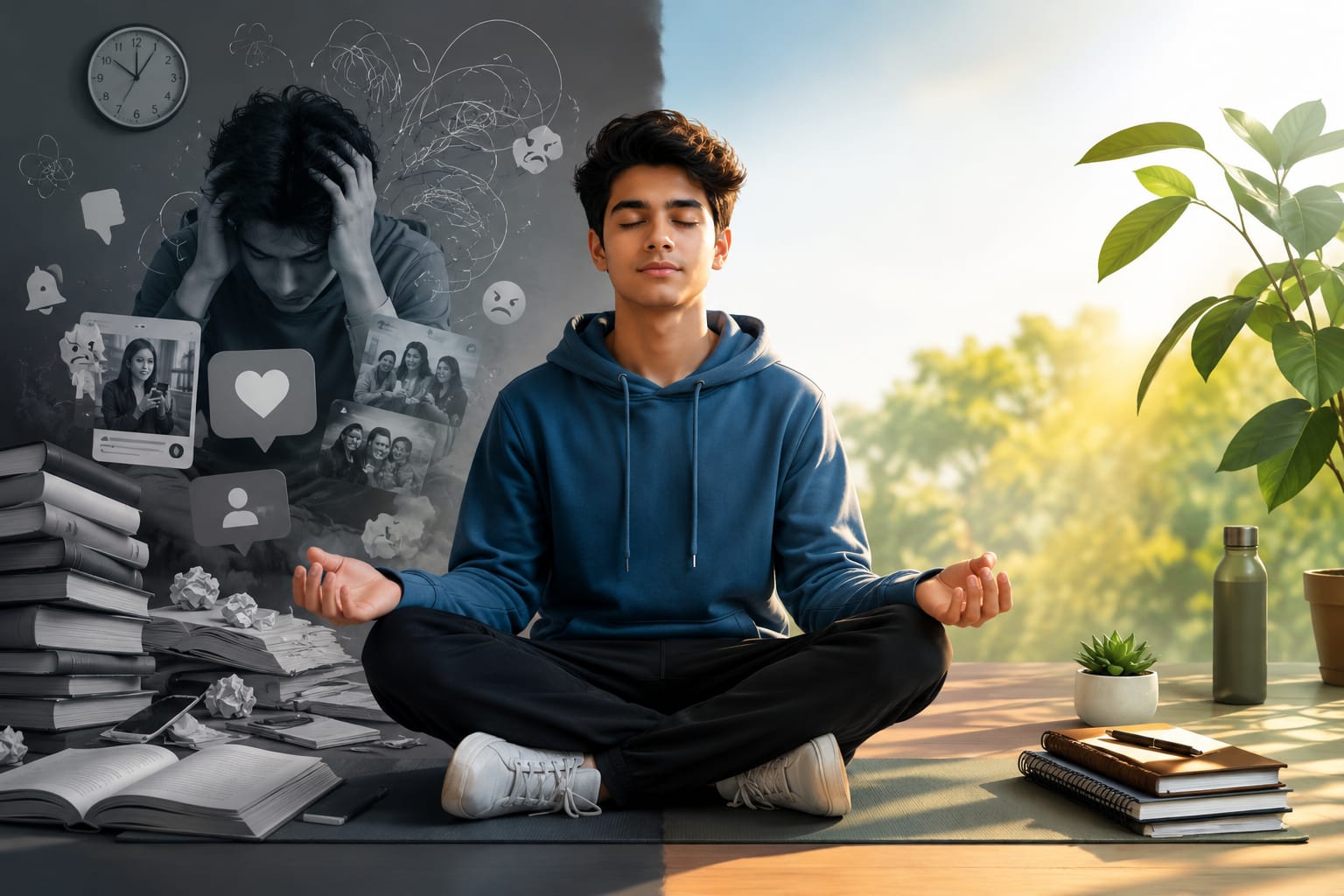
Does Exam Pressure or social media affect student’s mental health more?
Every student’s mental health is an integral part of his/her life. Mental health impacts thinking, feeling, learning and adapting to daily demands of students. Within today’s society, there is a high amount of pressure for students which can be detrimental to their mental health. Exam stress and social media are two major reasons for this pressure. Seeing exams has been a cause for worry for students since they have been connected to their success, college entry and future career opportunities. Meanwhile, social media has entered the mainstream and now plays a significant role in communication, relationships, and self-identity. While exam pressure and social media can be beneficial, they can have a negative effect if they are too high or if they are not used responsibly, and this can affect students’ mental health.
The connection between exams and mental well being.
Education has examinations as a part of it. They help assess students’ knowledge and understanding of various subjects. But, sometimes, the pressure to do well in exams can be overwhelming. Students feel very stressed out before exams due to the fear of scoring good marks, satisfying their parents and getting admission in these renowned colleges/universities.
Examinations can take a lot of time and in the process, students can get stressed, become sleep deprived and feel physically drained. Too much exam stress can have a detrimental impact on mental wellbeing in a variety of ways. Students can have anxiety, fear, frustration and decreased self-confidence. Even some individuals may report depression due to not being able to live up to expectations. Academic stress can cause severe emotional issues in severe cases.
Students will work harder and better with a moderate degree of pressure. But, under stress, it can have a negative impact on concentration, self-worth and school performance, as well as impacting overall wellbeing.
Social Media and students’ lives
Social media is now an integral part of students’ lives. It offers opportunities to be able to meet up with friends, share experiences, learn things, and keep up with current events. Education is also a benefit of social media, as there are learning videos, tutorials and study materials online. It also enables pupils to communicate their ideas and to keep in touch with others.
While these are all beneficial, there are a few issues that can arise when social media is overused. Students frequently make comparisons with others on the basis of what they see online regarding their appearance, achievements and lifestyles. These comparisons can create insecurity, jealousy and lack of self-esteem.
Students spend hours on social media, which can lead to time being spent on social media, fragmented sleep, and higher levels of stress. The unrealistic expectations of beauty, success and happiness that are displayed online can also have a negative impact on mental health. In addition to that, negative comments or cyberbullying/harassement online can have a significant effect on students’ emotional health, resulting in anxiety, loneliness, and depression.
Is Exam Pressure or Social Media greater?
Exam pressure and social media play a role in mental health for students but impact might manifest differently for different students. The pressure of the exam is usually of a short duration and increases during exams. It is directly related to academic achievement and future aspirations. Failure and/or worrying about disappointing families and teachers is a source of stress for many students.
Social media impacts students year-round and can have a more subtle, longer-term impact, however, in contrast to other media. Students may not always be aware of the amount of time they spend on the internet or how social media influences their feelings and self-image.
Social media can exacerbate exam stress in many situations. When seeing the study routines, success and grades of their classmates, it can add competition and stress. Students may feel that they are falling behind others, as this can cause further loss of confidence and may lead to anxiety. Hence, exam pressure and social media are interlinked and can be a pressure on a student’s mental health.
How to support pupils’ well-being
There are a number of strategies that students can use to effectively manage exam pressure and social media use. One of the main things is to have proper time management. A study plan and achievable targets to follow will help to minimise academic stress. Rest, activity and adequate sleep are also essential for focussed attention and emotional stability.
Second, students need to have positive social media behaviors. Set limits on screen time and avoid unnecessary comparisons and follow positive and educational content to minimize the negative impact of social media.
Students should also discuss openly their feelings of stress and emotions. If they are feeling overwhelmed, they should seek help from a parent, teacher, friend or counsellor. Problem sharing can help to relieve emotions and lower anxiety.
Schools and families share an important responsibility. They should develop environments that are conducive to students’ best efforts and to the respect of students which goes beyond academic achievement.
Conclusion
To sum up, exam pressure, and social media plays a significant role in students’ mental health. The pressure of exams, or too much social media use, can have a negative impact on self-esteem, focus and emotions. Nevertheless, exams and social media are not completely bad. They can be a positive aspect of learning, development and growth when used properly.
The secret is to strike the right balance. Students are expected to have a healthy balance of their academic obligations and digital well-being. The students can preserve their mental health and achieve success without compromising their happiness and overall wellness with awareness, emotional support and healthy lifestyle habits.