

Introduction
Social Media is now an integral part of the digital era. When it comes down to it, there are platforms where you can communicate, share ideas, learn new things and keep in touch with your friends and family, such as Instagram, Facebook, YouTube, Snapchat, and X (formerly Twitter). Checking social media is a common activity for many people, particularly for teenagers and young adults.
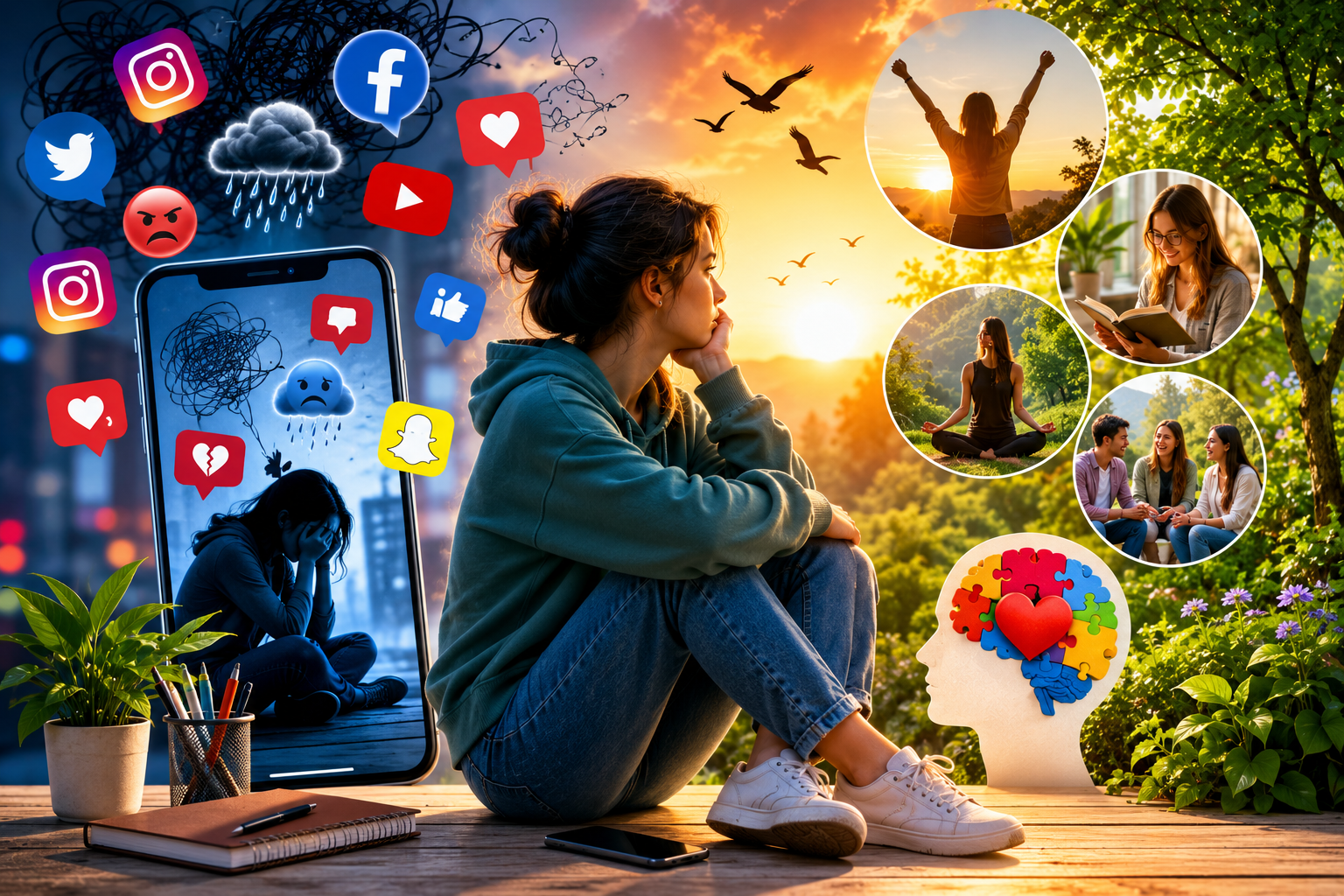
Social media has numerous positive attributes, but it undoubtedly affects mental health as well. Mental health is someone’s emotional, psychological and social state. It has an impact on an individual’s thought, feelings, and behavior in everyday life. The topic of social media and mental health is a complicated one – social media can be both positive and negative, depending on how it is used.
The Positive side of Social Media
The ability to connect is one of the greatest benefits of social media. Communications can be maintained with family and friends no matter how far away they may be. It is particularly useful for those who do not live in the same country as their studies or who work in different cities or live in different countries. Social media is a way to reach support communities as well. Those who are experiencing stress, anxiety, depression or other issues may find support through the other people in their group. When other people know what they’re going through, it helps them feel less alone. Another benefit is the access to information and education. Health professionals, counsellors and bodies typically offer helpful information on stress control, self-care and emotional health. Many people learn about mental health problems on social media, and are more likely to get professional help when required.
In the context of COVID-19, for instance, social media proved to be a valuable means of creating social connection. Without the ability to meet in person, people attended online classes, joined virtual events and communicated with friends and family. This is especially helpful for many people who felt alone and anxious.
Creativity and personal development can also be stimulated through social media. Users share educational videos, motivation, career advice and skill building videos. For students in the process of preparing for competitive examinations, having the right kind of study tips and motivation is crucial in boosting their performance and confidence in the exams.
The negative impact of social media is undeniable.
The negative impact of social media is clearly evident. Although having a social media profile has its pros, it can also have some cons. Social comparison is one of the problems. Individuals tend to post only their best and most successful images. They post pictures of vacations, accomplishments, success, and self-crafted pictures. Consequently, the viewer might see their life in contrast to these idealized visions and find himself feeling less than. Thus viewers may feel less than the idealized image because they compare their daily lives with it. For instance, a student at a college might see pictures of other students at that school getting internships, awards, or fancy trips. This may be a source of self-doubt, despite the fact that those posts are merely a fraction of the truth. One of the other issues is cyberbullying. Negative comments or messages online and hurtful comments can have a significant impact on one’s emotional well-being. Cyberbullying can happen anytime, to many people, and is not like traditional bullying. Victims may feel anxious, depressed and have low self-esteem. Social media can be a source of anxiety and stress also. There is a lot of pressure on many users to get likes, comments and followers. Others start to identify with their worth by online approval. Lacking the attention that is desired can lead to disappointment and insecurity.
The other one is the Fear of Missing Out (FOMO). Others go to parties, go out and have a good time. This can make people feel like they aren’t doing as well as others, and cause them to be unhappy.
Social Media and Sleep Problems?
We have a close link between quality of sleep and mental health. A lot of people surf the net with their phones late at night before going to sleep. The blue light emitted from screens can disrupt the body’s natural sleep cycle, which can make it difficult to fall asleep. Not getting enough sleep can make you more stressed and irritated, and more of a trouble shooter. As a result of bad sleeping patterns, over time, anxiety and other mental health issues can develop .In the real world, it could be students watching videos late at night or checking notifications. They may only be planning for a few minutes online, but instead they might spend hours consuming social media, which negatively impacts their performance and emotions the following day.
Reaching a Healthy Balance
There are no negative consequences to social media. It’s how people use it, that’s the key. There are steps people can take to enjoy the benefits of using social media – and minimize the risks. One good way to do this is to set time limits for social media. There are a number of smartphones today with screen time tracking and daily limits. Another good idea is to follow positive and education-based accounts instead of those that have an unrealistic lifestyle and negative content. Creating a healthier online environment can enhance wellbeing and diminish unhelpful comparisons. So can it be advantageous to take regular social media fasts. Balance is achieved through time spent with family, physical activity, reading, hobbies and outdoor activities, which all promote positive mental health. First of all, people should be aware that social media does not display the whole truth of people’s lives. We all have our own set of difficulties, failures, and tough times, and we may not always post about them online.
Conclusion
The communication, learning and interaction of people with the world has changed with the advent of social media. It provides a space for connection, learning, support and expression. But overuse can lead to anxiety, low self-esteem, cyberbullying, sleep difficulties and social comparisons. Social media can have a positive or negative effect on mental health, depending on how it’s used. With these healthy habits, reducing screen time and nurturing face-to-face connections, it is possible to reap the benefits of social media while minimizing its impact on emotional health. Living in a world where digital communication is constantly expanding, it’s vital to master the use of social media in a responsible way to help maintain mental health and live a balanced and fulfilled life.