

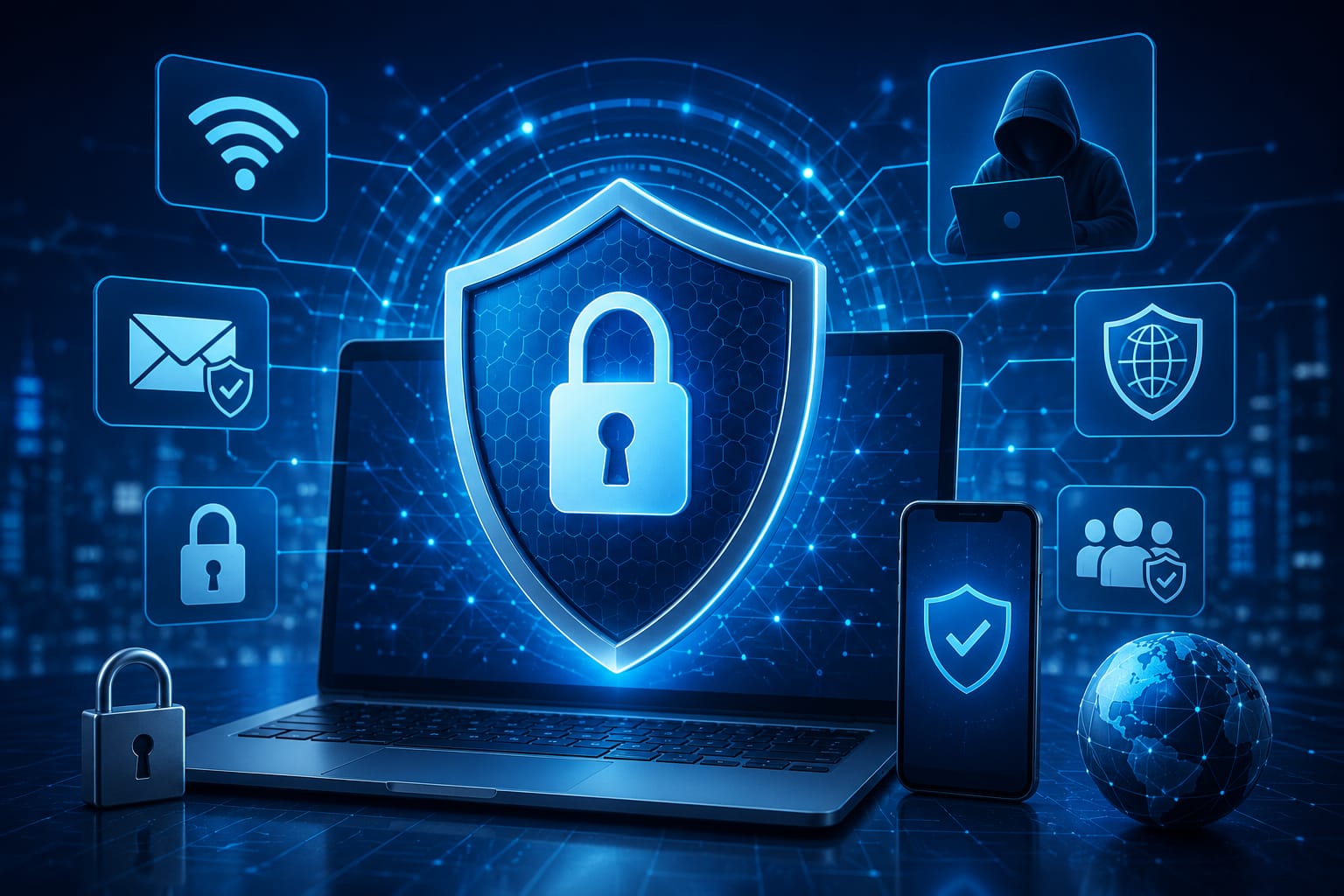
We live in a world where the internet’s a big part of our daily lives. People use it to talk to each other learn things do their banking, shop have fun and work. This makes life easier. Gives us more opportunities but it also makes us vulnerable to cyber threats. Cybercrime is a problem that affects people, businesses and governments all over the world. We hear about hacking, phishing, identity theft, malware attacks and data breaches all the time. These threats are getting more common and more complicated.
Cybersecurity is about protecting our systems, networks and data from attacks. Online safety is about being responsible and safe when we use the internet. When we combine these two things we can reduce our risks. Protect our personal information. This article will talk about the big cybersecurity risks. Give us some practical tips on how to stay safe online.
Understanding Cybersecurity Threats
To stay safe online we need to know about the kinds of threats that are out there.
One of the common threats is phishing. This is when attackers try to trick us into giving them information like passwords or bank details through fake emails, messages or websites. These messages can look real which makes them hard to spot.
Another big threat is malware. This includes viruses, ransomware and spyware. Malware can infect our devices when we download something that’s not safe open a bad email attachment or visit a malicious website. Once it is on our device it can steal our data hurt our files or lock our system until we pay a ransom.
Identity theft is also a problem. Cybercriminals might use our stolen information to pretend to be us get into our financial accounts or commit fraud.
We also have to worry about data breaches. This happens when hackers get into databases that have information. These breaches can expose a lot of peoples data at the time.
Knowing about these risks is the step to building strong digital protection habits.
Use Strong and Unique Passwords
One of the most effective ways to protect ourselves online is to use strong passwords. Weak passwords like “123456” or “password” are easy for hackers to guess. A strong password should have a mix of lowercase letters, numbers and special characters.
We should also use passwords for different accounts. If one account gets hacked the others will still be safe. To keep track of all our passwords we can use a password manager. This is a tool that stores and generates passwords for us.
It is an idea to update our passwords regularly to add an extra layer of security.
Enable Two-Factor Authentication
Two-factor authentication gives us a layer of security beyond just passwords. It makes us verify our identity using a method like a code sent to our phone an authentication app or an email confirmation.
Even if a hacker gets our password they cannot get into our account without that step. Turning on two-factor authentication for our email, banking and social media accounts makes it much harder for someone to get in without our permission.
Be Cautious with Emails and Links
Phishing attacks often come through emails or messages. We should be careful when we open emails from people we do not know especially if they are asking for information or want us to do something right away.
Before we click on any link we need to check the URL. Fake websites often have addresses that look a lot like ones but have small mistakes.
We should also avoid downloading attachments from sources because they might have malware.
Keep Software and Devices Updated
When our software gets updated it is not about new features. These updates often fix security problems that hackers could use to get into our devices.
We need to keep our operating systems, browsers, antivirus software and mobile apps up to date. We can set our devices to update automatically so we do not forget.
Regular updates make it much harder for hackers to get into our devices.
Use Secure Networks
Public Wi-Fi networks, like the ones in cafes, airports or hotels are often not secure. Hackers can intercept the data we send over these networks, including our passwords and financial information.
To stay safe it is best to avoid using Wi-Fi for sensitive things. If we have to using a Virtual Private Network (VPN) can help keep our data safe by encrypting it.
We should also secure our home networks with passwords and encryption.
Protect Personal Information
Sharing much personal information online can make us more vulnerable to cybercrime. We should only share details like our full name, address, phone number and financial information on websites we trust.
We need to adjust our social media privacy settings so we control who can see our posts and personal details. Being careful about what we share helps reduce the risk of identity theft and social engineering attacks.
Install Reliable Security Software
Antivirus and anti-malware software are important for detecting and removing threats. These tools scan our files watch what our system is doing and block behavior.
Choosing security software and keeping it updated ensures we are always protected against new threats. Many security tools also have features like firewalls and web protection which add layers of defense.
Practice Safe Online Behavior
Cybersecurity is not about the tools we use but also about how we behave online. We should think before we click, download or share something. Avoiding websites using trusted platforms and checking where information comes from can prevent a lot of cyber problems.
Parents should also teach their children about safety because kids might be more vulnerable to scams and inappropriate content.
Conclusion
Cybersecurity and online safety are crucial in a world where we use the internet every day. Cyber threats like phishing, malware and identity theft are always evolving, making it more important than ever to be aware and cautious.
By using passwords turning on two-factor authentication being careful with emails and links keeping our software updated and practicing safe online habits we can significantly reduce our risk of being hacked.
In the end online safety depends on both technology. How we behave. Staying. Being careful ensures a safer and more secure digital experience, for everyone.