

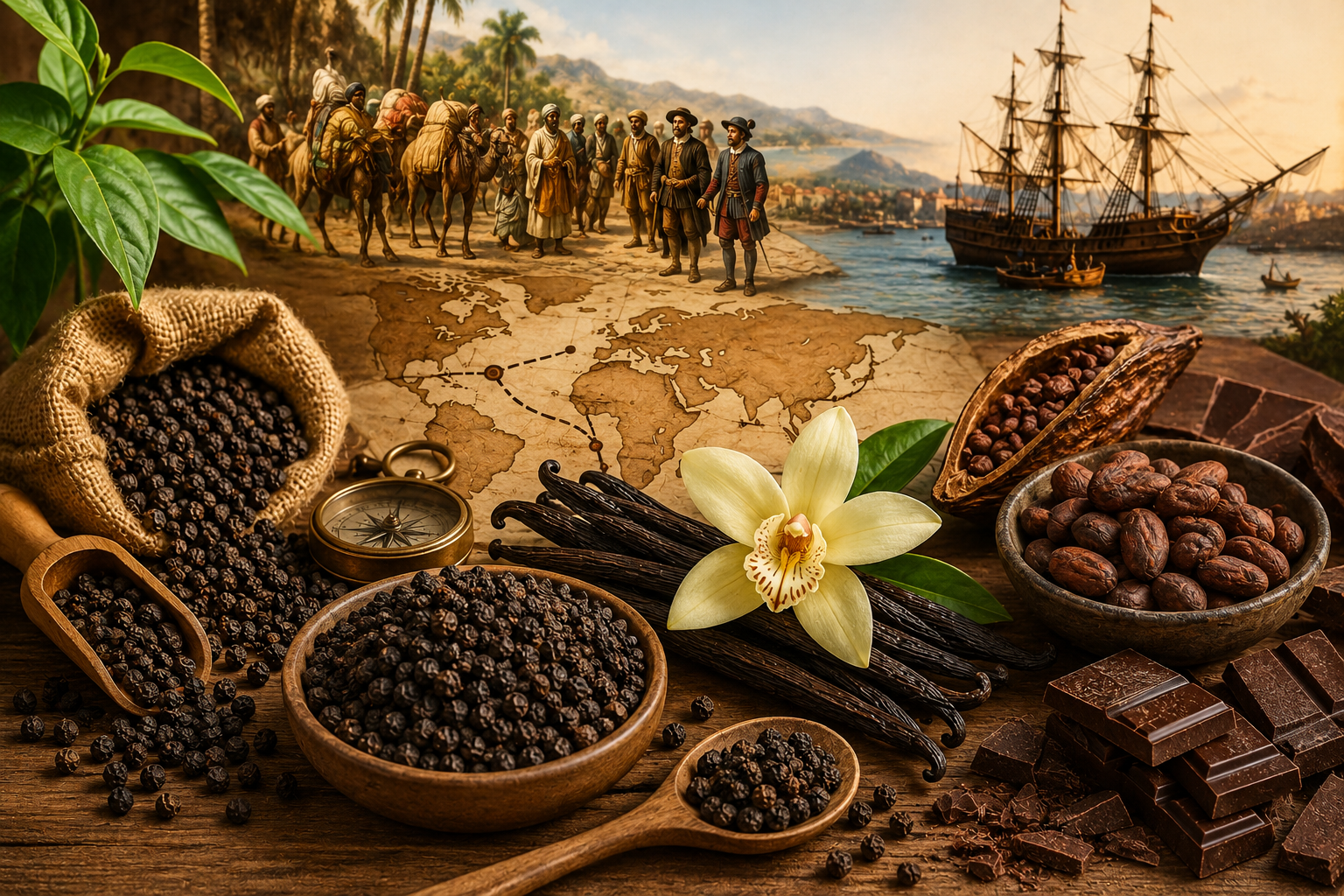
On a daily basis, we taste and consume various flavors in our food without giving much thought to their origins. The sweetness of vanilla in ice cream, the spicy flavor of black pepper in our food, and the rich flavor of chocolate in desserts—these flavors all have interesting histories. Many of the flavors we use today traveled across continents, influenced cultures, and even changed the course of history. Everyday flavors are more than a tale of food; they are also a story of trade, exploration, culture, and human curiosity. It is always fascinating to learn about the history of these flavors so that we can better appreciate the food we eat every day.
Why Flavors?
Food tastes better and becomes more memorable when it is flavored. Flavors can make an ordinary meal feel special. Different cultures have distinct flavors, achieved through the use of various spices and ingredients. For thousands of years, people have searched for ways to make food taste better. They discovered herbs, spices, fruits, and natural ingredients to enhance and season their meals. Over time, these ingredients became valuable commodities that were traded around the world.
Many popular flavors today were once rare and expensive. They were affordable only to the wealthy and were considered symbols of luxury and status.
The Story of Black Pepper
One of the most commonly used spices today is black pepper. It can be found in kitchens all over the world and is frequently used alongside salt. However, there was once a time when pepper was known as “black gold.” It originated in India and was highly valued in Europe during ancient and medieval times. Traders had to travel great distances to transport pepper from Asia to Europe.
The demand for pepper led to exploration and trade with different parts of the world. Indeed, many voyages were undertaken in search of direct routes to spice-producing regions. As a result, this common spice played a significant role in world history.
The Journey of Vanilla
Vanilla is one of the world’s favorite flavors. It is used in cakes, desserts such as ice cream, chocolates, and many other treats. Vanilla originated in Mexico, where it was used by ancient civilizations. European explorers discovered vanilla in the Americas and introduced it to Europe. Growing and pollinating vanilla plants is difficult and time-consuming, making natural production challenging. As a result, pure vanilla remains one of the most expensive spices in the world.
Today, vanilla is recognized for its sweet and comforting qualities, but historically, it was closely linked to exploration, agriculture, and international commerce.
The History of Chocolate: From a Bitter Drink to a Sweet Treat
Chocolate is loved by people of all ages. However, it did not always taste like the sweet treat we know today. Chocolate comes from the cacao bean, which was used by ancient civilizations in Central and South America. They prepared a bitter drink from cacao and highly valued it. In some cultures, cacao beans were even used as a form of currency.
Chocolate was introduced to Europe, where sugar and milk were added to make it sweeter. Over time, chocolate became a favorite food enjoyed by people around the world. Chocolate’s transformation demonstrates how cultural exchange and innovation can influence and improve food traditions.
The Role of Global Trade
Global trade helped spread many popular flavors throughout the world. Spices, herbs, fruits, and other ingredients were traded from one region to another. People explored new lands, discovered new tastes, and shared them with different cultures. This exchange contributed to the development of the diverse cuisines we enjoy today.
Chili peppers originally came from the Americas but have become essential ingredients in Indian, Thai, and Chinese cooking. Similarly, many ingredients commonly used today originated in distant regions. This exchange of flavors demonstrates how food connects cultures and countries around the world.
Flavors in the Modern World
Today, flavors are more accessible than ever before. Local markets and supermarkets offer spices and ingredients from many different countries. Food scientists also develop natural and artificial flavorings that help make food products more affordable and consistent. Thanks to modern technology, a wide variety of flavors is available to consumers, but the history behind them remains fascinating.
Understanding the origins of flavors helps us appreciate the efforts of farmers, traders, and cultures that contributed to their journey.
Conclusion
In conclusion, everyday foods have rich and fascinating histories. Black pepper, vanilla, and chocolate all traveled great distances and played important roles in trade, exploration, and cultural exchange.
Sometimes, the flavors we enjoy in our meals carry histories that span hundreds of years and multiple continents. The Secret History of Everyday Flavors teaches us about this remarkable journey and helps us appreciate how food has connected people throughout history. Whenever we enjoy a favorite food or dessert, we can reflect on the amazing story behind it.