


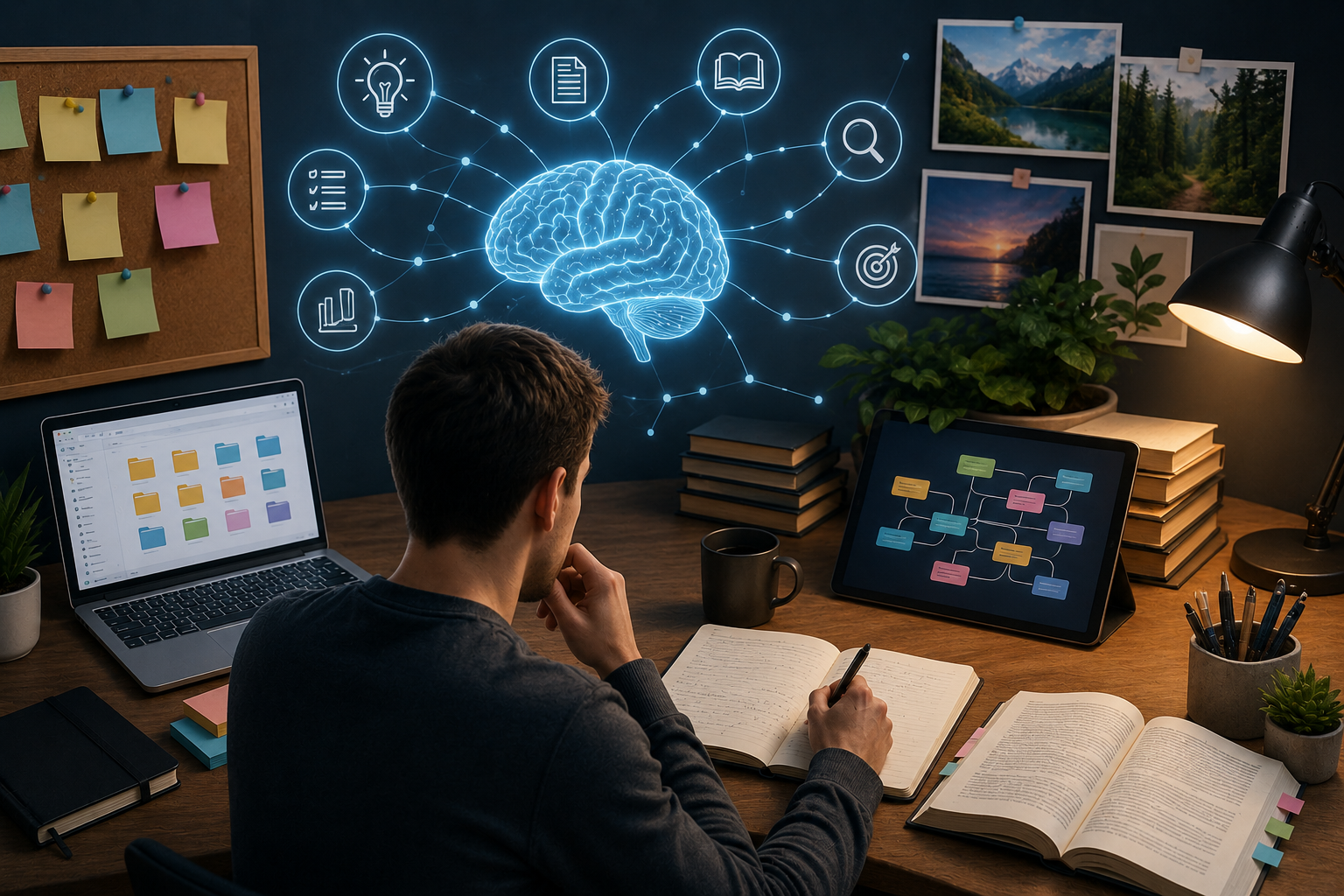
We live in a digital age, and information is everywhere. Each day, we read articles, watch videos, take notes, and learn new things. However, it can be difficult to remember all this information. Key concepts are easily forgotten, and valuable knowledge can be lost over time. This is where a “Second Brain” can help. A second brain is a personal information management system that exists outside the human brain. It helps us record thoughts, notes, tasks, and facts in a way that makes them easily accessible. Building a second brain is not meant to replace our actual brain. Instead, it helps reduce mental overload and allows us to focus on creativity, learning, and problem-solving.
What Is a Second Brain?
A second brain is a system, either digital or physical, for storing valuable information. It serves as an external memory where people can store notes, ideas, documents, and resources. There are several ways to build a second brain, including notebooks, note-taking applications, cloud storage, and other digital tools. Rather than relying solely on memory, people organize useful information so they can access it when needed. The primary goal of a second brain is to make information readily available and easily accessible whenever required.
What Is the Point of Having a Second Brain?
Modern life requires people to deal with an immense amount of information. Students take notes in class, professionals work on projects, and people gather ideas from books, papers, websites, and social media. Remembering all of this can create stress and reduce productivity. A second brain helps organize knowledge and removes some of the burden from the mind. It also improves efficiency because information can be retrieved quickly without searching through files or struggling to recall details. People can store information systematically and focus on applying what they have learned rather than simply memorizing it.
Step 1: Capture Key Information
The first step in creating a second brain is capturing useful information. Whenever you come across an important idea, quote, article, or lesson, save it immediately. This can be done using note-taking apps, notebooks, or digital documents. The goal is not to save everything, but to collect information that may be useful later. Examples include important concepts, study notes, project ideas, and personal insights. Consistently capturing information helps build a valuable knowledge base over time.
Step 2: Organize Information
Collecting information is not enough. It must also be organized properly. It is helpful to categorize notes into areas such as education, career, personal development, health, finances, and hobbies. Creating folders, tags, or labels makes information easier to manage. An organized system saves time and reduces confusion. The simpler the structure, the easier it is to maintain.
The third step is to review and update information regularly. A second brain is only valuable when it is current and well-structured. Reviewing notes helps reinforce learning and ensures information remains relevant. Outdated materials can be removed, and notes can be updated with new insights. Regular review also strengthens memory by giving individuals the opportunity to revisit and reflect on what they have learned.
A simple weekly review can keep the entire system effective and useful.
Step 4: Connect Ideas
The most significant part of a second brain is the ability to connect ideas. Sometimes, knowledge gained in one subject can help solve problems in another. When people link notes together, they can discover new patterns and insights. For example, a student studying business may connect marketing concepts with technological trends. These connections can inspire innovative ideas and deeper understanding. The more connections we create, the more valuable our knowledge becomes.
Step 5: Use Information Effectively
A second brain is not designed merely to store information; it is meant to help us use it.
Notes and ideas should support learning, decision-making, writing, problem-solving, and personal growth. Information becomes meaningful when it is applied in real-life situations.
A second brain ensures that useful knowledge is available whenever needed, whether for studying for exams, working on a project, or planning for the future.
The focus should always be on turning information into action.
There are many benefits to building a second brain. It improves organization, productivity, and knowledge management.
People can find information quickly, reduce stress, and avoid forgetting important details. It also enhances creativity by making it easier to connect ideas and generate new ones.
A second brain supports continuous learning and helps individuals manage both personal and professional responsibilities.
Over time, the system becomes a valuable personal resource as knowledge continues to accumulate.
Conclusion
In conclusion, a second brain is a powerful tool for managing information in today’s fast-paced world. It enables individuals to capture, organize, review, and use knowledge more effectively. By storing valuable information externally, people can reduce mental load and focus on learning, creativity, and productivity. Building a second brain does not require advanced technology—only consistency and effective organization. As the amount of information in our lives continues to grow, having a second brain can help us stay organized, make better decisions, and achieve our goals more efficiently. It is an investment in personal development that can provide lifelong value.