


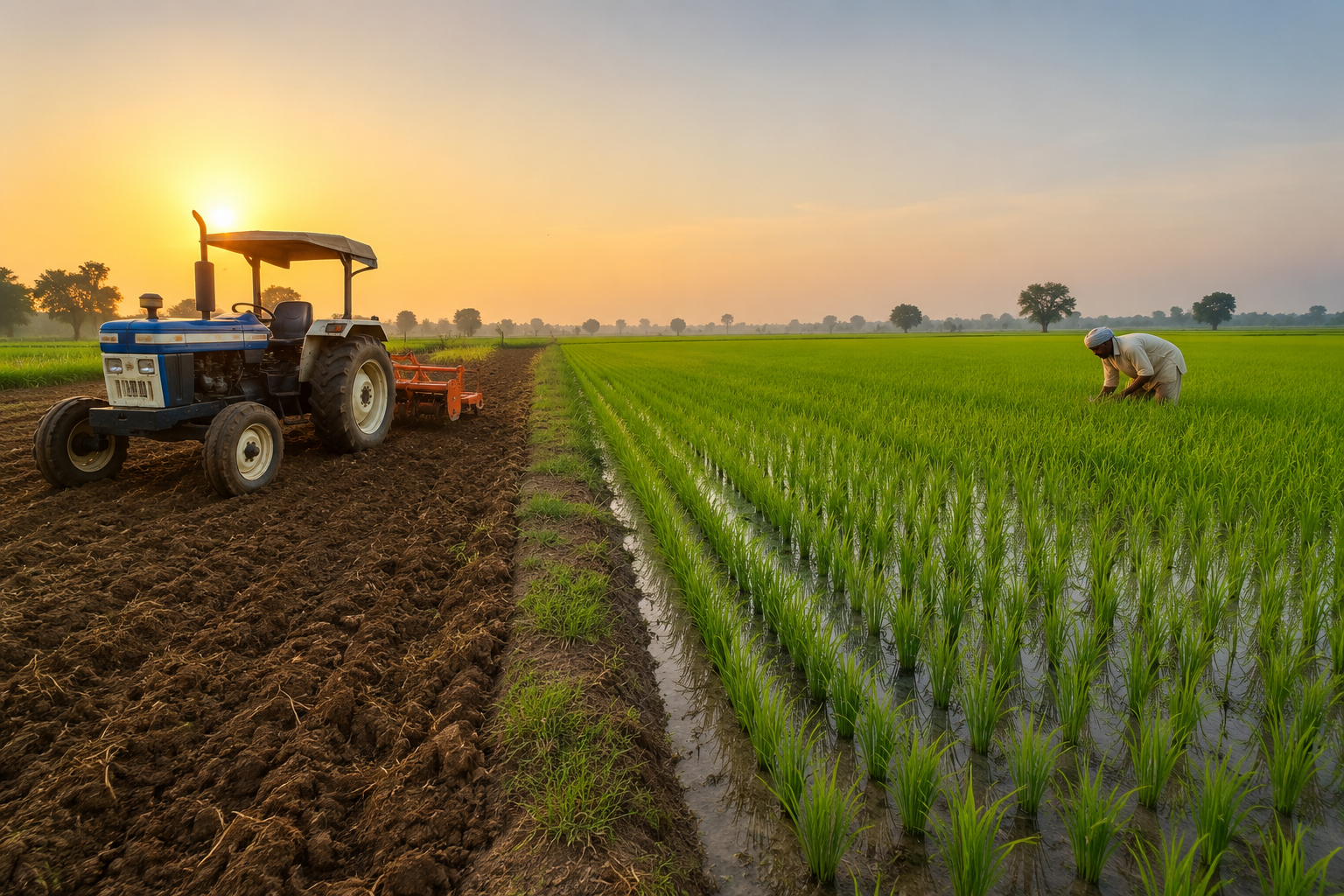
Punjab’s agriculture sector remained busy on 25 June 2026. Farmers faced challenges related to fertilizer supply, delayed monsoon rains, and trade concerns. At the same time, the government continued its efforts to support the ongoing Kharif season and promote sustainable farming practices.
The Central Government assured farmers that there is no shortage of urea and Di-Ammonium Phosphate (DAP) in Punjab. Officials said enough fertilizer stocks are available for the Kharif season. This announcement came after farmers expressed concerns about fertilizer availability during the peak paddy transplantation period. The government said supplies would remain smooth so that farming activities are not affected.
Meanwhile, the Kisan Mazdoor Morcha (KMM) and other farmer organisations staged protests in different parts of Punjab. They opposed the proposed India–US trade agreement. Farmer leaders believe the agreement could increase agricultural imports and lower the prices of locally produced crops. They also repeated their demand for a legal guarantee of the Minimum Support Price (MSP). In addition, they urged the government to strengthen policies that protect Indian farmers.
The weather has become another major concern. The monsoon has arrived late in several areas of Punjab. Because of this, paddy transplantation has slowed down. Many farmers are now using more groundwater to irrigate their fields. Experts warn that low rainfall could affect crop production. It may also increase pressure on Punjab’s already declining groundwater reserves.
To save water, the Punjab Government continues to promote staggered paddy transplantation and Direct Seeding of Rice (DSR). These methods reduce groundwater use and improve water management. However, most farmers still prefer to grow paddy because it offers assured procurement and stable returns. As a result, crop diversification is progressing slowly.
Experts continue to encourage farmers to grow crops such as maize, pulses, oilseeds, cotton, and horticultural crops. These crops require less water and can improve soil health. They also provide better long-term sustainability. However, farmers say they need reliable markets, better prices, and assured procurement before shifting away from paddy cultivation.