

Introduction
5G technology is one of the great strides in the field of digital communication. 5G is the fifth generation of wireless technology which is expected to deliver faster internet speeds, reduced latency, improved reliability and will allow millions of devices to be connected at once. Even though the previous generation was more concerned with enhancing mobile communication, 5G is changing the interaction between people, businesses and industries with digital technology.
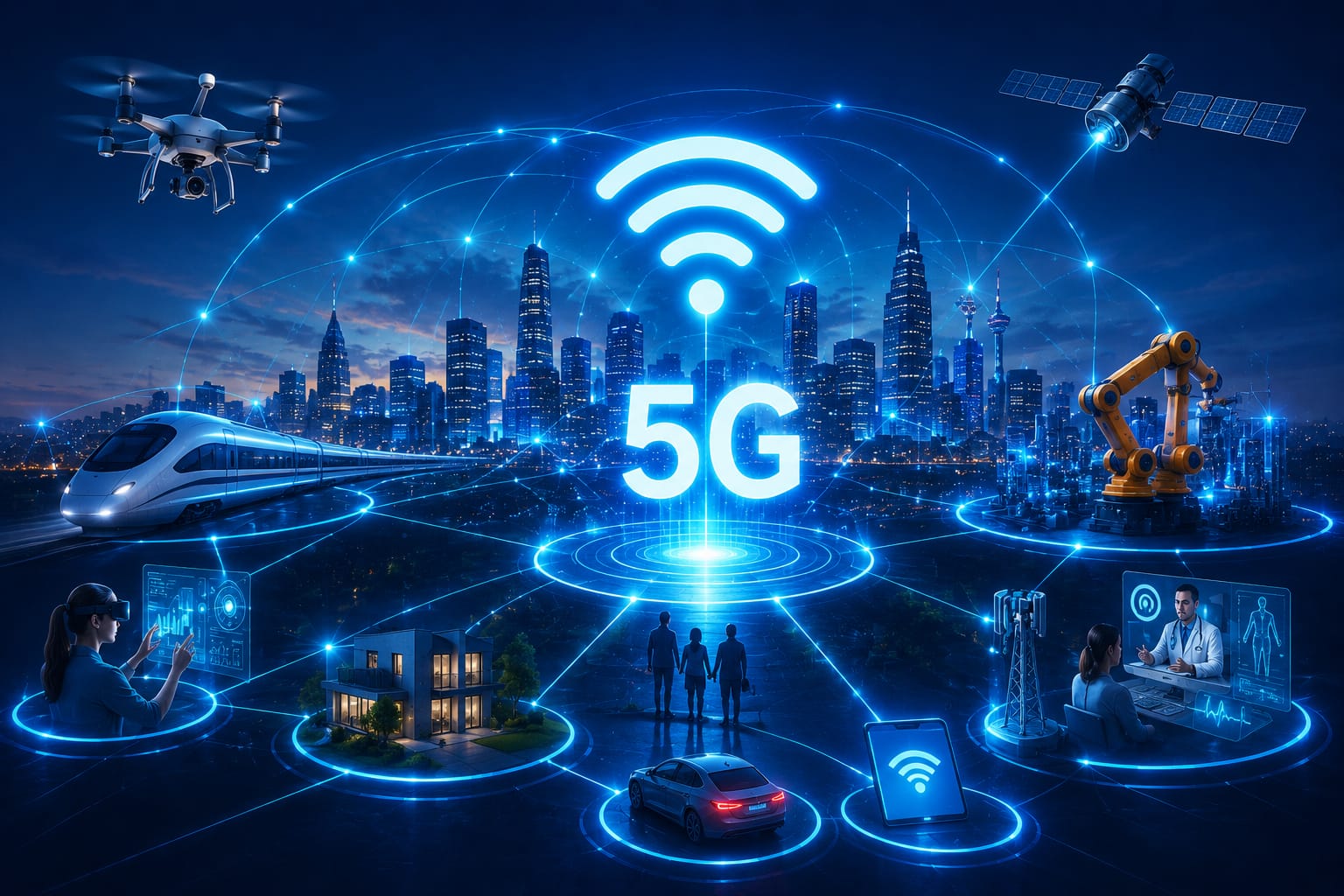
5G is enabling smart cities and autonomous vehicles, remote healthcare, and immersive entertainment, among other applications in almost every sector. This revolutionary technology is the core of the digital economy as more countries roll out their 5G networks.
What is 5G Technology?
5G is the latest generation of mobile network technology, succeeding 4G LTE. It provides much higher data transfer rates, lower delays in the networks and better capacity. 5G is different from previous wireless technologies, which can only support smartphones, 5G can be used by billions of Internet of Things (IoT) devices, industrial machines and connected systems.
In the best of conditions, download speeds now top several gigabits per second, allowing users to stream ultra-high-definition videos, download large files in seconds, and enjoy seamless online experiences.
Faster Internet Speeds
The remarkable speed is among the biggest benefits of 5G. Compared to 4G, 5G can deliver data much faster, enabling users to access content almost instantly. From streaming 4k/8k video content to playing online games and participating in HD video conferences, 5G will make a huge difference in performance.
Faster speeds also benefit businesses by transferring large amounts of data, accessing cloud applications and enhancing collaboration between remote teams.
Ultra-Low Latency
Latency is the delay between devices transmitting data. This delay is drastically cut down with 5G, ensuring more reliable real-time communication than ever before.
Low latency is especially important for applications such as:
Autonomous vehicles
Remote robotic surgery
Online gaming
Industrial automation
VR and AR.Virtual/Augmented Reality.
These technologies demand instant communication and 5G is making them more viable and efficient.
Supporting the Internet of Things (IoT)
Today the Internet of Things is gaining momentum due to the increasing number of devices being connected to the Internet.
5G networks will cater to millions of devices with ubiquity in a narrow area.
Revolutionizing Healthcare
One of the sectors seeing significant advantages from 5G technology is healthcare. High-quality virtual consultations with minimal interruptions, enhancing access to quality medical care in remote areas.
Medical equipment that is connected and shares patient information in real-time is also useful for hospitals to help with patient diagnosis and treatment more quickly. Advanced robot surgeries by specialists from different locations could be possible in the future with ultra-low latency.
Supporting Smart Cities
In the Age of the Smart City, investments in smart infrastructure systems are underway in cities globally, in the hope of providing better public services and urban life. 5G will enable intelligent traffic control, smart lighting systems, waste management, environmental monitoring, and public safety systems.
Data gathered by connected sensors in real time enables city managers and administrators to make decisions, ease traffic congestions, optimize energy use, and optimize life of city residents.
Stakeholders from businesses and industries are united in their mission to transform businesses and industries.
Industries is in the midst of digital transformation, and 5G is an important part of this transformation. Connected machines and sensors enable real-time monitoring of production in manufacturing facilities, minimizing downtime and enhancing efficiency.
Faster connectivity is being used in retail outlets to introduce smart stores, automated checkout and personalized customer experience. Real-time tracking optimizes supply chain management for logistics companies, while secure and responsive digital banking services are provided by financial institutions.
Making Entertainment and Games Even Better! Improving Entertainment & Games!
5G has brought about some phenomenal changes in the entertainment industry. Streaming platforms can stream content without buffering, while gamers can play multiplayer games without lag.
Cloud gaming services are on the rise as they enable users to play high-end games without having to invest in heavy equipment. 5G also enhances VR/AR applications, making them more immersive and interactive.
The key challenges in the deployment of 5G.
Although there are a number of benefits to 5G implementation, there are a number of challenges to consider. Telecom companies and governments have to invest heavily in building new network infrastructure. 5G may not reach the entire area in rural and remote regions.
In addition, the issues of cybersecurity, data privacy, and the need for more energy-efficient network operations are a concern. These challenges will be key to unlocking the full potential of 5G technology in the long term.
The future of digital connectivity.
The ongoing rollout of 5G networks is tightly coupled with the future of digital connectivity. The 5G will be the communication backbone for next generation digital services as AI, Edge computing and IoT continue to develop.
Companies will finding new ways to be innovative, healthcare systems will be more accessible, transportation more intelligent, and digital experiences more seamless for consumers. The technology is expected to contribute to economic growth and provide new models of business in various industries.
Conclusion
5G is much more than an increased mobile speed. It’s a paradigm change in the way people and devices interact in the digital world. Being fast and low-latency with the ability to power billions of connected devices, 5G is creating innovations in healthcare, education, manufacturing, entertainment, and smart cities.
With its increasing global adoption, 5G will be the backbone of future technologies that will further boost productivity and communication, and reshape daily life. Those that take on this technology now will be ready for the future of a connected world.