

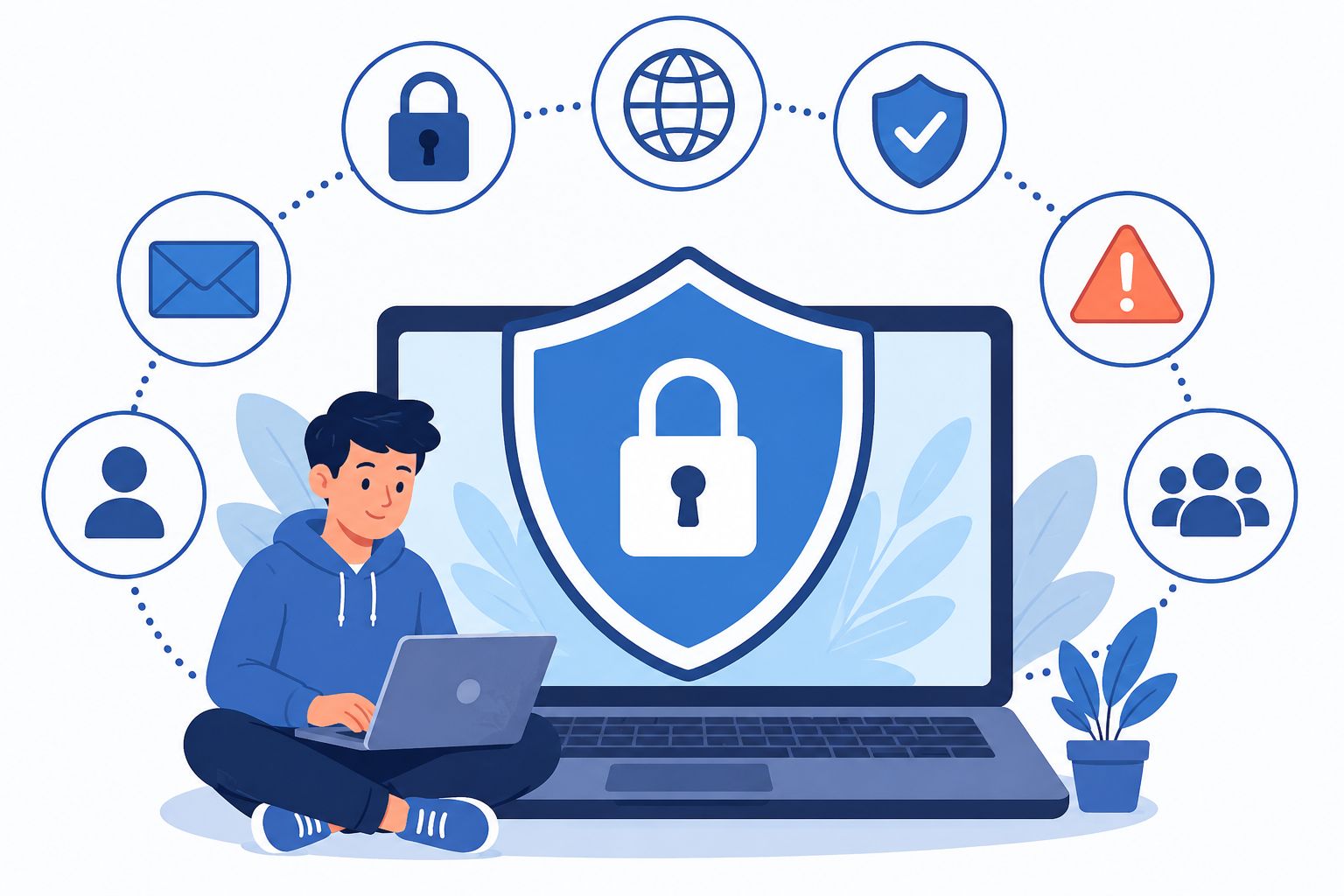
The internet has become an essential part of students’ lives. From attending online classes and completing assignments to communicating with friends and exploring new information, students rely on digital technology every day. While the internet offers numerous educational and social benefits, it also exposes users to various online risks. Therefore, understanding online safety has become increasingly important for students in today’s digital world.
Online safety refers to the responsible and secure use of the internet and digital devices. It involves protecting personal information, avoiding cyber threats, and using online platforms wisely. As students spend more time online than ever before, learning about cyber safety is essential for their security and well-being.
One of the biggest advantages of the internet is access to unlimited information. Students can use educational websites, digital libraries, video tutorials, and online courses to improve their knowledge and skills. However, not all information available online is accurate or trustworthy. Students should learn to verify sources and rely on credible websites for educational purposes.
Protecting personal information is one of the most important aspects of online safety. Many students share personal details such as phone numbers, addresses, photographs, and locations on social media platforms. Oversharing can increase the risk of identity theft, cyberstalking, and privacy violations. Students should be careful about the information they post online and regularly review their privacy settings.
Creating strong passwords is another essential step toward online security. Weak passwords can be easily guessed by hackers, allowing unauthorized access to personal accounts. Students should create unique passwords using a combination of letters, numbers, and symbols. Passwords should never be shared with friends or strangers, and different accounts should have different passwords for added protection.
Social media has become one of the most popular online activities among students. Platforms such as Instagram, Snapchat, YouTube, and WhatsApp allow users to connect and share experiences. However, social media also presents risks such as fake profiles, cyberbullying, misinformation, and privacy concerns. Students should only interact with people they know and avoid accepting friend requests from strangers.
Cyberbullying is a serious issue affecting many young internet users. It involves using digital platforms to harass, threaten, or embarrass others. Hurtful comments, rumors, and offensive messages can negatively impact a student’s mental health and confidence. Students experiencing cyberbullying should immediately report the issue to parents, teachers, or trusted adults rather than responding to the bully.
Online scams and fraud have become increasingly common. Cybercriminals often create fake websites, emails, and messages designed to trick users into revealing personal information. Students may receive messages promising prizes, scholarships, or rewards. Before clicking on links or sharing information, they should verify the authenticity of the source and avoid suspicious websites.
Phishing attacks are among the most common online threats. In these attacks, criminals pretend to be trusted organizations and request sensitive information such as passwords or banking details. Students should carefully examine emails and messages before responding and should never share confidential information online without proper verification.
Malware and computer viruses can also threaten online safety. These harmful programs may enter devices through unsafe downloads, infected websites, or unauthorized applications. Malware can damage files, steal personal information, and slow down device performance. Installing antivirus software, updating devices regularly, and downloading content only from trusted sources can help protect against such threats.
Another important aspect of online safety is responsible communication. Students should remember that their online actions can have real-world consequences. They should communicate respectfully, avoid spreading rumors, and think carefully before posting comments or sharing content. Practicing good digital citizenship helps create a positive and safe online environment for everyone.
Online gaming has become a favorite activity for many students. While gaming can improve problem-solving skills and provide entertainment, it also comes with risks. Some online games allow communication with strangers, which may expose students to inappropriate behavior or scams. Students should avoid sharing personal information while gaming and report any suspicious activity.
Parents play an important role in ensuring online safety. Open communication between parents and children helps create awareness about digital risks. Parents can guide students on safe internet practices, monitor online activities when necessary, and encourage responsible technology use. Building trust allows students to seek help when they encounter online problems.
Schools also contribute significantly to promoting cyber safety. Many educational institutions organize workshops and awareness programs to teach students about responsible internet use. Cyber safety education helps students recognize threats, protect their privacy, and develop healthy online habits.
Digital literacy is essential in the modern world. Students should learn how to identify fake news, verify online information, and use technology responsibly. These skills not only improve online safety but also prepare students for future academic and professional success.
Technology companies are continuously improving security measures to protect users. Features such as two-factor authentication, privacy controls, and content moderation systems help reduce online risks. However, personal responsibility remains the most effective form of protection.
The future of the internet will bring new technologies such as Artificial Intelligence, virtual reality, and advanced digital communication tools. While these innovations offer exciting opportunities, they also create new cybersecurity challenges. Students must stay informed and continue learning about safe online practices to adapt to the changing digital landscape.
In conclusion, the internet is a powerful tool that offers numerous opportunities for education, communication, and personal growth. However, it also presents risks such as cyberbullying, scams, phishing attacks, and privacy concerns. By protecting personal information, creating strong passwords, practicing responsible online behavior, and staying informed about cyber threats, students can enjoy the benefits of the digital world safely. Online safety is not just a skill but a responsibility that every student must develop to succeed in today’s connected world. Furthermore, students should regularly update their devices and applications to protect against the latest cyber threats. Keeping software updated improves security and reduces vulnerabilities. Developing good online habits at an early age helps students become responsible digital citizens and confident internet users.