

introduction
Blockchain technology is synonymous with cryptocurrencies such as Bitcoin and Ethereum. Although digital currencies put blockchain on the map, blockchain technology has a multitude of other uses beyond cryptocurrency. In today’s world, companies, governments, healthcare bodies, and educational institutions are interested in blockchain’s ability to enhance security, transparency, and efficiency.
Industries are increasingly digitizing their operations, and blockchain is one of the most promising technologies to help address issues of data management, fraud prevention, and secure transactions. Knowing about blockchain beyond cryptocurrency aids people and organizations to see the potential of blockchain.
What Is Blockchain?
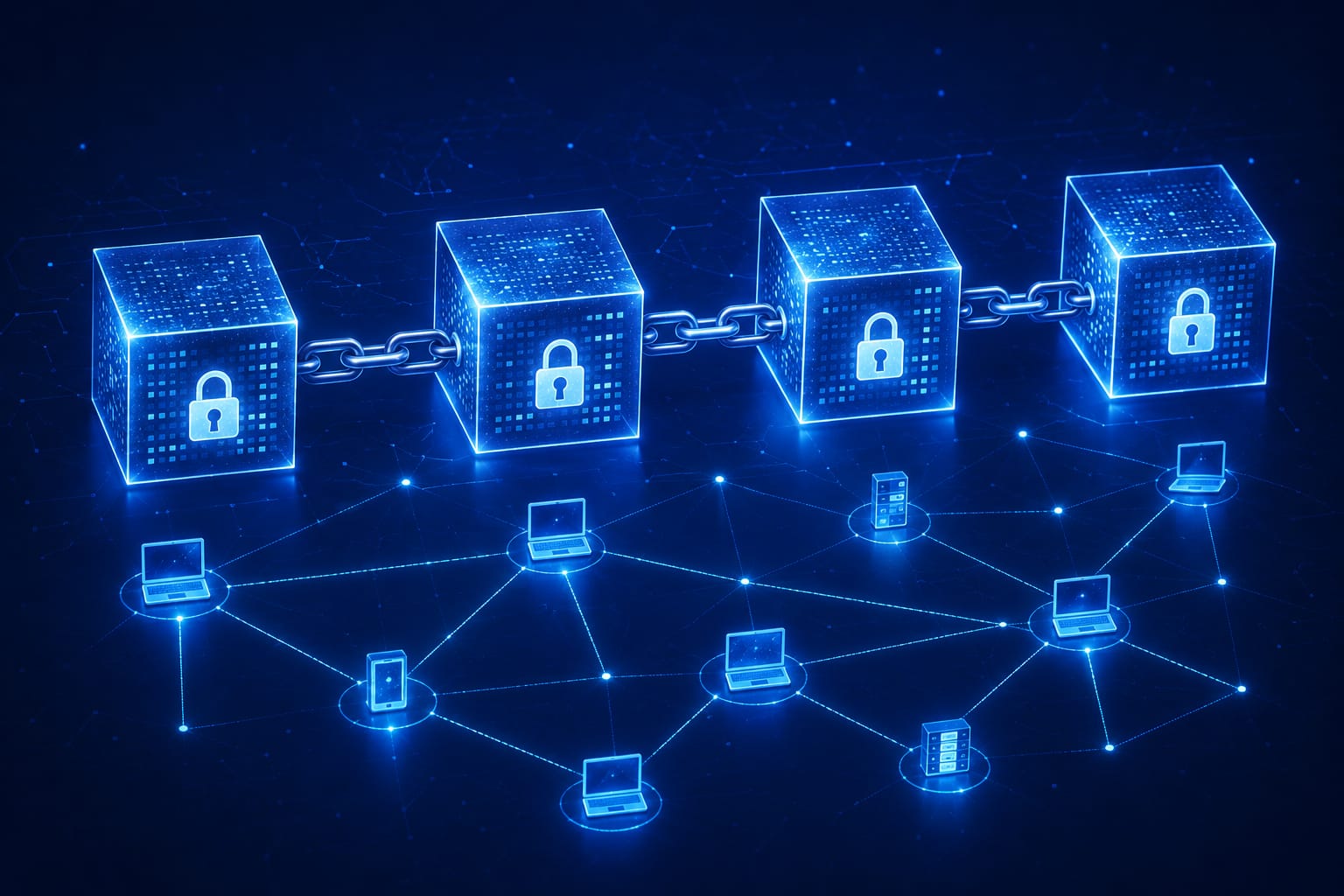
Blockchain is a digital ledger that records transactions among different computers, without centralized control. Rather than keeping data in one place, blockchain shares data across a network, ensuring it is very secure and difficult to manipulate.
These records, called blocks, include transaction data and are interlinked with the previous block by cryptographic techniques. This system is extremely reliable, as a block can’t be changed without changing all of the following blocks.
Key Features of Blockchain Technology
Decentralization
Blockchain works on a decentralized network as opposed to traditional databases, which are controlled by a central authority. All participants receive the same information, so that it is not dependent on a single organisation.
Transparency
All authorized participants can view transaction records, promoting trust and accountability. Each transaction is time stamped and left on the ledger.
Security
Blockchain employs intricate encryption and consensus methods to assure data security. The technology limits the ability to easily alter records and decreases the risk of frauds and cyber attacks.
Immutability
Once data has been recorded onto the blockchain it is permanent. This helps to prevent unauthorized alterations or changes to the records and helps in maintaining the records.
Blockchain Beyond Cryptocurrency
While cryptocurrencies continue to be a big hit, blockchain technology is revolutionizing many other industries.
Healthcare
Patient records are securely stored and shared using blockchain by healthcare providers. Patients can have more control over their medical data and physicians can have accurate records readily accessible. Another benefit of blockchain in the pharmaceutical sector is that it can help to minimize the presence of counterfeit drugs in the supply chain.
Supply Chain Management
Blockchain is being used by businesses to trace products from the manufacturing process to the delivery. The entire supply chain is documented and companies and consumers can check the authenticity of the products, promote transparency and minimize fraud.
Banking and Financial Services
Banks are leveraging blockchain technology to streamline cross-border payments, lower transaction costs and enhance settlement times. Smart contracts are also used to automate financial agreements to decrease working and processing delays.
Education
Blockchain is being employed in education to create academic certificates and digital credentials that are hard to fake. Blockchain’s application in education includes providing tamper-proof academic certificates and digital credentials. Employers are able to quickly confirm qualifications without having to go through a lengthy verification process.
Real Estate
There are many documents and intermediaries in the transaction of any property.
Government Services
Governments are considering blockchain applications to secure identity management, voting systems, tax administration and public records. These applications increase transparency and minimise administrative inefficiencies.
Smart Contracts
The smart contract is one of the most innovative and distinctive aspects of blockchain.
These contracts create a streamlined process without the need for middlemen and shortened waiting periods.
In the case of insurance claims, for instance, documents can be automatically verified to process the claim; in business payments, contracts could be fulfilled and payments released in just moments.
The advantages of Blockchain Technology
Enhanced Security
Blockchain’s cryptographic design makes it challenging for hackers to alter the data.
Improved Transparency
The participants can check each transaction, providing more trust for customers, suppliers and organizations.
Reduced Costs
Blockchain reduces the number of intermediaries and streamlines processes, reducing the costs of operations.
Faster Transactions
Numerous blockchain systems can carry out transactions much quicker than conventional processes, specifically for foreign payments.
Better Data Integrity
Immutable records help maintain data integrity and prevents unauthorized changes.
The adoption of blockchain is fraught with challenges.
While blockchain has its benefits, it also has its drawbacks.
Scalability
When transactions are in large numbers, some blockchain networks are slower than traditional payment systems.
Energy Consumption
Certain blockchain networks require significant computing power, resulting in high energy usage. Newer consensus mechanisms have been tackling this issue though.
Regulatory Uncertainty
Regulations for blockchain technology are still being developed in governments around the world, which is leaving businesses uncertain.
Integration Costs
Before implementing blockchain solutions, organizations might need to upgrade their current infrastructure and to train employees.
The Future of Blockchain
The applications of blockchain technology go beyond cryptocurrencies. Blockchain will continue to be connected to emerging technologies like artificial intelligence, the Internet of Things (IoT), cloud computing, and decentralized finance (DeFi).
Central bank digital currencies (CBDC), digital identity systems, and secure public services using blockchain technology are also under consideration for governments.
Conclusion
Blockchain is much more than a cryptocurrency’s backbone. It’s revolutionizing industries around the world by offering secure, transparent, and decentralized data management solutions. Whether in healthcare and education, banking and supply chains, the blockchain has innovative solutions that enhance efficiency, fight fraud and foster trust in the system.
Although challenges such as scalability and regulation remain, continuous technological advancements are making blockchain more practical and accessible. Blockchain will be crucial in creating a more secure, transparent, and connected future, as organizations keep evolving to embrace digital transformation.