

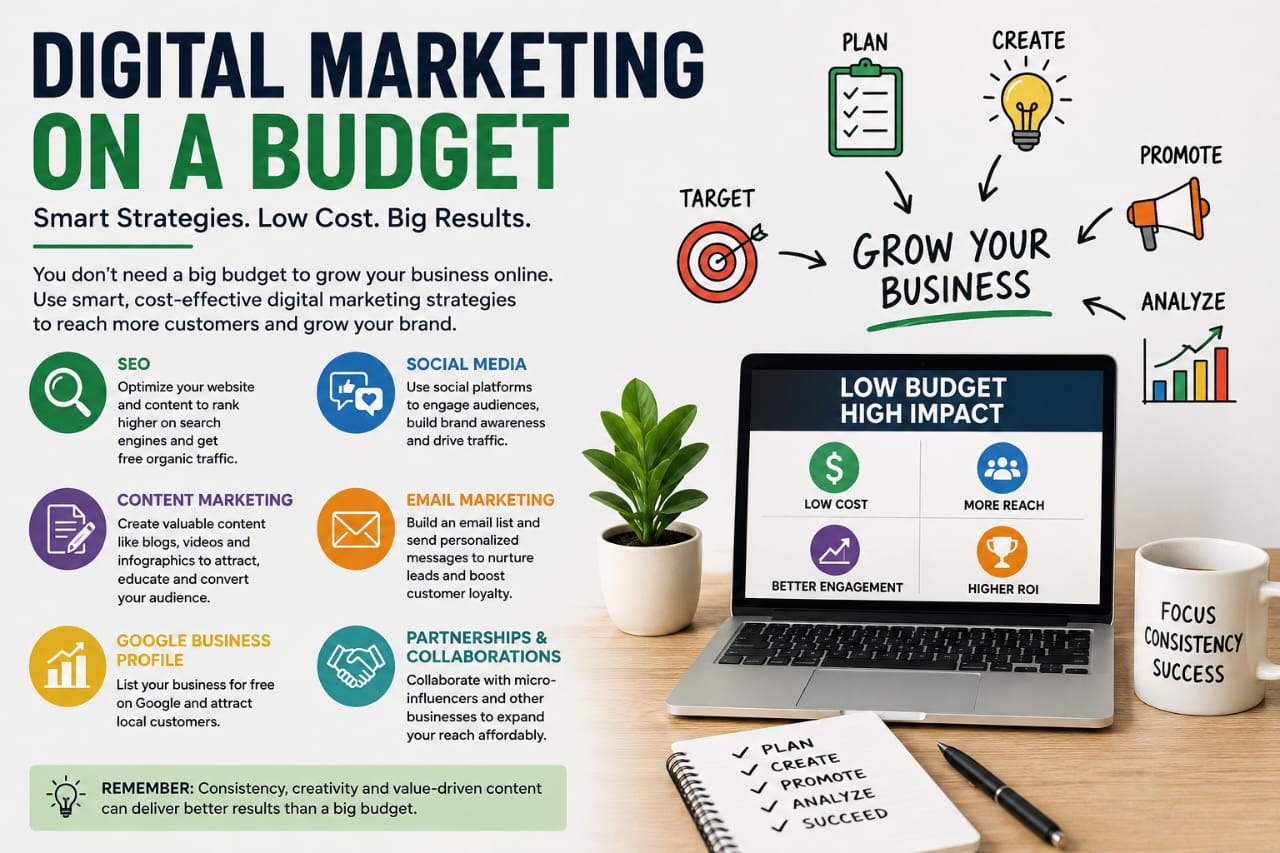
Digital Marketing on a Budget: Smart Strategies for Small Businesses
Digital marketing is one of the ways for businesses to reach customers build brand awareness and increase sales. Many small businesses, startups and freelancers think that they need a lot of money to market their business.. The truth is that you can get great results with limited resources by using the right strategies and focusing on things that have a big impact.
Digital marketing on a budget is about making smart choices using free or cheap tools and always creating value for your audience. Whether you are starting a business or trying to grow an existing one cost-effective digital marketing can help you compete with bigger brands.
1. Create a Strong Online Presence
Your website is the foundation of your marketing strategy. It should be fast work well on phones and be easy to navigate. Make sure it has information about your products or services contact details and what your customers say about you.
You do not need to spend a lot of money on a website. Platforms like WordPress, Wix or Squarespace offer options for creating professional-looking websites. Make sure your website has calls to action, such as “Contact Us ” “Get a Quote ” or “Shop Now.”
2. Focus on Search Engine Optimization
Search Engine Optimization helps your website rank higher on search engines like Google without paying for ads. This brings long-term traffic to your site.
Some basic Search Engine Optimization tips include:
Research what words your customers are searching for.
Write high-quality blog posts regularly.
Use page titles and descriptions.
Optimize images with text.
Improve website speed and mobile performance.
Although Search Engine Optimization takes time it provides results and reduces your dependence on paid advertising.
3. Use Social Media Marketing
Social media platforms allow businesses to connect directly with their audience at no cost. Choose platforms where your target audience spends the time instead of trying to be active everywhere.
Share valuable content such as:
Tips to help your customers
Updates about your products
What your customers say about you
Behind-the-scenes photos
Short videos
Polls and questions
It is more important to be consistent than to post a lot. A simple content calendar can help you stay organized.
4. Start Content Marketing
Content marketing builds trust. Positions your business as an expert in your industry.
Create content such as:
Blog articles
How-to guides
Checklists
Infographics
Videos
Frequently Asked Questions
Helpful content attracts visitors improves Search Engine Optimization and encourages people to share your website with others.
5. Build an Email List
Email marketing is one of the digital marketing strategies. Unlike media you own your email list and can communicate directly with subscribers.
Offer a resource such as an eBook, discount coupon or checklist in exchange for email addresses.
Send newsletters containing:
Updates about your business
tips
Special offers
New product launches
Seasonal promotions
Keep emails short, useful and personalized whenever possible.
6. Use Free Marketing Tools
Many excellent marketing tools have plans that are perfect for small businesses.
Some popular free tools include:
Canva for design
Google Analytics for website tracking
Google Search Console for Search Engine Optimization monitoring
Buffer for scheduling social media posts
Mailchimp for email marketing
Trello for content planning
These tools can help you market professionally without spending much money.
7. Encourage Customer Reviews
Positive reviews build trust and influence buying decisions.
Ask customers to leave reviews on Google, Facebook or other relevant platforms. Display these testimonials on your website and social media pages.
Respond politely to both negative reviews to show that you value customer feedback.
8. Collaborate with Others
Partnerships can expand your reach without increasing your budget.
Consider collaborating with:
businesses
Industry experts
Bloggers
Micro-influencers
Community organizations
Joint promotions, guest blog posts and social media collaborations help both businesses reach new audiences.
9. Repurpose Your Content
Creating content takes time. Of starting from scratch every time repurpose existing content.
For example:
Turn blog posts into media posts.
Convert articles into videos.
Create infographics from statistics.
Combine blogs into an eBook.
Turn customer questions into Asked Questions articles.
Repurposing saves time while maximizing your contents value.
10. Track Your Results
Monitor your marketing performance regularly to understand what works best.
Track metrics such as:
Website visitors
Search rankings
Social media engagement
Email open rates
Conversion rates
Sales and leads
Focus your efforts on strategies that deliver the return on investment.
Common Budget Marketing Mistakes
Avoid these mistakes:
Trying every marketing platform at once.
Ignoring Search Engine Optimization.
Posting content.
Not measuring campaign performance.
Focusing on selling instead of providing value.
Giving up quickly.
Digital marketing success requires patience and continuous improvement.
Tips for Long-Term Success
Set realistic goals.
Understand your target audience.
Publish quality content consistently.
Learn from your analytics.
Stay updated with marketing trends.
Build relationships with customers.
Small improvements made consistently often produce long-term results.
Digital marketing on a budget is not about spending less. It is about spending. By focusing on Search Engine Optimization, content marketing, social media, email campaigns and free digital tools businesses of any size can build an online presence without a large marketing budget.
Success comes from consistency, creativity and understanding your audiences needs. Start with a proven strategies measure your progress and continue improving over time. With patience and dedication even businesses, with resources can achieve impressive growth through smart digital marketing.