

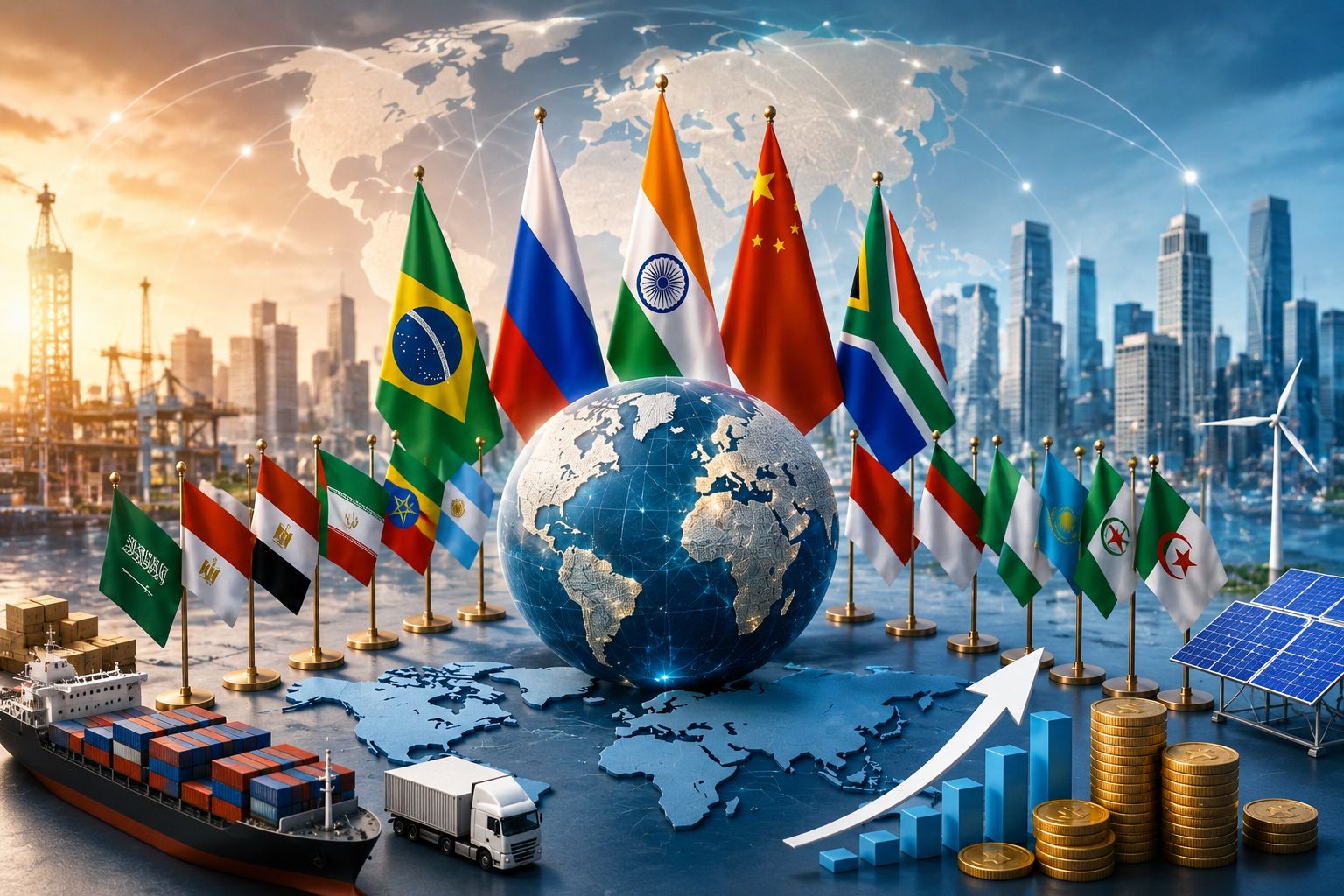
The BRICS group has become very important in the world of economics and politics. It was formed by Brazil, Russia, India, China and South Africa. The main goal of BRICS is to help emerging economies work together and make the global financial system more balanced. In years BRICS has grown by adding new member countries, which makes the group more representative of the developing world.
The expansion of BRICS is a change in global geopolitics and economics. As more countries join BRICS the group is getting influence in international trade, investment, energy security and financial cooperation. While the expansion creates opportunities for member nations it also presents challenges related to working together making decisions and competing globally.
What Is BRICS?
BRICS is a group of emerging economies that work together on issues like economic growth, trade, investment, sustainable development, technology and global governance. The term “BRIC” was first used in 2001 to describe the growing economies of Brazil, Russia, India and China. South Africa joined the group in 2010. It became BRICS.
The BRICS organization holds meetings where leaders discuss ways to strengthen economic cooperation improve trade relations support sustainable development and reform global financial institutions.
Why Is BRICS Expanding?
The expansion of BRICS shows how important emerging economies are in the market. Many developing nations want a say in international decision-making and are looking for alternatives to traditional Western-led institutions.
New member countries bring economic strength, natural resources, bigger consumer markets and strategic locations. The expansion also allows BRICS to work together more in areas like energy, food security, infrastructure development, digital technology and financial systems.
Many countries see BRICS as a chance to diversify their trade partnerships and reduce their dependence on a global markets.
Economic Impact of BRICS Expansion
The expansion of BRICS has an impact on the global economy. Together BRICS members make up a part of the worlds population, economic output and natural resources. With members the alliance represents an even bigger part of global trade and production.
More cooperation among member countries encourages investment, infrastructure projects and business opportunities. Companies get access to markets and governments benefit from stronger economic partnerships and more foreign investment.
The expansion also makes regional supply chains stronger. Improves economic resilience during times of global uncertainty.
Trade and Investment Opportunities
Trade is one of the advantages of BRICS cooperation. Member countries are working to reduce trade barriers improve transportation networks and encourage investment in industries.
Expanding trade partnerships helps businesses reach customers and increases exports and imports. Investments in manufacturing, agriculture, technology, renewable energy and infrastructure are expected to create jobs and support term economic growth.
Better financial cooperation may also encourage the use of currencies in trade, which reduces transaction costs and increases financial stability among member nations.
Energy and Resource Cooperation
Many BRICS countries are rich in resources like oil, natural gas, minerals and agricultural products. The expansion increases cooperation in energy production, energy security and resource management.
Countries can work together to secure energy supplies and invest in renewable energy projects, green technology and sustainable development. This cooperation helps reduce risks from supply disruptions and fluctuating energy prices.
Energy partnerships also support development and make economic resilience stronger across member countries.
Technology and Innovation
Technology is becoming an important area of BRICS cooperation. Member nations are investing in intelligence, digital infrastructure, cybersecurity, telecommunications, semiconductor manufacturing and space research.
Working together in innovation allows countries to share knowledge develop technologies and improve digital connectivity. Joint research projects and technology partnerships can help emerging economies compete better in the digital economy.
Technology cooperation also creates opportunities for startups, research institutions and skilled professionals.
Challenges Facing BRICS Expansion
Despite its growing influence BRICS also faces challenges. Member countries have political systems, economic priorities and foreign policy interests which makes it hard to agree on some issues.
Economic differences between members can affect trade negotiations and investment decisions. Geopolitical tensions, international sanctions, currency fluctuations and global economic uncertainty also present challenges for the alliance.
As BRICS expands it is essential to maintain unity while respecting interests for long-term success.
Impact on Global Financial Institutions
One of the goals of BRICS is to promote reforms in global financial institutions like the International Monetary Fund and the World Bank. Many developing countries think these institutions should better reflect todays economic realities.
The New Development Bank, established by BRICS provides funding for infrastructure and sustainable development projects. As membership expands the bank may play a role in financing economic development across emerging markets.
More financial cooperation within BRICS could contribute to a balanced international financial system.
Future Prospects
The future of BRICS looks promising as more countries want to join the alliance. The expansion is expected to strengthen trade, investment, energy cooperation, digital transformation and infrastructure development.
However success will depend on coordination, mutual trust and the ability to address differences among member nations. If managed well BRICS could become a more influential force in shaping the future global economy.
The expansion of BRICS is a development in international economic and political cooperation. By bringing leading emerging economies the alliance is creating new opportunities for trade, investment, technology, infrastructure and sustainable development.
Although challenges remain BRICS has the potential to change economic governance by giving developing nations a stronger voice in international affairs. As the organization continues to grow its influence, on trade, finance and diplomacy is likely to increase making it one of the most significant international partnerships of the modern era.