

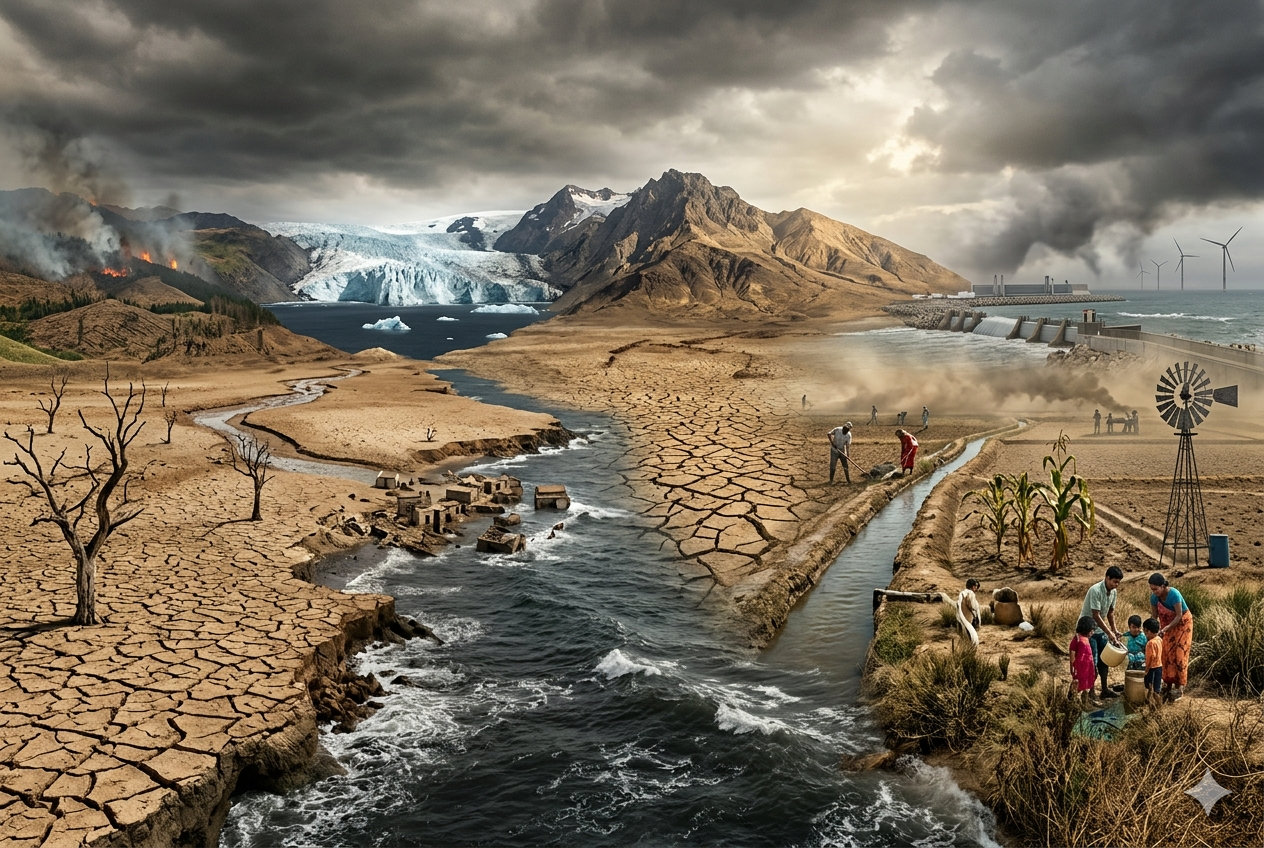
Climate change has emerged as one of the most pressing issues for humanity today. It is the change in temperature, climate and environment of the Earth over a long period of time. Climate change is a natural process that has happened over the years, but is now occurring at a fast Climate change rate due to human activities. Human activities, such as burning fossil fuels, clearing forests, industry emissions, and excessive consumption have led to a significant rise in the amount of greenhouse gases in the atmosphere. This has caused an increase in the world temperatures which have resulted in a myriad of environmental, economic and social impacts. To create feasible solutions and secure a sustainable future for future generations, it is critical to grasp the impacts of climate change.
Causes of Climate Change
Increased greenhouse gas concentrations (e.g., CO2, CH4, N2O) is the key driver of modern climate changes. These gases hold the earth’s heat in the atmosphere, causing the greenhouse effect. These emissions are significant sources of emissions from human activities, especially the use of coal, oil and natural gas to generate energy. Moreover, extensive deforestation also contributes to carbon dioxide sequestration, as trees are fewer in number, which in turn leads to greater
Intensive agriculture, urbanization and industrialization also play a significant role in the degradation of the environment and in climate change.
Environmental Effects
Rising global temperatures are one of the most noticeable impacts of climate change. Sea level is rising due to melting glaciers and polar ice caps as a result of global warming. The world is becoming more vulnerable to flooding, erosion and loss of valuable land in coastal communities all over the world. Extreme weather events, such as hurricanes, droughts, floods, and heatwaves are also more common and more severe due to climate change.
The degradation of ecosystems and biodiversity is also a serious threat. The adaptation speed of many plants and animals to the changing environmental conditions is limited. As the natural habitats are destroyed or made unsuitable, some species are becoming extinct. Coral reefs, which are commonly referred to as the “rainforests of the sea” are especially sensitive to increasing ocean temperatures and acidification. Biodiversity loss can lead to ecological imbalance and loss of resilience of natural systems.
Economic and Social Impacts
Climate change has far-reaching economic consequences. Stable weather is a key component of agriculture, and this is especially vulnerable. Variations in rainfall, droughts and extreme weather events may impact yields and food security. Often farmers suffer financial losses because of unpredictable growing conditions that have an impact on the local and national economies.
Social aspects of climate change are also relevant. The poor are disproportionately affected, particularly in low-income countries. As temperatures rise, and extreme weather events continue to happen, people may be forced to move out of their homes and out of harm’s way. Climate related disasters also put extra strain on public services, infrastructure and healthcare systems. In addition, heat-related illnesses, air pollution related respiratory issues, and transmission of some infectious diseases are emerging public health threats.
Global efforts and solutions
Cooperation at local, national and international level is needed to combat climate change. The roles of all the governments, businesses and individuals are important. The best approach is to cut down on greenhouse gas emissions by moving towards renewable energy like solar, wind, and water power. Greater energy efficiency and sustainable transport will also help reduce carbon emissions.
Safeguarding forests and rehabilitating degraded ecosystems are critical actions to take in fighting climate change. Trees absorb carbon dioxide and the help regulate the Earth’s climate. Furthermore, sustainable agricultural methods can help to minimize environmental harm without compromising food production. It is also crucial to increase public awareness and education – informed citizens will support environmentally responsible policies and lifestyles.
Several international treaties have spurred action on countries to reduce emissions and limit global warming. Although achievements have been made, there is still a need for sustained efforts and increased action to achieve climate targets and safeguard the planet.
Conclusion
Climate change is a complicated and pressing worldwide problem that has an impact on all things on Earth. It affects increased temperatures, extreme weather, environmental degradation, economic losses and social problems. The effects of this are severe, but there is now a chance to minimize the risks of the future by bringing together people and good practices. Societies can play their part in creating a healthier and more sustainable future by adopting cleaner energy sources, safeguarding the environment and natural ecosystems, and fostering environmental responsibility. Climate change is a challenge that demands action, innovation and collaboration, but the rewards of action go well beyond this generation.
Word Count: ~ 780 words.