

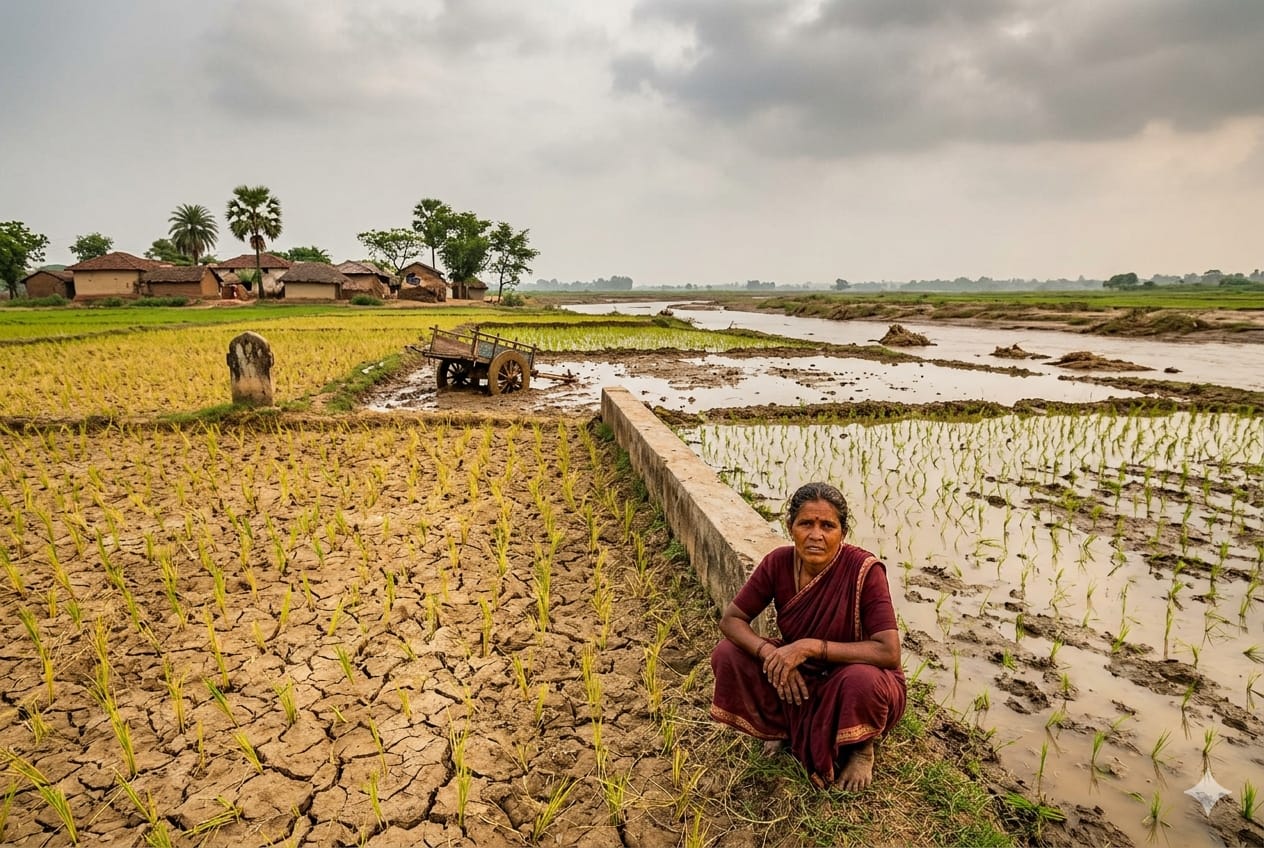
Agriculture is very important for India economy. It supports the lives of half of the population. Indias farming system depends on resources like rainfall, temperature, soil quality and seasonal patterns.. In recent years climate change has become a big challenge for agriculture. Rising temperatures, rainfall, frequent droughts, floods and extreme weather events are disrupting farming and threatening food security.
Climate change means long-term changes in weather patterns. This is mainly caused by activities like deforestation, industrial emissions and burning fossil fuels. These changes are now directly affecting crop production, farmer income and the stability of the sector in India. This article explores how climate change is impacting agriculture in India and why it needs attention.
Rising Temperatures and Heat Stress on Crops
One of the visible effects of climate change is rising temperatures. In India heat levels are affecting crop growth and productivity. Many crops, wheat, rice and maize are sensitive to temperature changes.
Higher temperatures reduce soil moisture. Increase evaporation. This leads to water stress in plants. Heat waves during stages of crop growth like flowering and grain formation can significantly reduce yields. For example wheat production in India has declined in recent years due to unexpected temperature spikes during harvesting.
Heat stress also affects livestock. It reduces milk production. Increases the risk of diseases.
Irregular Monsoon Patterns
The Indian monsoon is the backbone of agriculture. A large portion of farming depends on rainfall.. Climate change has made monsoon patterns unpredictable. Some regions experience delayed rainfall while others face rainfall or long dry spells.
Uneven rainfall distribution creates uncertainty for farmers. Delayed monsoons can postpone sowing while excessive rainfall can damage standing crops. Floods in states like Assam, Bihar and parts of Uttar Pradesh often destroy crops and soil fertility.
On the hand drought-prone areas like Maharashtra and Rajasthan suffer from water scarcity. This leads to crop failure. Reduced agricultural output.
Increased Frequency of Extreme Weather Events
Climate change has led to a rise in weather events like floods, droughts, cyclones and unseasonal rains. These events cause severe damage to agriculture.
Cyclones in states like Odisha, Andhra Pradesh and Tamil Nadu often destroy large areas of farmland, especially paddy fields. Flash floods wash away crops erode topsoil and damage irrigation systems.
Unseasonal rainfall during harvest seasons affects crop quality. This makes them less valuable in the market. Such unpredictable events increase risks for farmers and reduce their ability to plan effectively.
Water Scarcity and Irrigation Challenges
Water is critical for agriculture. Climate change is intensifying water scarcity in parts of India. Groundwater levels are declining due to overuse and reduced recharge caused by rainfall.
Regions that depend heavily on irrigation like Punjab and Haryana face long-term sustainability issues. Traditional irrigation methods are becoming less effective. Farmers are forced to rely on alternatives like tube wells and pumps.
Inadequate water availability affects crop selection. Reduces productivity. This is especially true for water- crops like rice and sugarcane.
Impact on Soil Health and Fertility
Soil health is another area affected by climate change. Heavy rainfall and floods lead to soil erosion. This washes away nutrients. It reduces soil fertility. Lowers crop yields over time.
Rising temperatures also affect soil microorganisms. They play a role in maintaining soil structure and nutrient cycles. In some regions increased use of fertilizers to compensate for poor soil health further degrades soil quality.
Salinity in agricultural lands is increasing due to rising sea levels. This makes the soil less suitable for cultivation.
Effects on Crop Diversity and Food Security
India is home to a variety of crops.. Climate change is threatening this diversity. Some traditional crop varieties are unable to withstand changing climate conditions. They are gradually being replaced by resilient but limited varieties.
This reduction in crop diversity affects security. It increases dependence on a major crops. Food systems become more vulnerable to climate-related disruptions.
Lower agricultural productivity leads to rising food prices. This affects consumers. Increases economic pressure on low-income households.
Economic Impact on Farmers
Farmers are among the vulnerable groups affected by climate change. Crop failures due to unpredictable weather lead to losses and increased debt. Many small and marginal farmers lack access to technology or insurance systems. These could help them recover from losses.
Uncertainty in agriculture discourages investment in farming. This leads to income and migration from rural to urban areas in search of alternative livelihoods.
Government support programs and crop insurance schemes exist.. Implementation challenges often limit their effectiveness.
Adaptation and Sustainable Solutions
Despite these challenges several adaptation strategies can help reduce the impact of climate change on agriculture in India. Climate-resilient farming practices, like drought- crop varieties and improved irrigation systems like drip irrigation are becoming increasingly important.
Farmers are also adopting farming methods and crop diversification. These reduce risks. Weather forecasting technology and digital advisory services help farmers make decisions regarding sowing and harvesting.
Government initiatives focused on agriculture, water conservation and soil management play a crucial role in building resilience against climate change.
Conclusion
Climate change poses a threat to agriculture in India. It affects temperature patterns, rainfall distribution, water availability and soil health. These changes directly impact crop productivity, farmer livelihoods and national food security. The increasing frequency of weather events further worsens the situation. This makes agriculture more uncertain and risky.
To ensure a future it is essential to adopt climate-resilient agricultural practices. We must improve resource management. Support farmers through technology and policy interventions. Addressing climate change in agriculture is not important for farmers but also, for ensuring food security and economic stability for the entire nation. Climate change impacts agriculture. Agriculture needs protection. Farmers need support.