

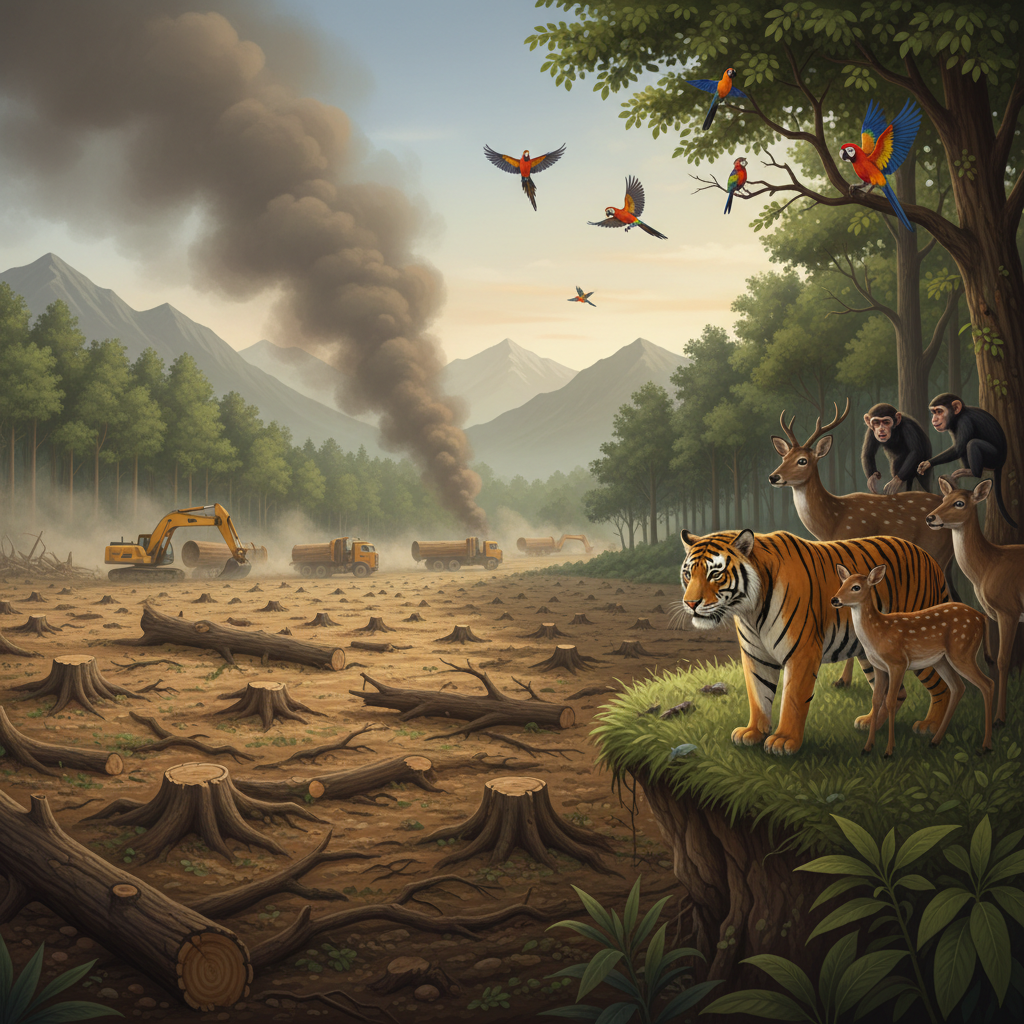
Deforestation is when forests are cut down on a scale for farming, city growth, mining, building roads and logging. Forests are some of the ecosystems on Earth with millions of plants and animals living there. When forests are destroyed it immediately and lastingly affects wildlife. The loss of trees isn’t about losing wood; it’s about losing entire ecosystems that support life in complex ways. This article looks at how deforestation affects wildlife and why its a threat to biodiversity
Loss of Natural Habitat
The biggest impact of deforestation on wildlife is that it destroys their homes. Forests are where animals live have babies and find food. When trees are cut down animals lose their shelter places to have babies and food.
Some animals are very special. Can’t survive outside their natural homes. For example monkeys and sloths live in trees. Can’t adapt to open areas. They often die from exposure or starvation when their forests are cleared.
Even animals that can move to areas often find those areas already crowded, leading to more competition for limited resources.
Disruption of Food Chains
Forests have food webs where every living thing plays a role. Deforestation disrupts these food chains by removing species and changing the balance of ecosystems.
When plants are cleared, animals that eat plants lose their food source. As those animals decline in number predators that rely on them also suffer. This can lead to a collapse in populations across species.
Sometimes the absence of predators to habitat loss leads to too many prey animals in nearby areas, which further disrupts the balance. Such disruptions make ecosystems weaker and less able to handle changes.
Fragmentation of Habitats
Deforestation doesn’t always mean forest loss; often it breaks large forests into smaller pieces. This is called fragmentation. Fragmentation has consequences for wildlife because it limits movement and genetic exchange between populations.
Animals that need areas like big cats and bears are especially vulnerable. When their habitats are divided they may be forced into areas that can’t support their needs. This increases the risk of inbreeding, reducing diversity and making populations more susceptible to disease and environmental changes.
Fragmentation also exposes wildlife to settlements increasing human-wildlife conflict. Animals may enter villages or farms in search of food leading to encounters.
Climate Change and Environmental Stress
Forests help regulate the climate by absorbing carbon dioxide and releasing oxygen. When forests are destroyed large amounts of carbon are released into the atmosphere contributing to warming.
Climate change has powerful effects on wildlife. Rising temperatures and changing rainfall patterns alter habitats and force animals to migrate to areas. However deforestation limits migration routes making it difficult for species to adapt.
Many animals depend on seasonal patterns for breeding and feeding. Climate disruption caused by deforestation can interfere with these cycles reducing reproduction rates and threatening long-term survival.
Increased Risk of Extinction
One of the serious consequences of deforestation is the increased risk of species extinction. Many animals found in forests are endemic meaning they exist in specific regions. When those forests disappear these species have else to go.
Extinction isn’t about losing individual species; it affects entire ecosystems. Each species plays a role in maintaining balance. The disappearance of one species can trigger cascading effects throughout the ecosystem.
Amphibians, birds and insects are particularly vulnerable due to their sensitivity to changes and limited ability to relocate.
Impact on Biodiversity
Biodiversity refers to the variety of life in a habitat or ecosystem. Forests are among the sources of biodiversity on Earth. Deforestation reduces this diversity by eliminating species and shrinking habitats.
Low biodiversity weakens ecosystems making them less productive and less stable. It also reduces the natural services forests provide, such as air, water purification and soil fertility. Over time degraded ecosystems struggle to recover even if reforestation efforts are introduced.
Human-Wildlife Conflict
As forests shrink animals are often forced into human-populated areas in search of food and shelter. This leads to increased human-wildlife conflict, which can be dangerous for both sides.
Farmers may lose crops to animals leading to losses while animals are often killed or injured in retaliation. Large mammals such as elephants and leopards are frequently involved in conflicts. These interactions further threaten vulnerable wildlife populations.
Conclusion
Deforestation has reaching consequences for wildlife affecting habitats, food chains, climate stability and biodiversity. It leads to habitat loss, fragmentation and increased extinction risks while also intensifying human-wildlife conflict. The destruction of forests disrupts the balance of ecosystems that have evolved over millions of years.
Protecting forests is essential not for wildlife but also for maintaining environmental stability and human well-being. Forest management, reforestation and conservation efforts are crucial steps toward reducing the impact of deforestation. Preserving forests means preserving life in all its diversity ensuring that future generations inherit a planet, in nature and wildlife.