

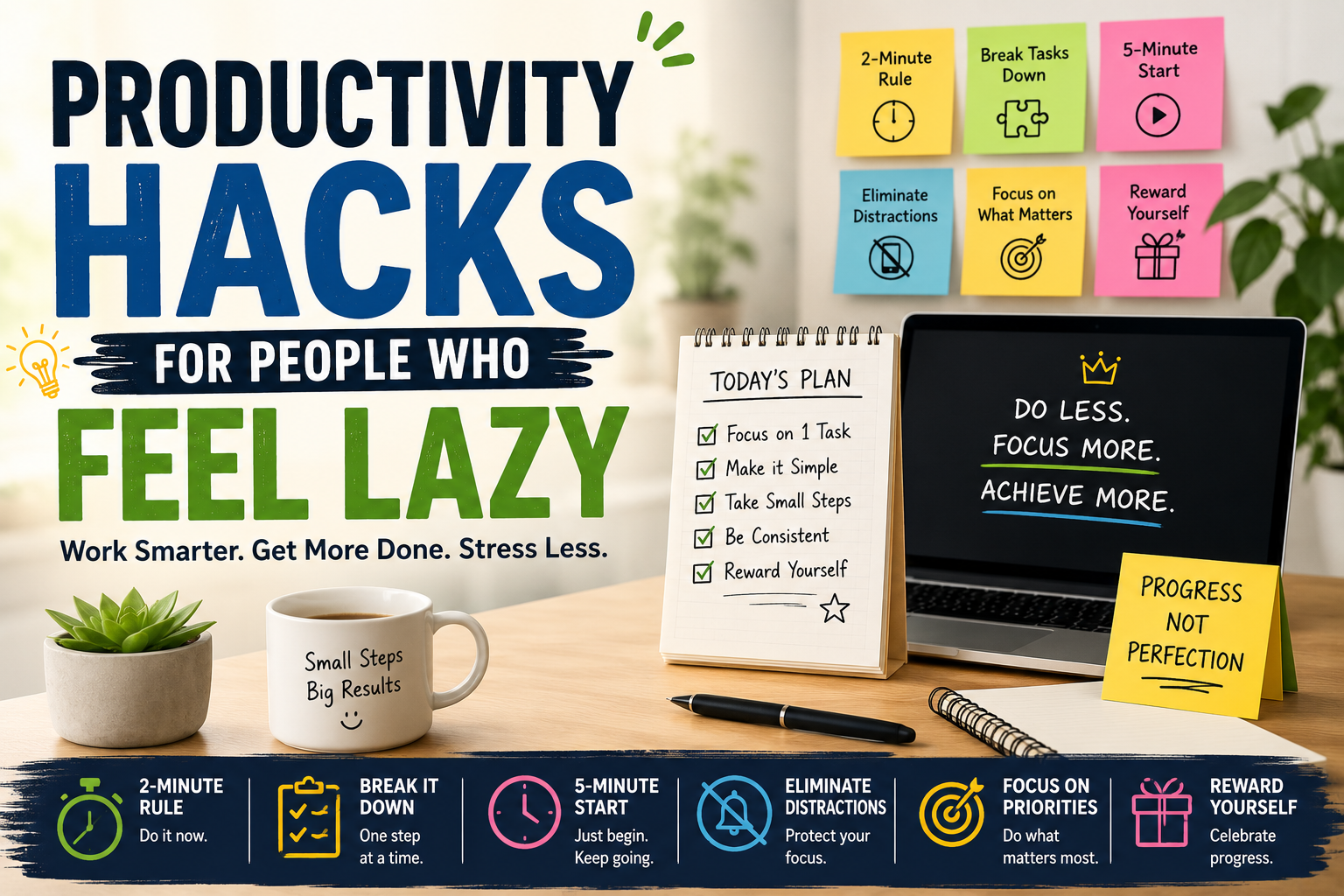
Productivity Hacks for People Who Feel Lazy
Introduction
Many people believe they are lazy when they struggle to complete tasks or stay focused. However, laziness is not always the real issue. In many cases, people feel overwhelmed, distracted, unmotivated, or simply exhausted. Productivity is not about working nonstop or filling every minute of the day with tasks. Instead, it is about finding efficient ways to get things done while reducing stress and preserving energy.
The good news is that anyone can become more productive, even those who dislike strict schedules and complicated systems. By adopting simple productivity techniques and building positive habits, people can accomplish more while maintaining a healthy work-life balance. The goal is not to work harder but to work smarter.
Understanding Why People Feel Lazy
Before exploring productivity strategies, it is important to understand why people often feel lazy. Many individuals are not actually lazy; they are overwhelmed by responsibilities, distracted by technology, or uncertain about where to begin. Others struggle with perfectionism or fear of failure, which can make even simple tasks seem intimidating.
When a task feels difficult or stressful, the brain naturally seeks easier and more enjoyable alternatives. This is why people often spend time scrolling through social media, watching videos, or engaging in other distractions instead of focusing on important work.
Recognizing that productivity challenges are normal can help people stop blaming themselves and start focusing on practical solutions.
The Two-Minute Rule
One of the easiest productivity techniques is the Two-Minute Rule. If a task can be completed in two minutes or less, do it immediately. Examples include replying to a short email, putting away clothes, organizing a workspace, or making a quick phone call.
Small tasks may seem unimportant, but they can quickly accumulate and create mental clutter. Completing them right away prevents them from becoming larger responsibilities later. It also provides a sense of accomplishment that can motivate further action throughout the day.
Break Big Tasks into Smaller Steps
Large projects often feel overwhelming, making people more likely to procrastinate. Breaking a big task into smaller, manageable steps can make it much easier to begin.
For example, instead of writing “Complete the report” on a to-do list, divide it into smaller actions such as researching information, creating an outline, writing individual sections, and editing the final version. Completing one step at a time reduces stress and makes progress more visible.
This approach helps transform intimidating projects into achievable goals.
The Five-Minute Starting Method
Many people struggle with productivity because getting started feels difficult. The Five-Minute Starting Method is designed to overcome this barrier.
The idea is simple: commit to working on a task for just five minutes. Once people begin, they often discover that continuing is much easier than expected. Starting is frequently the hardest part of any task, and this technique helps eliminate the pressure of committing to hours of work.
Even if the task is only completed for five minutes, some progress has been made, which is always better than doing nothing.
Reduce Unnecessary Decisions
Making too many decisions throughout the day can drain mental energy. This phenomenon, often called decision fatigue, can reduce focus and productivity.
One effective solution is to simplify routine choices. Many successful people plan their meals, clothing, and daily schedules in advance. Establishing routines for common activities reduces the number of decisions that need to be made each day.
By conserving mental energy, people can focus more effectively on important tasks and responsibilities.
Focus on One Task at a Time
Many people believe multitasking increases productivity, but research suggests otherwise. Constantly switching between tasks forces the brain to refocus repeatedly, which can lead to mistakes and decreased efficiency.
Instead of juggling multiple activities, focus on one task at a time. Give full attention to the task until it is completed or reaches a natural stopping point. This approach improves concentration and often results in higher-quality work.
Single-tasking is particularly useful for individuals who are easily distracted or frequently lose focus.
Create a Distraction-Free Workspace
Modern technology provides endless opportunities for distraction. Social media notifications, text messages, and online entertainment can interrupt concentration and reduce productivity.
Creating a distraction-free workspace can significantly improve focus. Turning off unnecessary notifications, placing mobile devices out of reach, and keeping the workspace organized can help minimize interruptions.
A clean and quiet environment encourages better concentration and makes it easier to stay committed to important tasks.
Reward Yourself for Progress
Rewards can be powerful motivators. Giving yourself a small reward after completing a task can make productivity more enjoyable and sustainable.
For example, after finishing an assignment or reaching a goal, you might take a short walk, enjoy a favorite snack, watch a television show, or spend time on a hobby. These rewards create positive associations with productive behavior and encourage consistency.
The key is to ensure that rewards remain controlled and do not become distractions themselves.
Prioritize What Matters Most
Not every task deserves the same amount of attention. Some activities contribute more significantly to long-term goals than others. Learning to identify and prioritize high-value tasks can dramatically improve productivity.
A useful strategy is to select the three most important tasks each day. Focus on completing these tasks before addressing less important activities. This prevents busy work from consuming valuable time and energy.
By concentrating on meaningful priorities, people can achieve better results without extending their working hours.
Conclusion
Productivity is not about being busy all the time. It is about using time, energy, and attention effectively. People who consider themselves lazy can become far more productive by applying simple strategies such as the Two-Minute Rule, breaking large tasks into smaller steps, reducing distractions, and focusing on priorities.
The most successful productivity systems are often the simplest. Small improvements practiced consistently can lead to significant long-term results. By working smarter rather than harder, anyone can accomplish more, reduce stress, and create a healthier balance between work and personal life.